
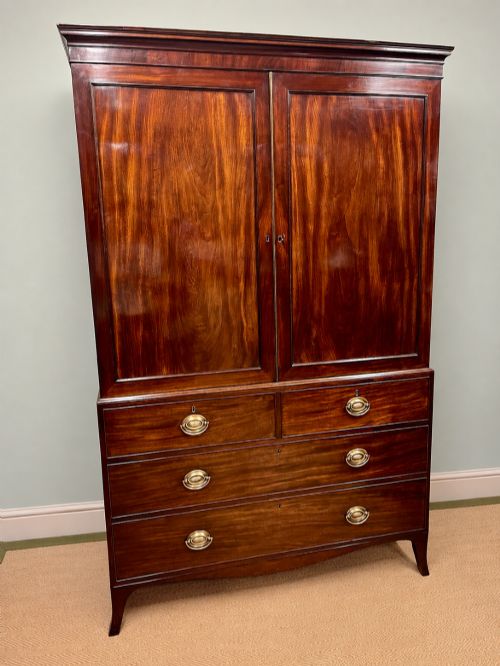
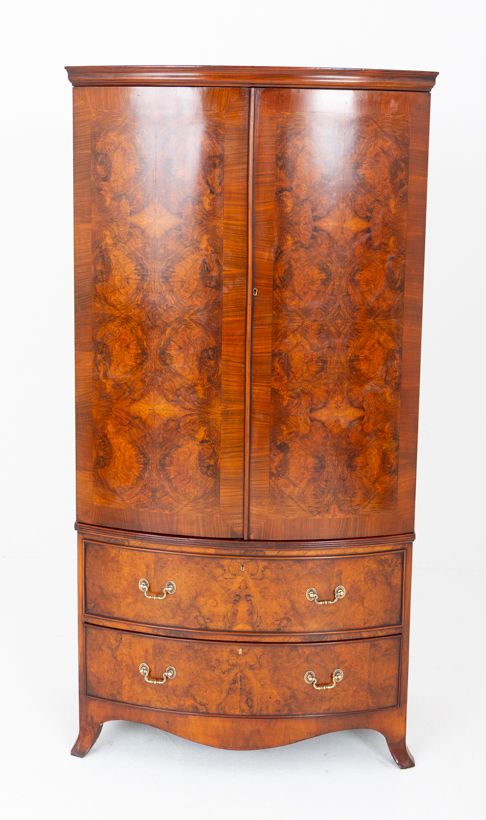
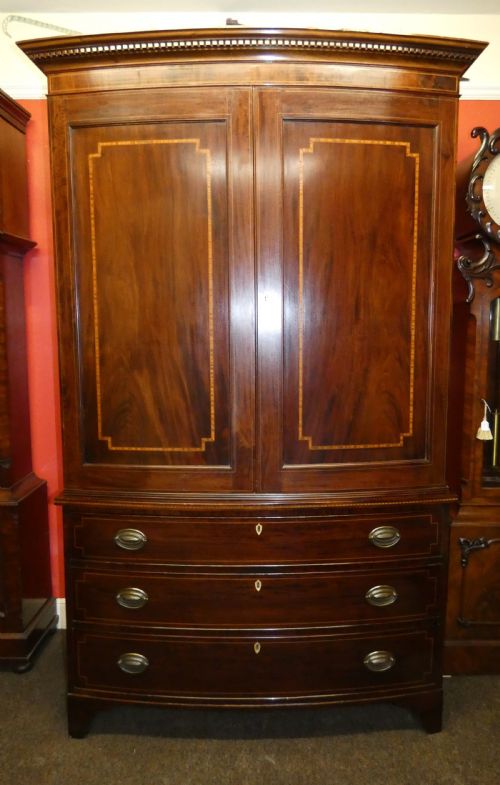
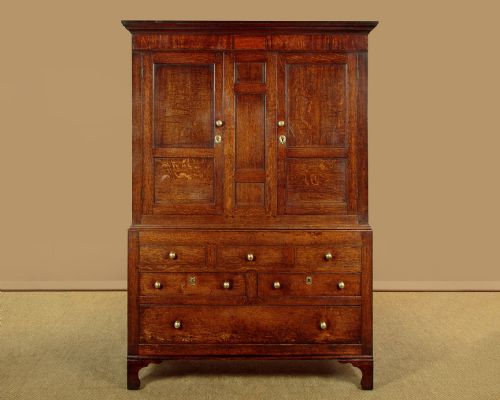
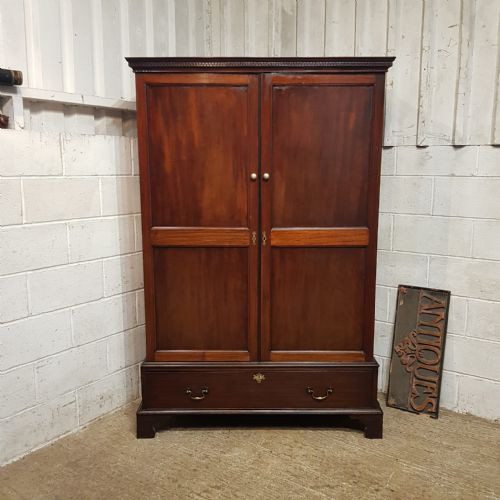


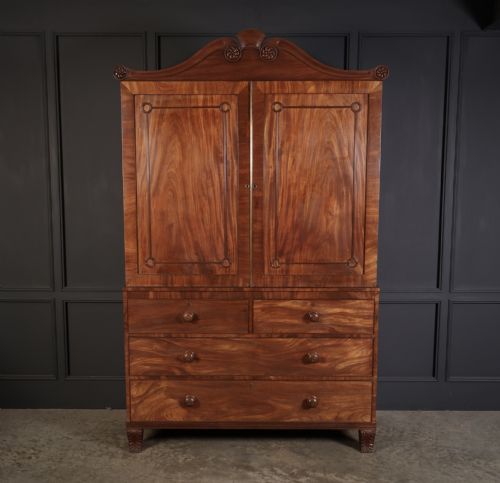
Regency Linen Press Cabinet
A regency linen press cabinet is a stately piece combining upper linen storage with lower drawers, offering timeless architectural presence for the bedroom.
Regency Linen Press Cabinet
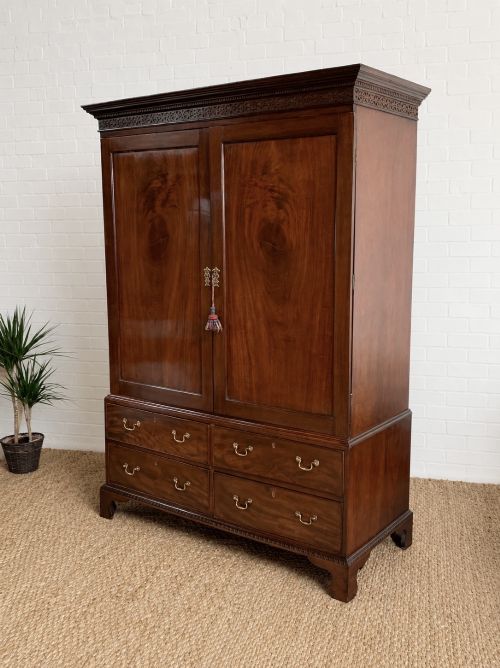
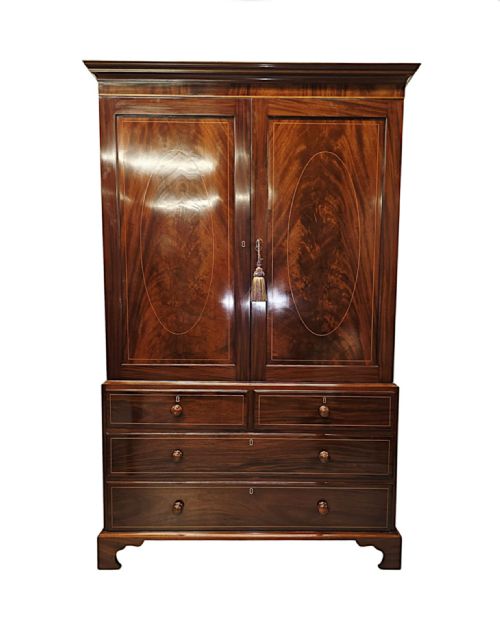
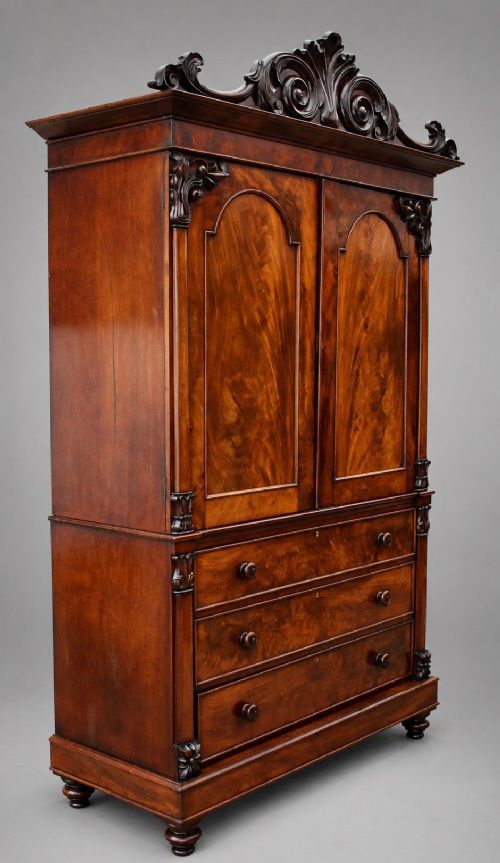
A regency linen press cabinet is a substantial storage item typically featuring a panelled upper section for folded textiles above a chest of drawers in the lower half. The examples found here span the broader Regency era, alongside related Georgian, William IV, and later revival interpretations.
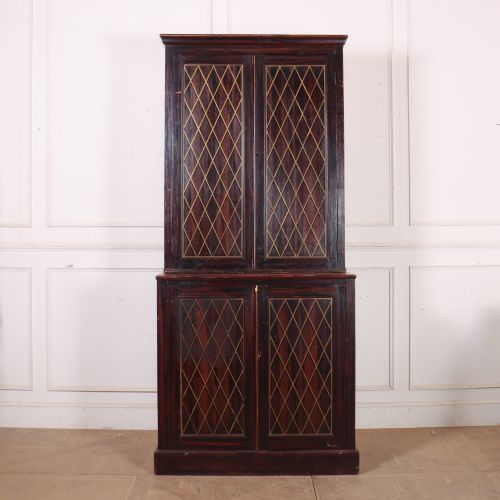
Buyers also encounter related press cupboards and miniature cabinets reflecting the cabinet-making standards of the nineteenth century. These forms provide practical clothes storage while serving as striking focal points in period interiors.
What varies in quality
The choice of timber figure largely separates standard examples from the finest pieces, with select cuts like flame mahogany and burr walnut commanding attention. The crispness of carved details, such as cornices and inlaid stringing, demonstrates the skill of the original workshop.
Proportion and scale also define superior items, from grand breakfront cabinets to finely balanced dwarf linen cupboards. Intact original brass mounts and well-figured secondary woods further distinguish the better-executed examples.
Several diminutive pieces appear as miniature cabinets, proving that cabinet-makers enjoyed crafting grand architectural statements on a diminutive scale.
Gillows
The Regency Linen Press Cabinet Glossary
- Linen press
- A tall storage cabinet traditionally used for holding household linen on sliding trays or shelves behind upper doors. The lower section typically contains functional drawers.
- Flame mahogany
- A distinct timber veneer showing a tongue-like flame figure caused by cutting across the branch junction. It was favoured by cabinet-makers for drawer fronts and door panels.
- Blind fretwork
- Carved ornamentation applied to a solid background so that the pattern appears pierced without cutting completely through the wood. It often decorates the cornice of nineteenth-century pieces.
- Breakfront
- A piece of furniture whose facade projects forward in the centre section. This layout creates visual depth and breaks up the linear mass of large wardrobes.
- Dwarf
- A descriptive term for a lower-than-average cabinet height, often found on compact presses designed for smaller dressing rooms. These items maintain full internal capacity despite their reduced vertical stature.
Regency Linen Press Cabinet: Frequently Asked Questions
What is a regency linen press cabinet?
A regency linen press cabinet is a large storage unit featuring upper cupboard doors that conceal sliding trays or hanging space, positioned above a chest of lower drawers. These pieces were designed to store folded household linen and garments before modern fitted wardrobes became common.
Today, they serve as versatile bedroom or hallway furniture, offering substantial storage capacity combined with classic architectural proportions.
How do I use a linen press today?
These cabinets adapt well to modern living as bedroom wardrobes or linen cupboards, with internal trays easily utilised for folded jumpers, bedding, or accessories. Lower drawers provide convenient space for smaller garments and daily items.
Placing the cabinet in a bedroom or dressing room allows the rich timber grains and classical lines to become a natural focal point of the interior.
How do I tell Regency from Georgian pieces?
Regency furniture typically exhibits bolder classical influences, often incorporating elements inspired by Greek and Roman design, alongside darker figured timbers like flame mahogany. Georgian pieces tend towards restrained classical proportions with straight lines and subtle bracket feet.
Overlaps frequently occur, particularly in transitional periods where cabinet-makers blended stylistic traits from consecutive reigns.
What does a dwarf linen press mean?
A dwarf linen press is a lower-height variant designed to fit rooms with restricted vertical space or lower ceilings, such as upper chambers. Despite the reduced stature, these cabinets retain the standard two-section format of upper doors over lower drawers.
They offer a more compact silhouette while maintaining the presence and storage functionality of full-sized presses.