
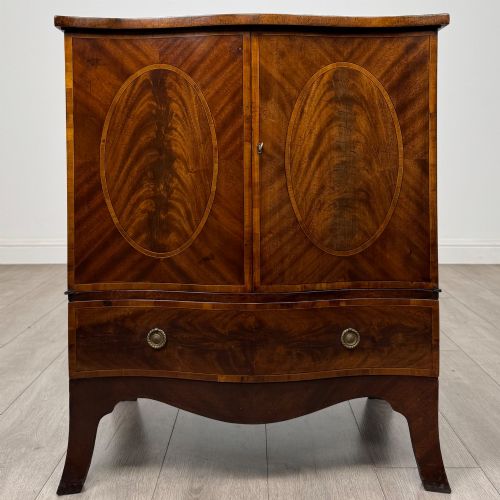
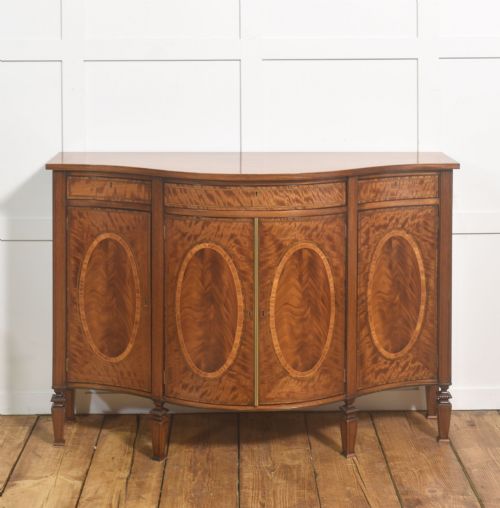
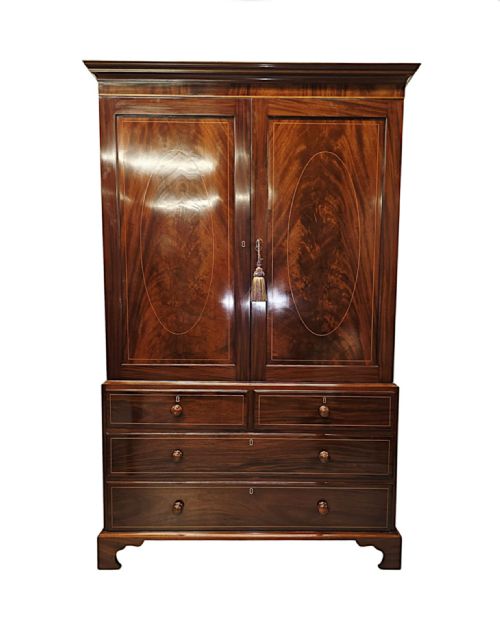
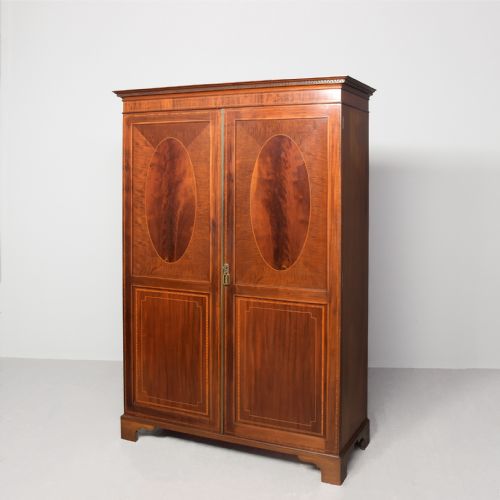
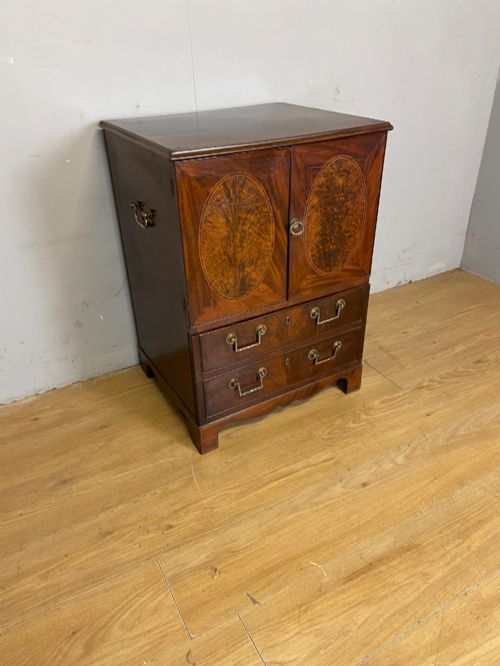


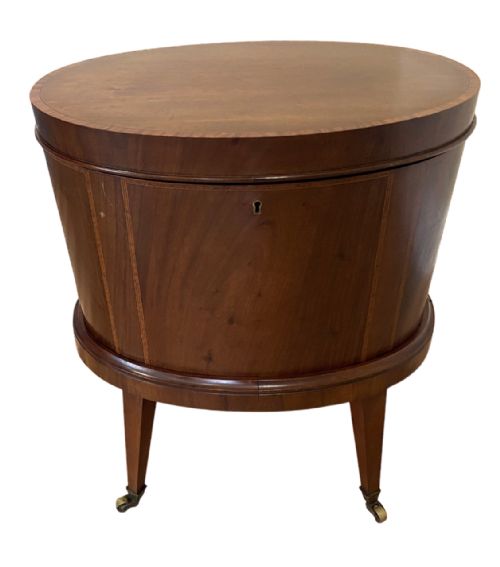


Georgian Oval Inlay Cabinet
A georgian oval inlay cabinet brings refined timber and crisp stringing into a room.
Georgian Oval Inlay Cabinet
When searching for a georgian oval inlay cabinet, collectors encounter a variety of storage forms including linen presses, side cabinets, and cellarettes spanning the Georgian, Regency, and Edwardian periods. These pieces serve as functional furniture while displaying decorative wood figure and contrasting borders.
The selection ranges from 18th-century George III pieces to later revival items made in the 19th and early 20th centuries. Formats vary from small tabletop spice cabinets to large floor-standing wardrobes and sideboards.
Mahogany forms the primary structure of these items, often paired with satinwood, harewood, and boxwood details. The construction methods reflect the cabinet-making standards of their respective eras, whether eighteenth-century workshops or Edwardian revivalists.
Materials and construction
Cabinet makers utilised solid mahogany and flame mahogany veneer over secondary timbers, building up robust carcases for linen presses and sideboards. The surfaces often highlight the rich grain of the wood through careful polishing.
Inlay work relied on contrasting timbers such as satinwood, harewood, and boxwood. Craftsmen cut thin strips and oval motifs to insert into recesses, creating sharp borders and central panels.
Cellarettes once kept wine safe from thirsty butlers.
Quality differences
Quality rests in the crispness of the inlay and the selection of the mahogany veneer. Finer examples display tightly figured flame mahogany and precise boxwood or satinwood stringing that remains flush with the surrounding timber.
Proportion and scale distinguish superior items, particularly in smaller pieces like spice cabinets and cellarettes where balance is essential. The integration of period brass hardware also signals the standard of the original workshop.
The Georgian Oval Inlay Cabinet Glossary
- Inlay
- A decorative technique where pieces of contrasting wood are fitted into the surface of a carcase. This method creates geometric borders or central oval motifs.
- Flame mahogany
- A veneer cut from timber where the grain creates a flickering, flame-like pattern. Makers selected these boards for prominent door and drawer fronts.
- Linen press
- A large storage furniture piece featuring upper doors enclosing sliding trays and lower drawers. They provide deep storage for textiles and garments.
- Cellarette
- A fitted cabinet designed for holding bottles securely. These containers often feature internal dividers and carry handles.
- Stringing
- Thin lines of contrasting wood inlaid into channels on cabinet surfaces. This linear detail defines the edges of panels and drawers.
Georgian Oval Inlay Cabinet: Frequently Asked Questions
How do I care for mahogany?
Keep these items away from direct sunlight and heat sources to prevent the wood and veneer from drying out.
Apply a traditional wax polish occasionally and buff gently with a soft cloth to maintain the surface sheen.
Where were these cabinets placed?
Larger presses and sideboards stood in bedrooms, dining rooms, and hallways for storing household textiles and provisions.
Smaller pieces like spice cabinets and cellarettes sat on tables or sideboards in entertaining rooms.
How can I tell the period?
Examine the secondary timbers, construction joints, and the style of the brass hardware to determine the date.
Revival pieces from the Edwardian era often show mechanical sawing marks and lighter interior woods compared to 18th-century originals.
What is satinwood used for?
Satinwood provides a pale, golden contrast to darker mahogany panels, often utilised in oval appliques and stringing.
Its bright grain draws the eye to specific focal points on cabinet doors and drawer fronts.