
Vintage Mahogany Buffet Server
These vintage mahogany buffet server pieces bring enduring timber grain and substantial dining room storage to a traditional interior.
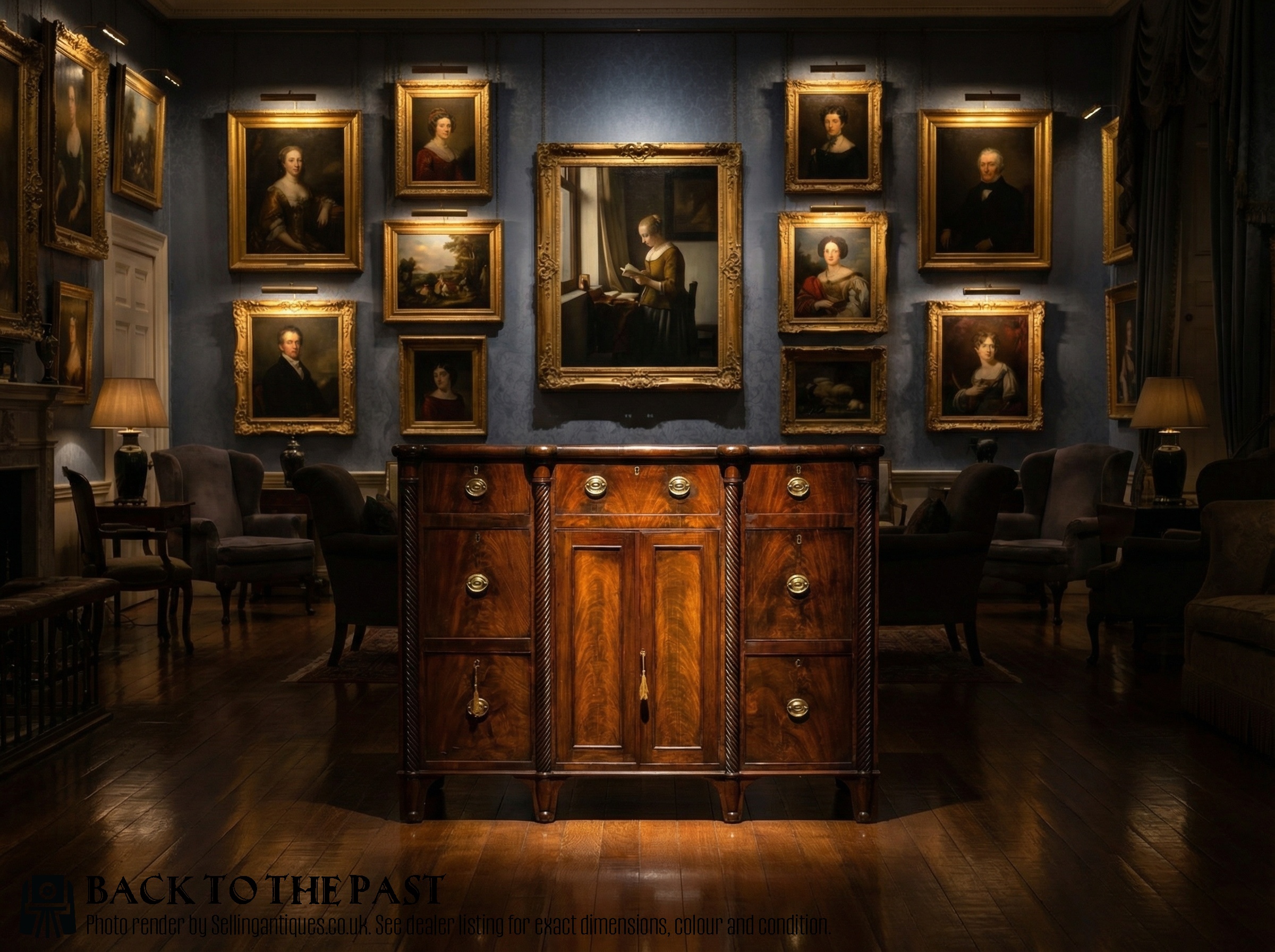
Vintage Mahogany Buffet Server
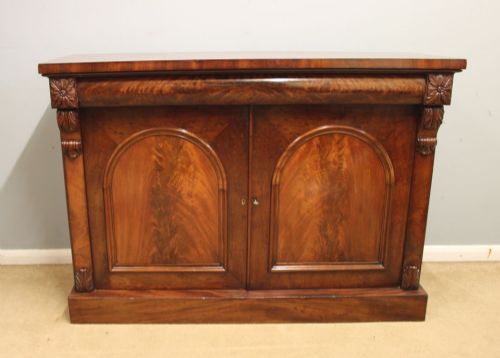
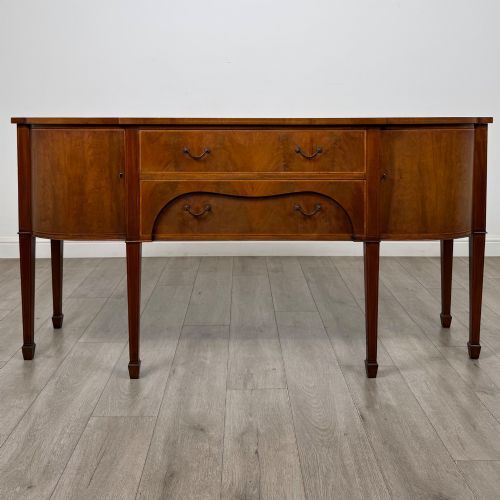
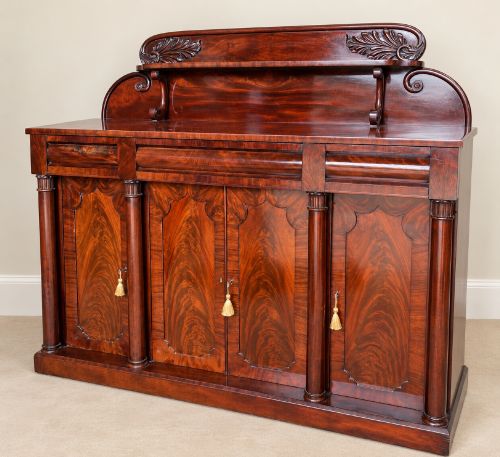
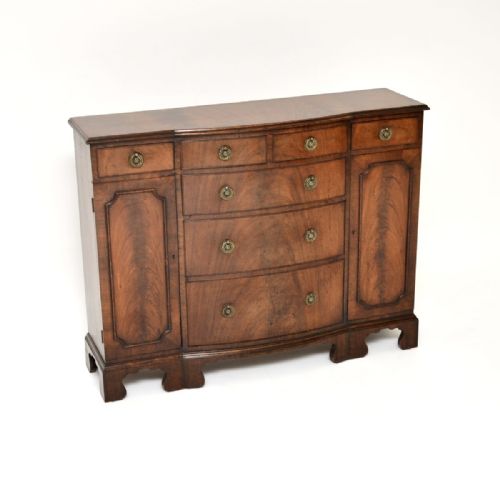
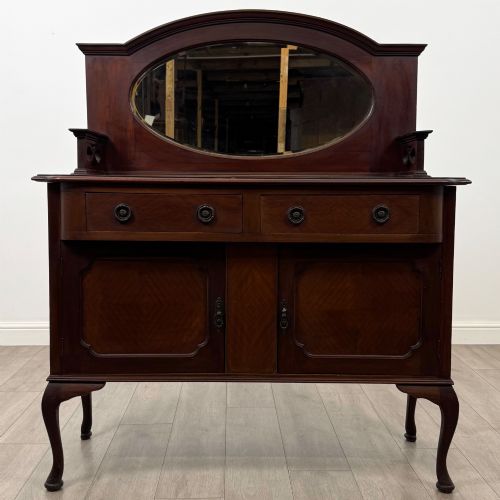
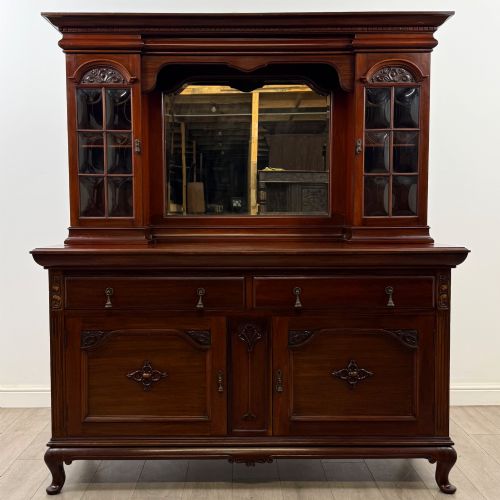
A vintage mahogany buffet server functions as a primary dining room storage piece, often appearing under designations such as sideboard, chiffonier, or console table. When searching for a vintage mahogany buffet server, buyers encounter forms stretching from Georgian originals to Edwardian and Victorian revivals.
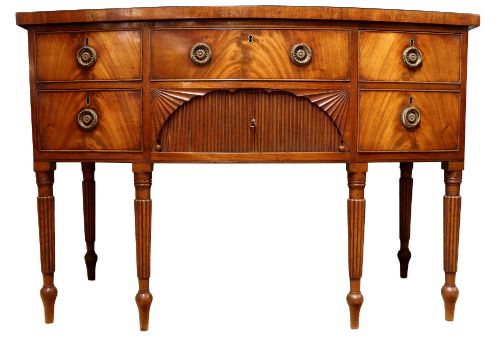
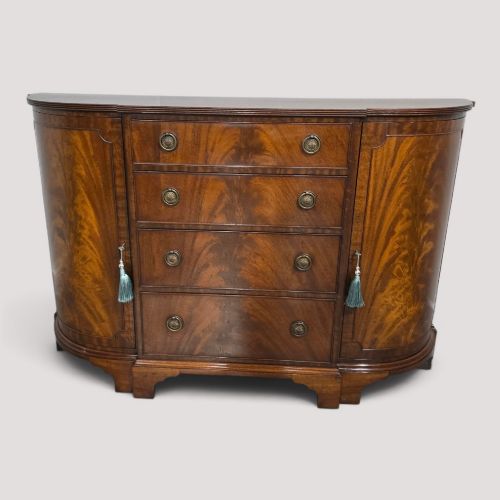
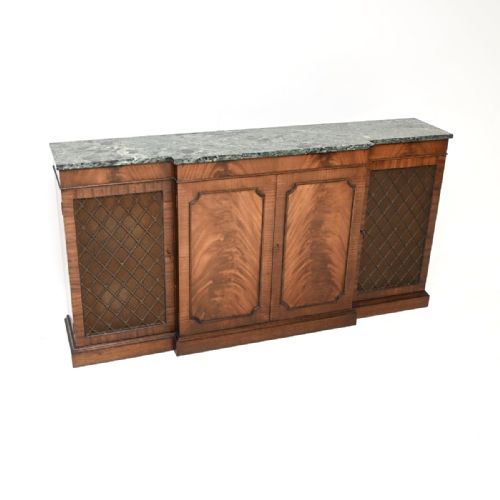
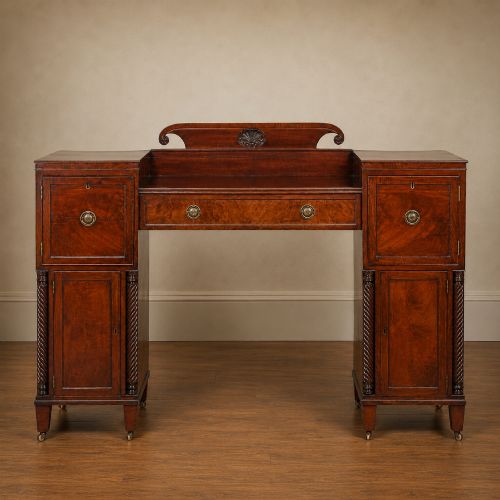
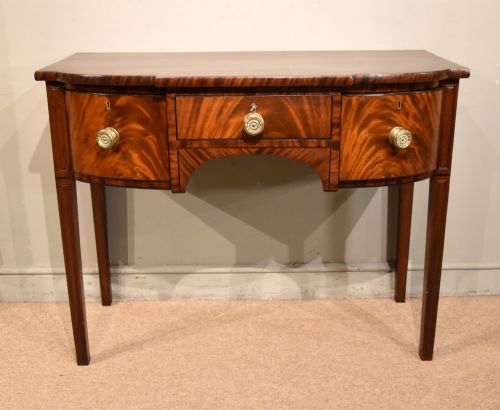
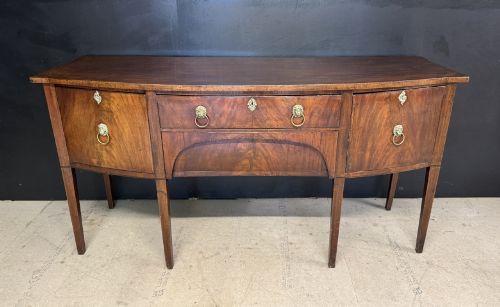
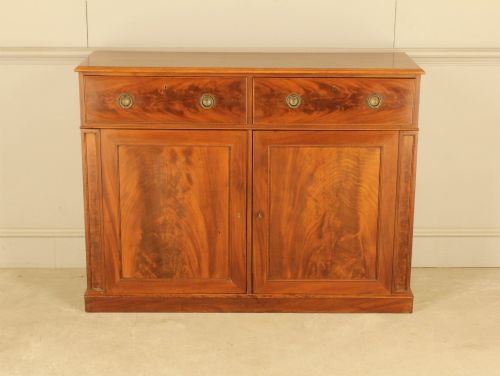
The selection spans straight-fronted carcases, bow-front designs, and breakfront layouts incorporating cupboards and drawers. Examples from the Regency and Georgian periods sit alongside Edwardian pieces and later revivals, offering diverse scales for period dining spaces.
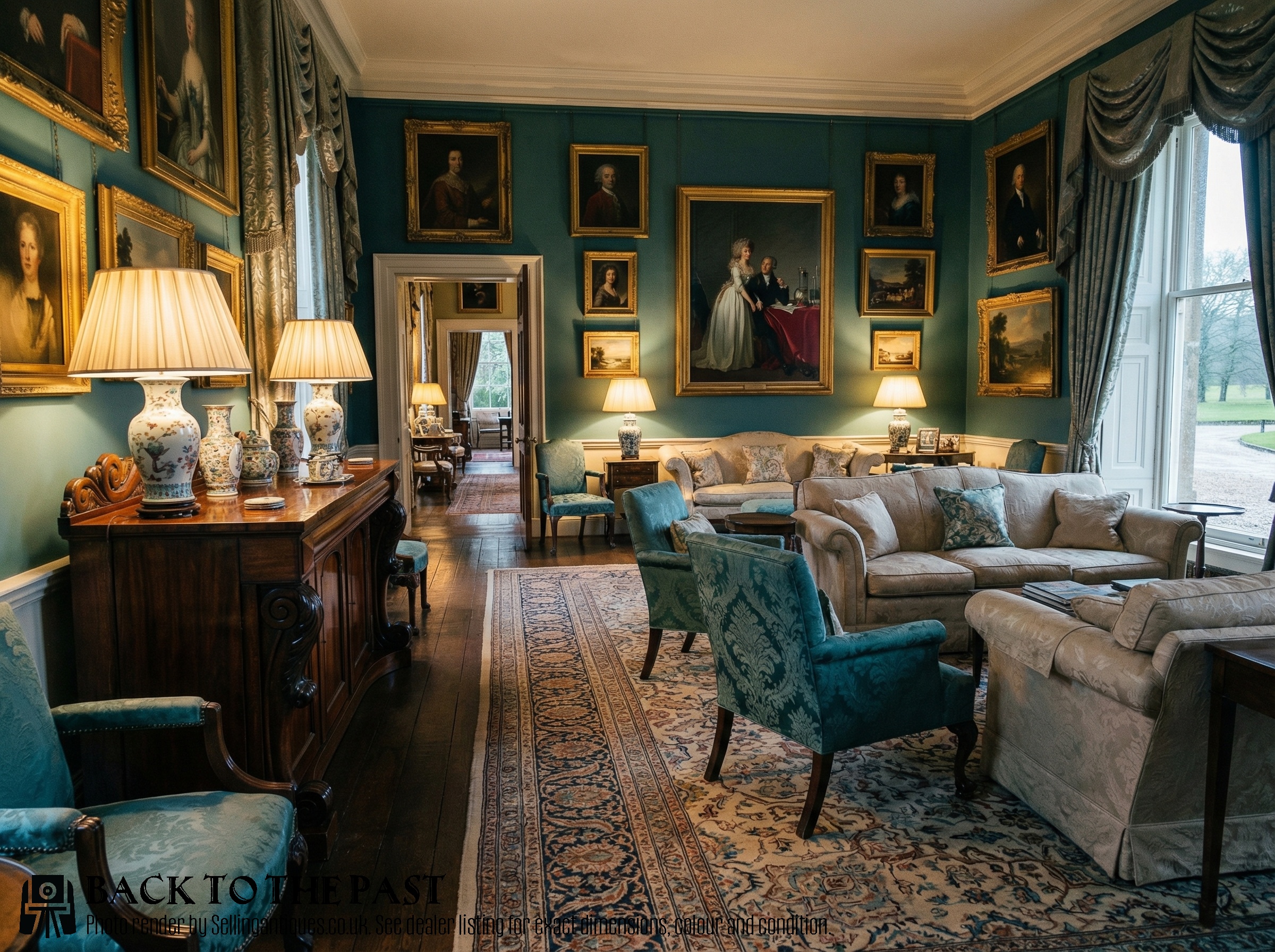
Materials and construction methods
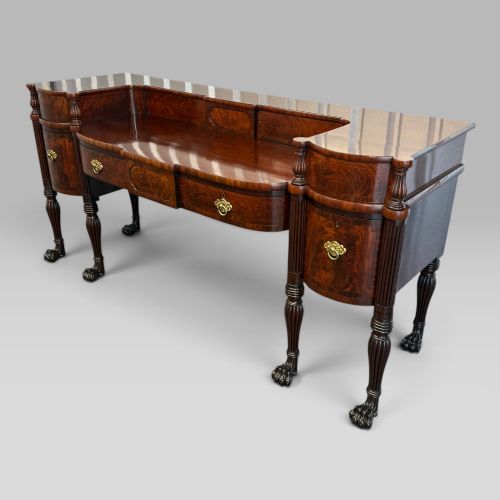
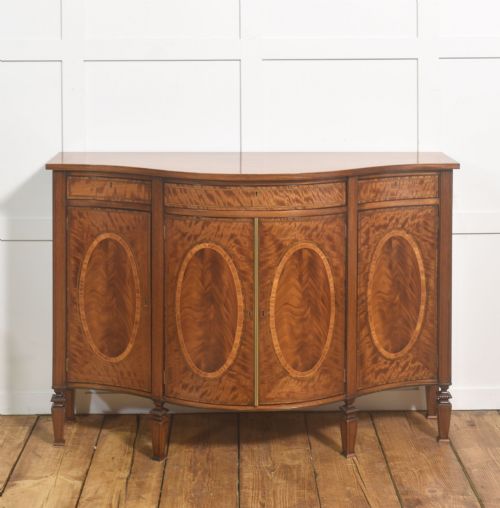
Cabinet makers utilised solid mahogany and flame mahogany veneers over secondary timbers, frequently enhanced by contrasting boxwood and satinwood stringing or marquetry inlay. Brass fittings such as lion paw feet, handles, and gallery rails accent the dense timber grain.
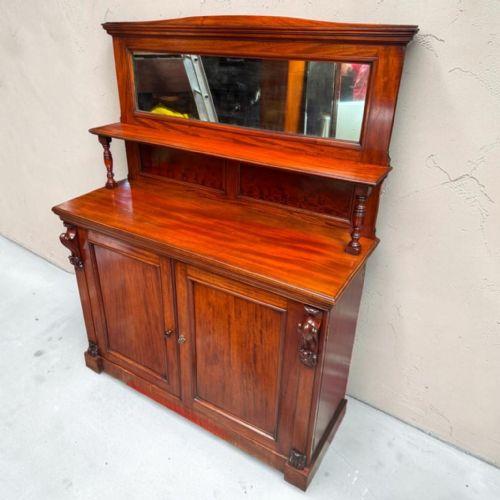
Structural elements include curved bow fronts, pedestals, and breakfront configurations built with traditional joinery. Occasional variations incorporate marble tops, glass panels, and mirror backs into the primary mahogany framework.
One unexpected Regency piece rests upon six carved lion paw feet, ensuring your dining room guards its floorboards with absolute feline dignity.
Distinctions in construction and design
Quality rests upon the selection of timber, particularly the depth of figure in flame mahogany veneers and the precision of inlaid satinwood or boxwood details. Superior execution shows in crisp carving around pedestal bases and lion paw feet.
Construction integrity defines the upper tier, where drawer linings, solid mahogany carcases, and original brass hardware remain intact. Lesser examples rely on simpler stylistic revivals with plainer secondary woods and reduced decorative subtlety.
M. D. Miller & Sons
The Vintage Mahogany Buffet Server Glossary
- Bow front
- A convex curved cabinet front that projects outward in a smooth sweep. This shape gained popularity during the Georgian and Regency periods.
- Flame mahogany
- A veneer cut from timber where the branches join the main trunk, creating a fiery, undulating grain pattern. Cabinet makers used this to catch the light on principal surfaces.
- Breakfront
- A piece of furniture where the central section projects forward from the flanking outer sections. This layout creates architectural depth on large dining room pieces.
- Chiffonier
- A compact sideboard or cabinet featuring shelves or a mirror back above the main surface. It served practical storage and display functions in Victorian rooms.
- Pedestal sideboard
- A form consisting of two distinct pedestals connected by a central counter or table section. These pieces often date from the Regency and Georgian eras.
Vintage Mahogany Buffet Server: Frequently Asked Questions
Where do I place a buffet server?
These pieces traditionally anchor the dining room wall, providing a surface for serving food and storing tableware. Their substantial depth requires a room with adequate clearance behind dining chairs.
Smaller console or cupboard variants also function effectively in hallways or drawing rooms where surface area and enclosed storage are required.
How do I care for mahogany surfaces?
Maintenance requires regular dusting with a soft, dry cloth to protect the polished timber finish from abrasive particles. Avoid placing the wood in direct sunlight or near heat sources to prevent the veneers from drying out.
Application of traditional beeswax helps nourish the grain and preserves the lustre of the antique polish over decades of use.
What distinguishes Georgian from Edwardian pieces?
Georgian pieces date from the eighteenth and early nineteenth centuries, featuring hand-cut joinery and proportions driven by neoclassical design principles. Timber selection and structural integrity reflect the primary period of manufacture.
Edwardian items and later revivals date from around 1900 onward, frequently reinterpreting earlier Sheraton or Chippendale styles with contemporary workshop methods.
What is the difference between a buffet and a sideboard?
The terms often overlap in marketplace listings, though buffets traditionally emphasise serving functions with lower profiles. Sideboards frequently incorporate more extensive cupboard and drawer arrangements for dining storage.
Both forms utilise matching mahogany construction, brass hardware, and similar decorative inlays across the various periods represented.