




Vintage Mahogany Breakfront
A vintage mahogany breakfront brings architectural presence to a room, offering deep sections and disciplined proportions that house books or silver with quiet authority.
Vintage Mahogany Breakfront
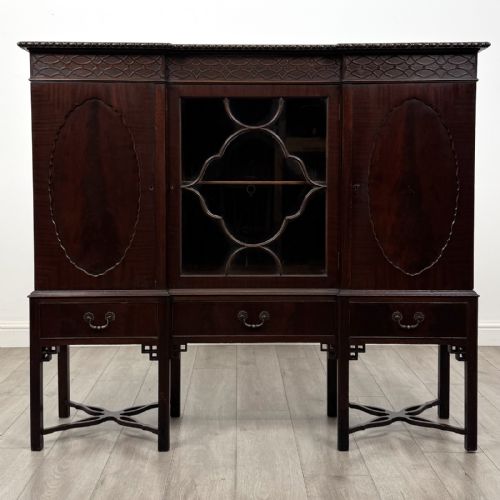
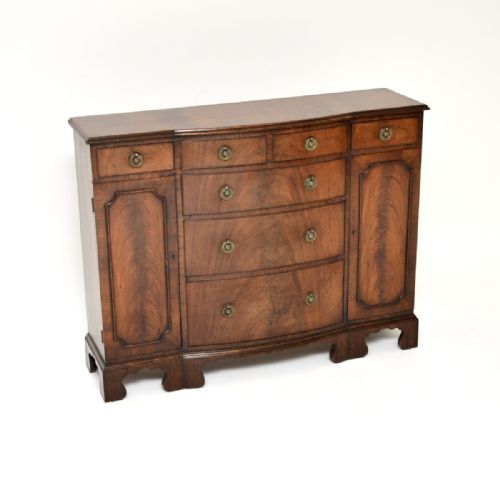
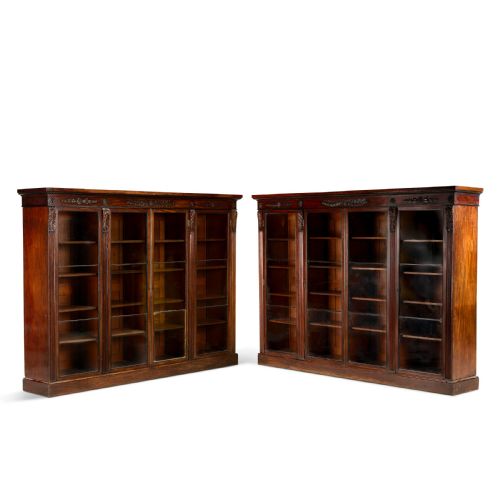
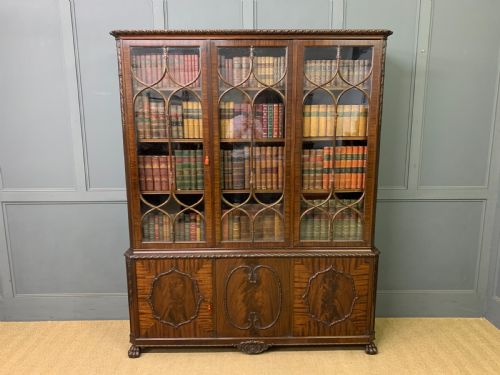
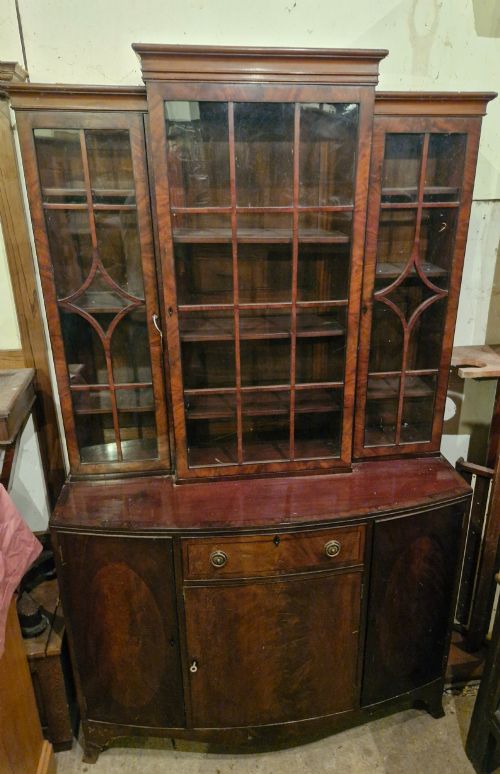
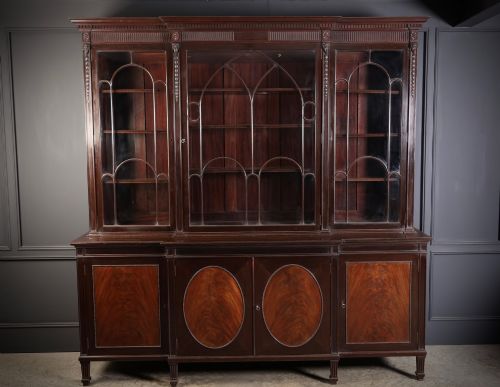
When you search for a vintage mahogany breakfront, you are looking at substantial case furniture defined by a central section that projects forward from flanking wings. The pieces gathered here stretch from the late eighteenth century through to the early decades of the twentieth, taking the form of bookcases, sideboards, and wardrobes rather than a single functional type.
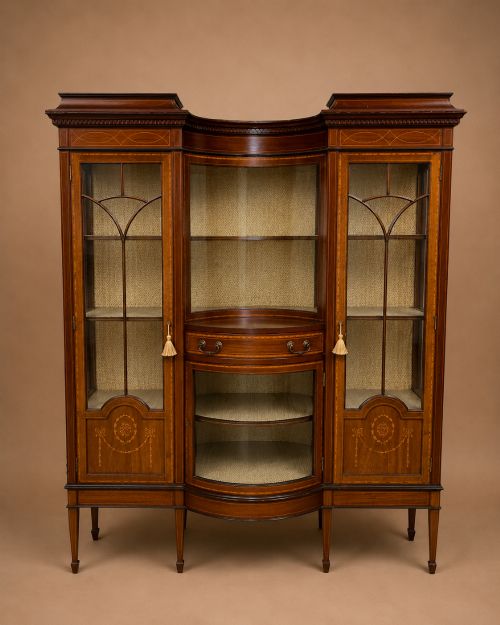
The most common examples you will meet on this page date from the Edwardian era and the early nineteen-hundreds, often executed in revived Georgian or Chippendale styles. These later iterations borrow the grand scale of earlier centuries while adapting to domestic spaces through glazed doors and fitted shelving.
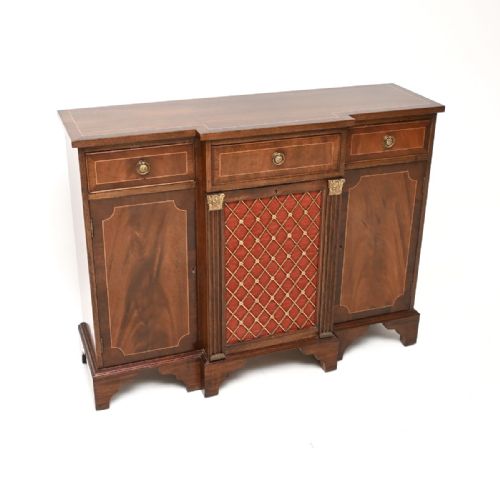
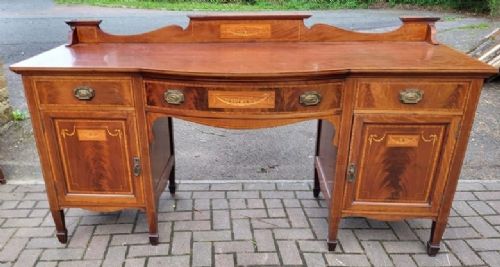
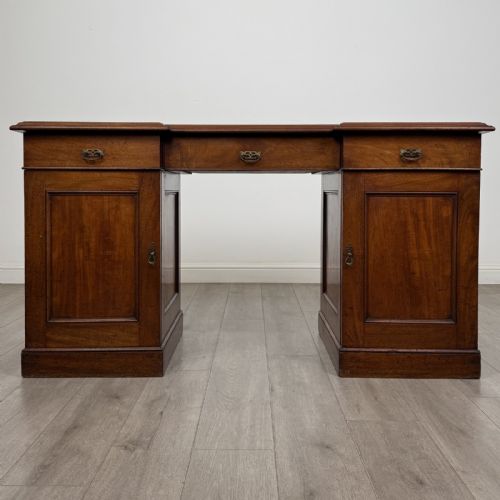
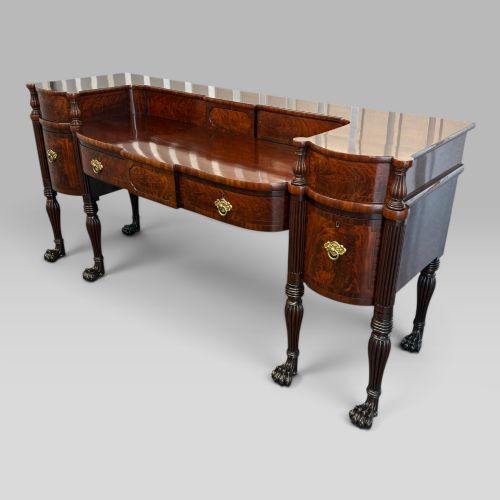
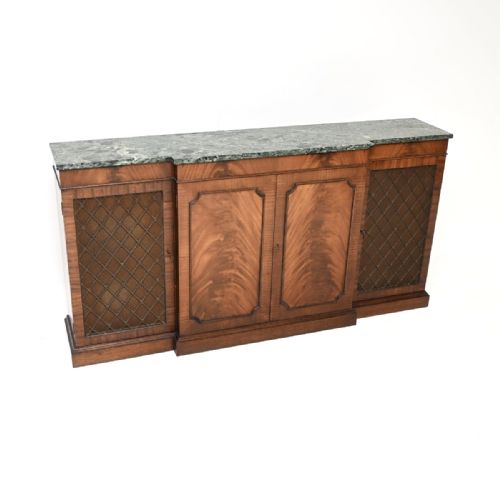
Beyond bookcases, the evidence shows the breakfront profile applied to sideboards and cabinets, where the stepped facade breaks up the long line of a wall. Whether built in the eighteen-hundreds or the nineteen-thirties, each piece uses the projecting central section to create depth and shadow.
How they were made
The makers of these pieces relied on solid timber and rich veneers, frequently selecting flame mahogany to draw the eye across large cabinet doors and drawer fronts. Satinwood inlay provides sharp contrast against the deep reddish-brown grain, forming geometric borders or neoclassical motifs.
Structural integrity depended on heavy timber frames, often fitted with glass panes in the upper sections and supported by brass hardware or carved feet. Where sideboards and bookcases meet the floor, details such as lion paw feet or plinth bases anchor the substantial weight of the timber.
Vintage Mahogany Breakfront Retail Price Guide 2026
Typical asking prices for vintage mahogany breakfront among the pieces listed under this phrase on Sellingantiques today, from the lower quarter to the upper quarter. They describe what is for sale here now, not the wider market.
Bookcases, sideboards, and display cabinets dominate the forms, reflecting the enduring utility of large storage furniture in period homes.
What varies in quality
Quality reveals itself in the selection of the timber and the handling of the veneer, where the grain matches seamlessly across multiple doors rather than appearing patched together. Higher grade pieces show meticulous attention to the alignment of satinwood inlay and the crispness of carved mouldings.
The internal architecture of the piece also separates standard production from finer examples, visible in the thickness of the adjustable shelving and the smoothness of drawer construction. Glazing bars that are slender and hand-mitred indicate a higher standard of cabinet work than heavy, utilitarian framing.
Lamb And Co
The Vintage Mahogany Breakfront Glossary
- Breakfront
- A piece of furniture whose facade is divided into sections, with the centre portion projecting forward beyond the flanking wings.
- Flame mahogany
- A highly figured wood veneer showing a distinct flame-like pattern caused by the way the timber is cut from the log.
- Compactum
- A large wardrobe combining hanging space with internal drawers, shelves, and sliding trays for comprehensive clothes storage.
- Sheraton Revival
- A late nineteenth and early twentieth century style drawing on the lighter, neoclassical designs of the seventeen-eighties.
- Satinwood
- A lustrous, yellowish timber native to India and Ceylon, prized for contrasting stringing and inlay work on dark cabinets.
Vintage Mahogany Breakfront: Frequently Asked Questions
How do I date a mahogany cabinet?
Dating involves examining the construction methods of the carcase, the choice of secondary timbers, and the style of the handles and feet. Regency and Georgian pieces display hand-cut dovetails and native timber framing, whereas Edwardian and later revival items often show standardised manufacturing techniques.
Secondary characteristics such as the depth of the mahogany colour and the type of glass used in the doors also help establish the era of manufacture.
Where should I place a large breakfront?
These substantial pieces require a generous wall and sufficient room to step back and appreciate their proportions. Dining rooms and drawing rooms suit them best, where their height and depth can anchor the scale of the interior.
Direct sunlight should be avoided to protect the polish and prevent the mahogany veneer from fading or drying out over time.
How do I care for antique mahogany?
Maintenance requires keeping the timber away from extreme temperature fluctuations and direct heat sources that cause wood to split. A light application of quality wax preserves the lustre of the French polish without building up a sticky residue.
Dusting with a soft, dry cloth prevents particulate accumulation in the carved details and around the brass hardware.