
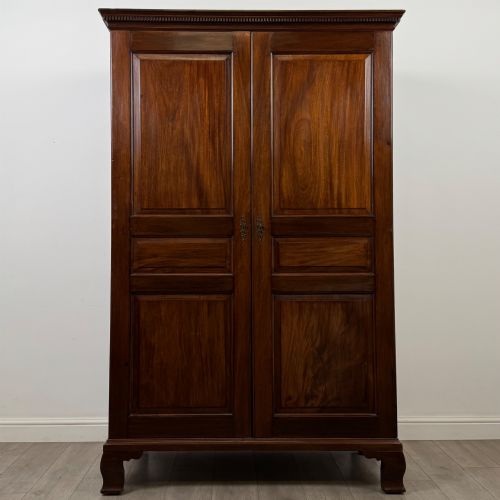
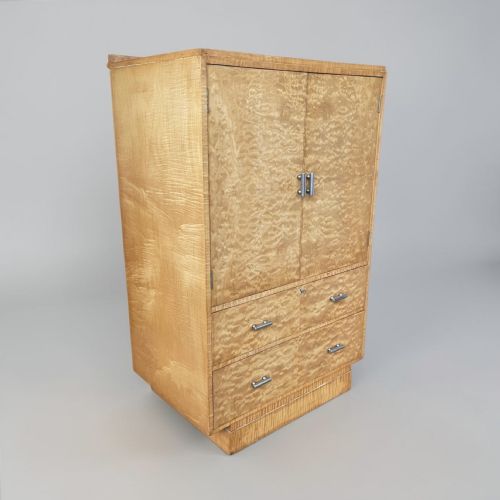
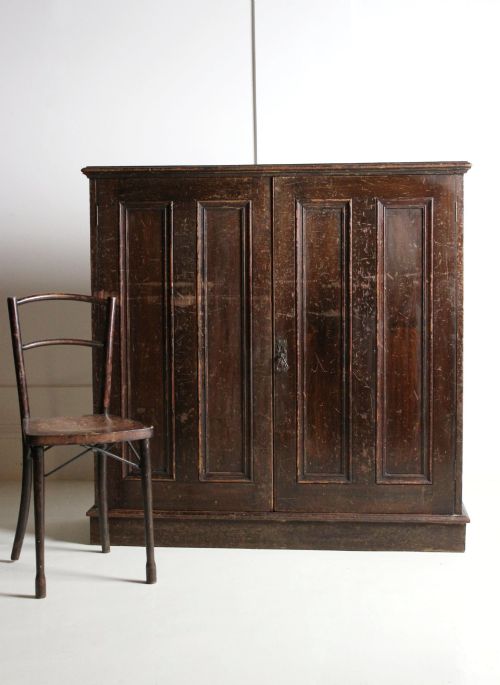
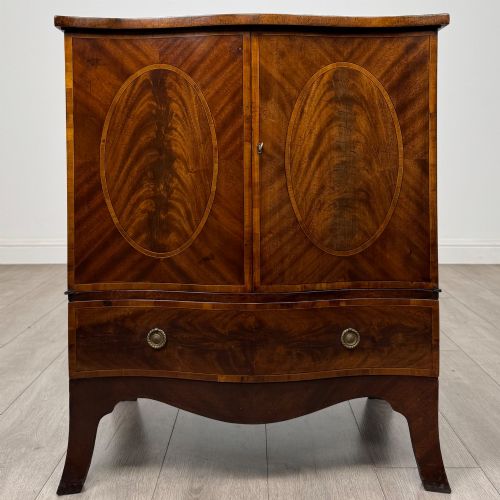
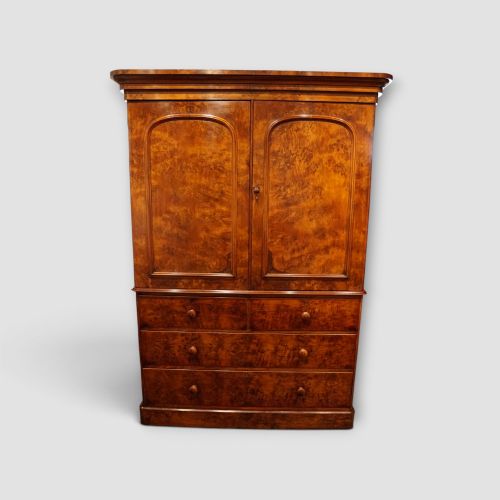
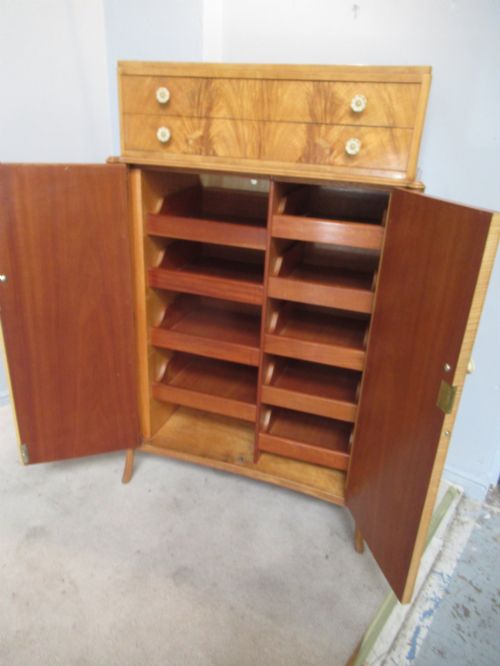
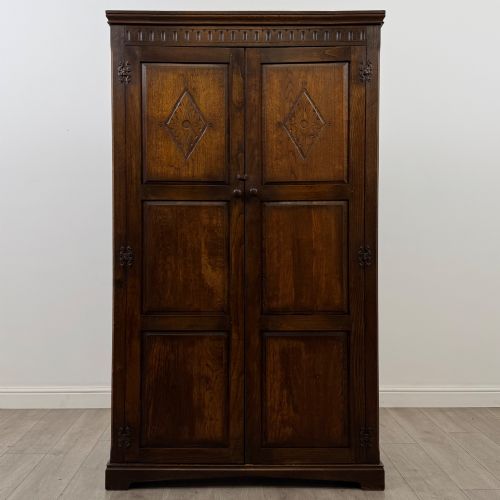
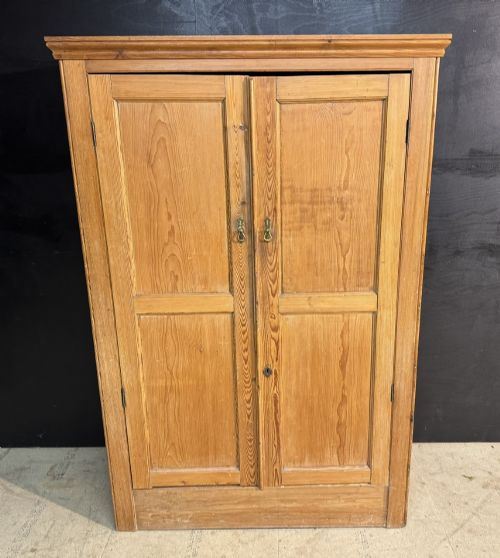
Vintage Linen Press Cupboard
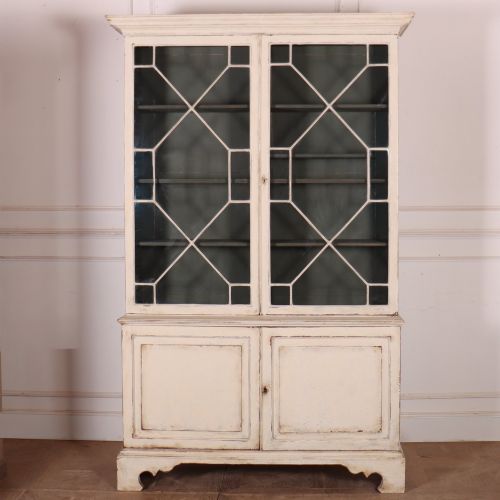
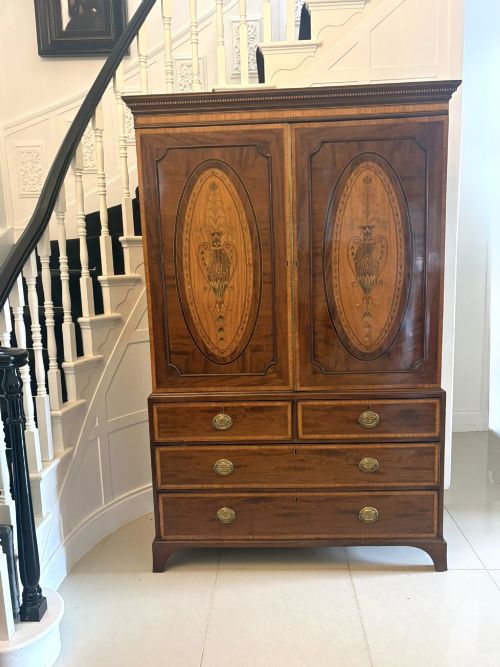
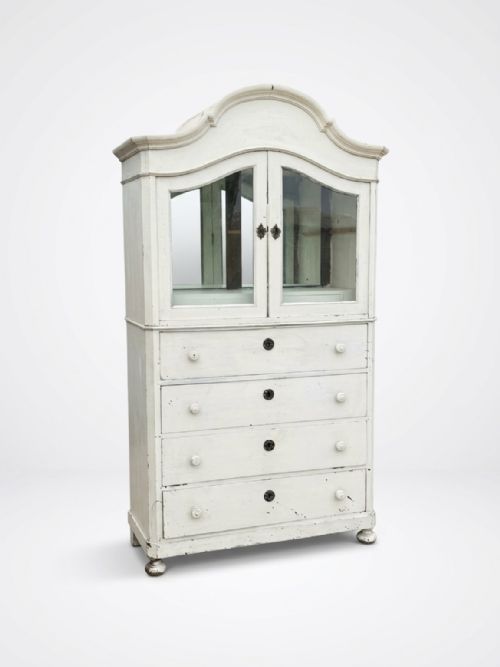
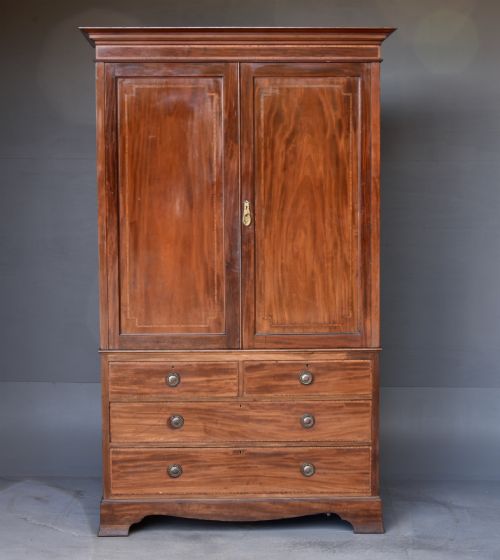
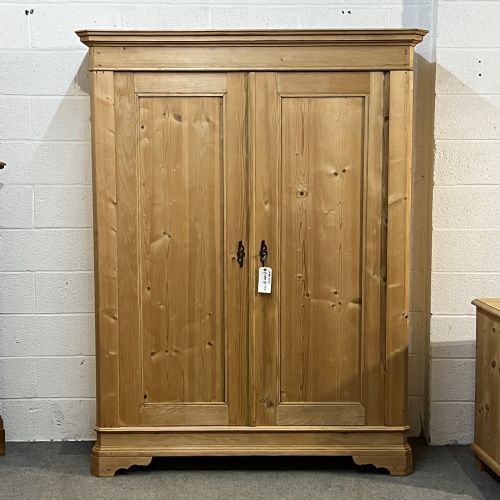
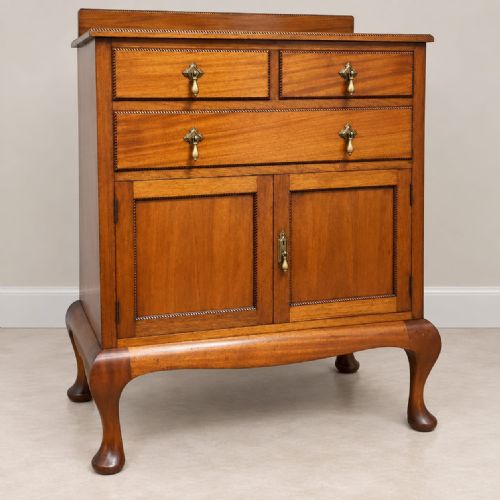
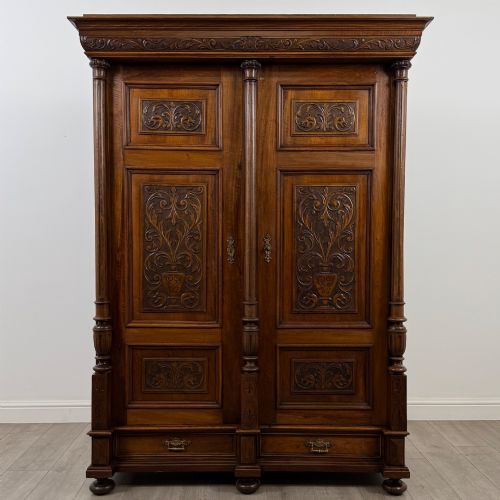
A vintage linen press cupboard provides substantial architectural presence and deep storage, housing textiles and garments with time-earned timber character.

Vintage Linen Press Cupboard
A vintage linen press cupboard combines upper cabinet storage with lower drawer space, originating primarily across the nineteenth and early twentieth centuries. These large storage pieces appear frequently in mahogany, pine, and oak, reflecting both formal period tastes and utilitarian country workshops.
Buyers encounter distinct regional and stylistic variations, ranging from Georgian mahogany satinwood inlaid examples to painted French pine housekeepers cabinets. Edwardian wardrobes, tallboys, and compactum variants also populate the selection, offering specialised internal shelving and hanging space.

Materials and Construction
Cabinet makers utilised solid timbers such as mahogany, oak, and pine alongside decorative veneers like burr walnut and satinwood. Brass hardware, iron fittings, and glass doors complement the structural joinery, while painted finishes occasionally incorporate scumble work.
Traditional construction relies on framed panels and dovetailed drawer boxes designed to support heavy household textiles. Carved mouldings, blind fretwork cornices, and inlaid banding define the aesthetic execution across different periods.
Several cupboards retain remarkably vibrant blue paint and scumble faux oak finishes from the 19th century.
Quality and Execution
The degree of refinement in timber selection and veneer matching distinguishes standard utility furniture from high workshop output. Finer examples display carefully chosen flame mahogany, precise satinwood inlay, and crisply carved cornices.
Structural integrity depends on the original thickness of the timber and the retention of fitted interior shelving or sliding trays. Surface treatments range from patinated original polish to later painted coats.
maples & co·Harris Lebus
The Vintage Linen Press Cupboard Glossary
- Linen press
- A tall cabinet specifically designed with sliding trays or shelves in the upper section for storing folded sheets and garments. Lower drawers typically provide additional storage for larger items.
- Compactum
- A fitted wardrobe combining hanging space, shelving, and internal drawers within a single carcass. This form maximises storage efficiency in smaller bedroom spaces.
- Scumble paint
- A decorative surface technique applied to imitate natural wood grain using translucent layers of glaze over a prepared base colour. It appears frequently on nineteenth-century utility pine furniture.
- Blind fretwork
- Carved decorative geometric or interlaced patterns applied to a flat wooden surface without piercing right through. This ornamentation often decorates the cornice of formal mahogany presses.
- Tallboy
- A tall chest of drawers standing on a base section or combining multiple stacked drawer tiers. These vertical units provide significant capacity with a compact floor footprint.
Vintage Linen Press Cupboard: Frequently Asked Questions
What is a linen press?
A linen press is a tall storage cabinet traditionally built to house folded textiles on internal sliding shelves or trays. The lower section typically incorporates a chest of drawers for garments and linens.
These pieces served a central role in domestic organisation before fitted wardrobes became standard in modern homes. Their dual configuration offers deep storage capacity while maintaining a formal architectural facade.
How do I date a cupboard?
Dating relies on examining construction methods, timber choices, and stylistic ornamentation relative to known historical periods. Georgian and Victorian examples often feature hand-cut dovetails and dense native hardwoods.
Later Edwardian and 1930s pieces introduce machine-assisted joinery, alternative veneers, and internal fittings adapted for modern wardrobe storage. Comparing hardware types and decorative motifs provides further chronological clues.
Where should I place one?
These tall storage units require substantial wall space and adequate clearance for opening large cabinet doors and pulling out deep drawers. Bedrooms and dressing rooms provide natural settings for their original storage purpose.
Living areas and hallways also accommodate them well, provided the room height and depth can support their imposing architectural scale. Ensuring level flooring helps maintain proper door alignment.
Can I use it for hanging clothes?
Many compactum wardrobes and certain press variations include internal hanging rails alongside traditional shelving compartments. Some pieces retain their original configuration of sliding trays rather than hanging space.
Converting a traditional linen press to accommodate modern coat hangers sometimes requires minor internal adjustments depending on the internal depth. Checking the internal dimensions ensures compatibility with modern garment storage needs.