




Vintage Lead Crystal Goblet
These vintage lead crystal goblet pieces are heavy, brilliant drinking vessels built for toast and table, prized for their clarity and tactile weight.
Vintage Lead Crystal Goblet
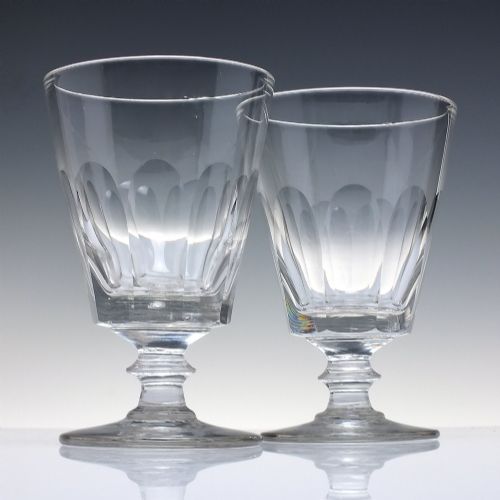
When you search for vintage lead crystal goblet, you are looking at drinking vessels that range from eighteenth-century table glass to nineteenth-century rummers and Edwardian crystal. The pieces available across this selection span Georgian, Victorian, Regency, and Edwardian periods, taking the form of wine glasses, ale glasses, rummers, and cordial glasses.
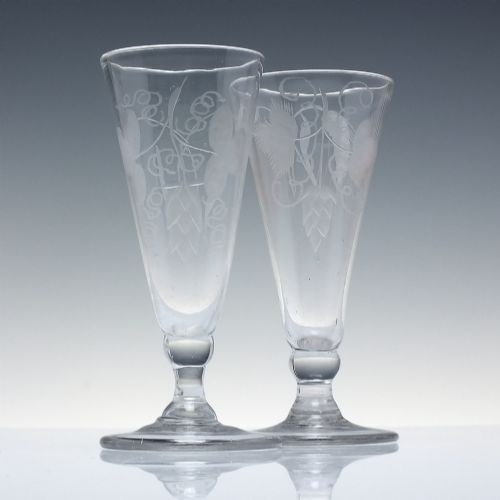
You will encounter heavily cut lead crystal alongside delicate air twist stems and plain bowls. The forms shift from small cordial glasses to large serving rummers engraved with hops and barley or historical scenes like the Sunderland Bridge.
How they were made
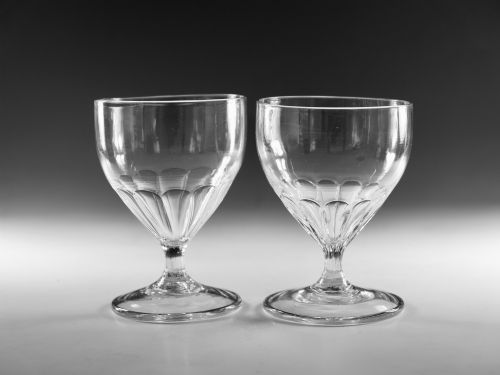
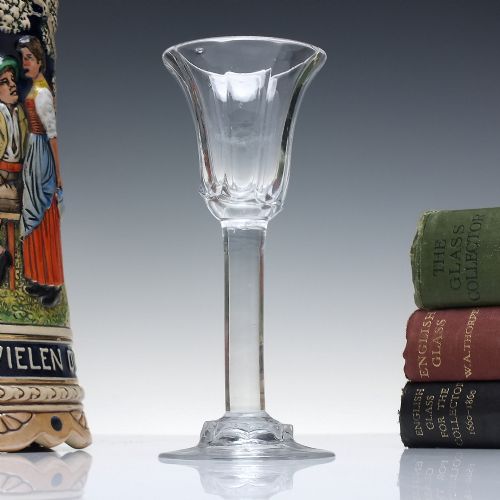
These vessels rely on lead glass, flint glass, and lead crystal, shaped through hand-blowing and finished with decorative wheel-cutting or opaque enamel. Glassmakers manipulated molten material to form ribbed ogee bowls, faceted stems, and wide foot bases.
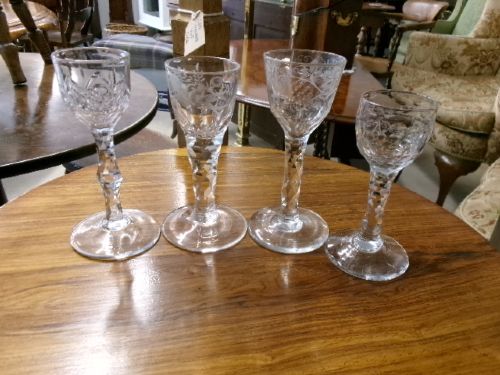
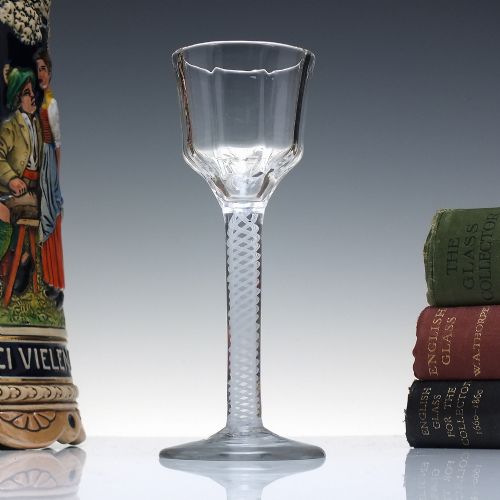
Techniques such as air twists, mercury twists, and double series opaque twists introduce internal patterns within the stems. Surface decoration includes detailed engraving of botanical motifs like hops and barley, alongside etched panels.
Listings include pieces spanning from the eighteenth century through to the Edwardian period, utilising lead crystal, flint glass, and opaque enamel.
What varies in quality
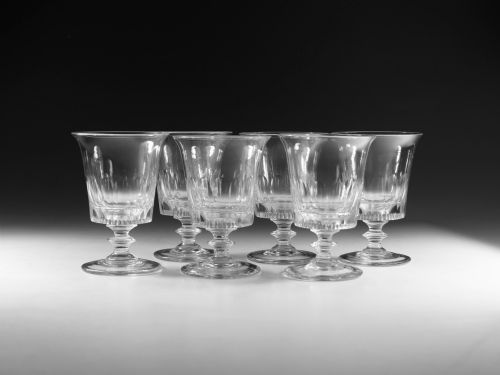
Quality rests in the precision of the glass cutting, the clarity of the lead crystal, and the balance of the stem against the bowl. Crisp facets catch the light sharply, while softer edges indicate heavy wear or less precise wheel work.
The complexity of internal stem formations, such as fine air twists or intricate double series opaque twists, separates standard vessels from finer examples. Proportions between the wide foot base, stem, and bowl dictate the visual harmony of the piece.
The Vintage Lead Crystal Goblet Glossary
- Rummer
- A large drinking glass popular in the eighteenth and nineteenth centuries, typically used for ale, beer, or wine. These sturdy vessels often feature wide bowls and thick stems.
- Air twist
- A decorative stem formation created by trapping elongated bubbles within the molten glass before drawing and twisting the stem. This technique produces delicate spiralling threads inside the glass.
- Ogee bowl
- An S-profile bowl curving outward at the rim and inward toward the base. This shape was common on eighteenth-century wine and ale glasses.
- Flint glass
- A heavy, brilliant type of glass developed with lead oxide to increase refractive index and weight. It forms the basis of much historic British table crystal.
- Facet stem
- A stem polished with flat planes that reflect light from multiple angles. These geometric cuts appeared frequently on late eighteenth-century and nineteenth-century goblets.
Vintage Lead Crystal Goblet: Frequently Asked Questions
What is a rummer used for?
Rummers served as heavy drinking vessels for ale, beer, and wine during the eighteenth and nineteenth centuries. Their generous capacity made them suited for communal toasts and hearty tavern meals.
Today, collectors use them as water goblets or display pieces. Their sturdy build makes them practical for occasional table use.
Are these glasses safe for drinking?
Historic glassware can be used for drinks, provided the material is sound and free from structural cracks. Lead crystal was widely used for centuries to serve wine and ale.
Hand washing in lukewarm water is essential to protect the historic glass. Dishwashers should be avoided entirely to prevent scratching and thermal shock.
What makes an air twist stem?
Makers trapped small air bubbles inside the molten metal and pulled the glass into a rod. Twisting the rod while hot stretched the bubbles into fine spiralling threads.
This intricate method required great skill from the glassblower. Single and double series twists denote the complexity of these internal patterns.