


Facet Cut Glass Stemware
Facet cut glass stemware brings tactile brilliance to the table, offering drinking vessels shaped by careful hand-polishing across centuries.
Facet Cut Glass Stemware
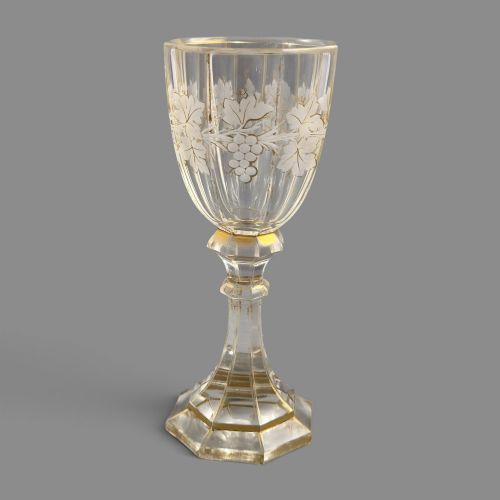
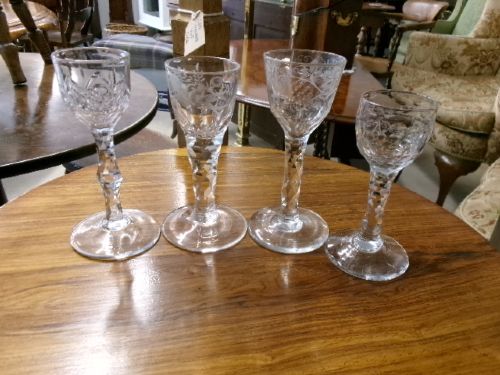
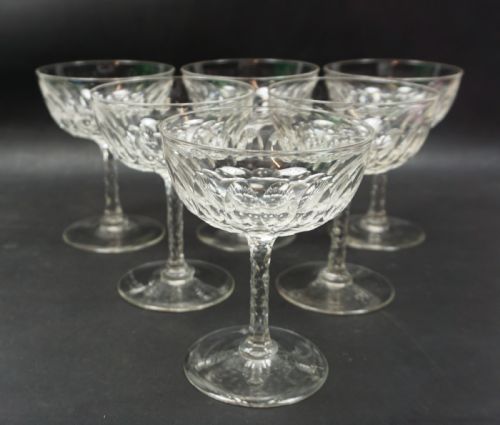
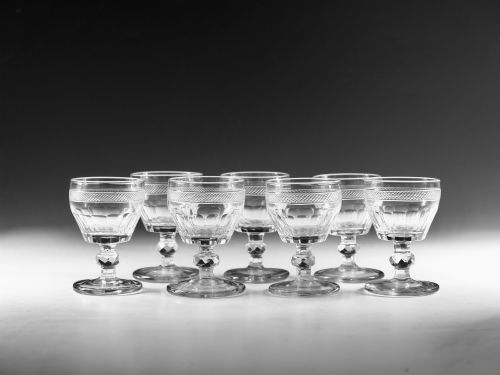
When you search for facet cut glass stemware, you encounter drinking vessels defined by geometric stems and polished bowls dating from the eighteenth century to the early twentieth century. The selection includes wine glasses, champagne glasses, port glasses, cordial glasses, goblets, and ale flutes spanning Georgian, Victorian, Edwardian, and Bohemian periods.
You are most likely to meet Georgian drinking glasses and nineteenth-century English or Bohemian examples on this page. These pieces range from simple cordial glasses with faceted stems to elaborately engraved goblets bearing gilding or historical commemoration.
Materials and construction
Makers utilised lead crystal, lead glass, and clear glass as the primary medium for these vessels, allowing deep light refraction through the material. Artisans shaped the bowls and stems before applying wheel-cutting techniques to create flat facets along the glass.
Surface ornamentation on these pieces frequently includes wheel engraving of floral motifs such as hops and barley, alongside gilding and gold leaf accents. Certain items combine plain bowls with multi-faceted stems above wide foot bases.
Listings feature lead crystal, clear glass, and lead glass adorned with gilding and gold leaf across Georgian, Victorian, and Edwardian periods.
Assessing quality and character
The distinction between standard examples and exceptional pieces rests upon the crispness of the facet cutting and the clarity of the metal. Sharp, clean angles on the stem and superior transparency in the lead crystal indicate a higher standard of craftsmanship.
Artistic execution of engraved decoration and the presence of supplementary embellishments such as gold leaf or gilding elevate individual items. The balance of the proportions between the bowl, the faceted stem, and the wide foot base also marks the distinction.
Moser·James Giles
The Facet Cut Glass Stemware Glossary
- Facet cut
- A method of cutting flat planes into the surface of glass to catch and reflect light. This technique is particularly prominent on the stems of drinking vessels from the eighteenth and nineteenth centuries.
- Lead crystal
- A high-clarity glass containing lead oxide, which increases weight, brilliance, and workability for cutting. It serves as the primary material for many fine drinking glasses.
- Champagne coupe
- A wide, shallow-bowled glass designed for sparkling wine, often featuring a decorative stem. These vessels appear in nineteenth-century English drinking sets.
- Römer goblet
- A traditional large drinking goblet originating in continental Europe, often characterised by applied decoration and rich colour or gilding. Bohemian makers produced notable examples during the nineteenth century.
- Ale flute
- A tall, slender glass intended for serving ale, frequently decorated with engraved botanical motifs. Eighteenth-century versions often incorporate faceted stems.
Facet Cut Glass Stemware: Frequently Asked Questions
What is facet cut glass stemware?
These pieces are historical drinking vessels featuring stems shaped with flat, polished geometric cuts designed to reflect light. They encompass forms such as wine glasses, cordials, and goblets.
Produced across the eighteenth, nineteenth, and early twentieth centuries, they represent traditional glassmaking styles from England and Bohemia.
How were these glasses used?
They served functional roles for consuming wine, port, sherry, champagne, and ale during formal dining and social occasions. Specific vessels matched particular drinks according to capacity and bowl shape.
Some pieces were also created as commemorative items for royal coronations or political sympathies, serving decorative or symbolic roles.
How do I date facet stem glasses?
Dating relies on stylistic clues such as the profile of the bowl, the form of the foot base, and the configuration of the facets on the stem. Eighteenth-century examples often feature distinct proportions compared to Victorian or Edwardian pieces.
Engraving styles and material composition, such as the use of lead crystal or gold leaf gilding, also provide chronological indicators.
Can I use these glasses daily?
While these items remain functional drinking vessels, their age and delicate engraved or gilded surfaces require careful handling. Hand washing is essential to preserve the lead crystal and any surface decoration.
Many collectors choose to display them or reserve them for special occasions to protect the historical glass from accidental damage.