


Lead Crystal Facet Glass
Lead crystal facet glass pieces offer exceptional weight and brilliant light refraction, drawing collectors to their crisp geometric cuts and historical forms.
Lead Crystal Facet Glass
When searching for lead crystal facet glass, buyers encounter a diverse selection of antique drinking vessels, decanters, and table lamps spanning multiple centuries. The objects range from eighteenth-century wine glasses and ale flutes to Victorian decanters and Edwardian spirit bottles.
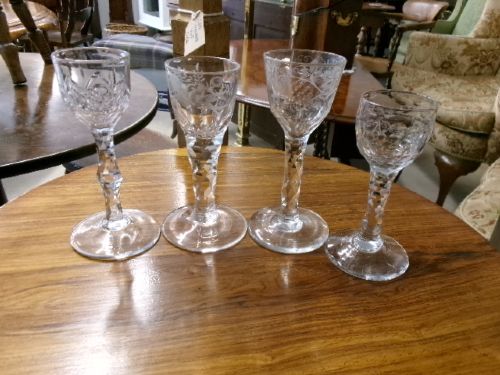
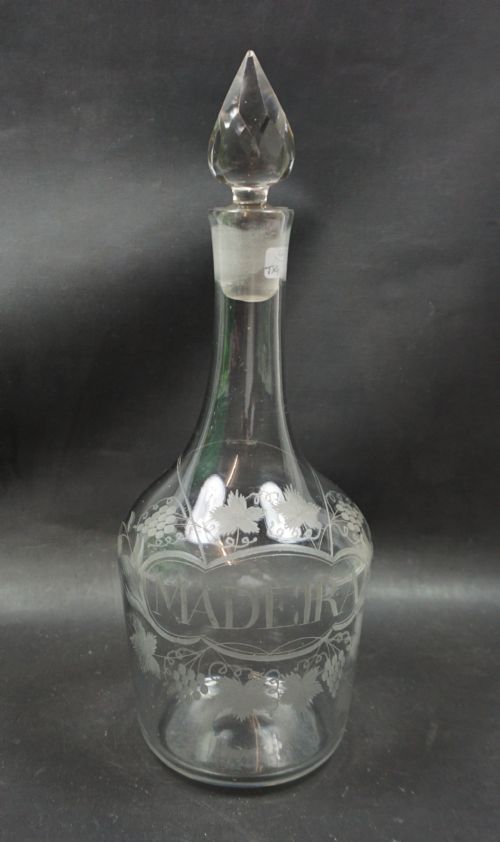
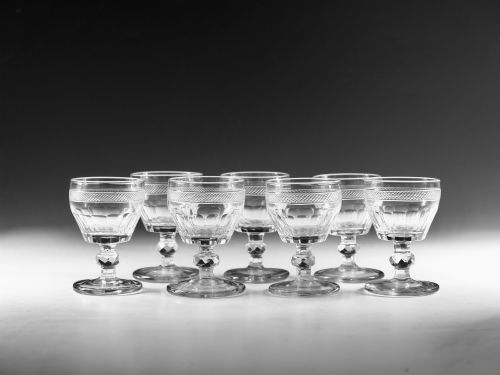
The most common items on this page are decanters and stemmed drinking glasses featuring linear facets along the stem or body. These pieces demonstrate the traditional forms produced by English and European glasshouses across the Georgian, Victorian, and Edwardian eras.
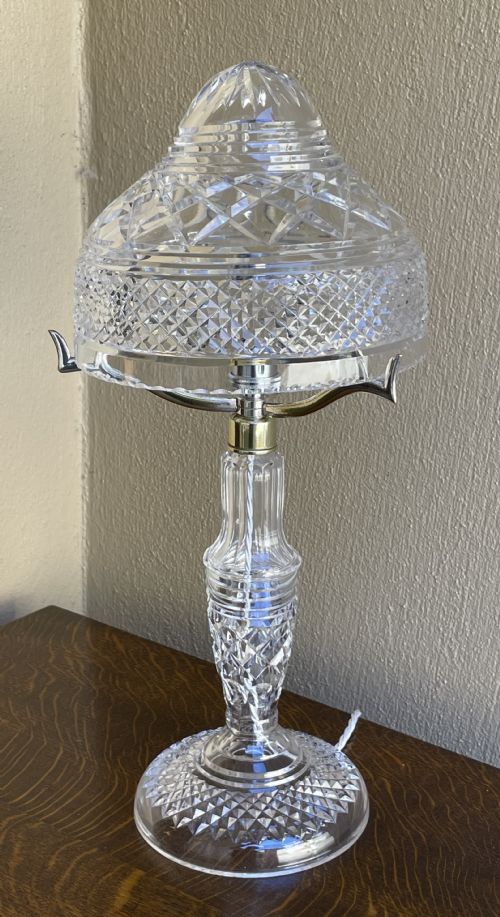
Beyond tableware, the selection includes lighting such as cut crystal mushroom lamps alongside decorative bowls and vases from later twentieth-century periods. Each item reflects the persistent utility and decorative appeal of heavy cut glassware.
Materials and cutting techniques
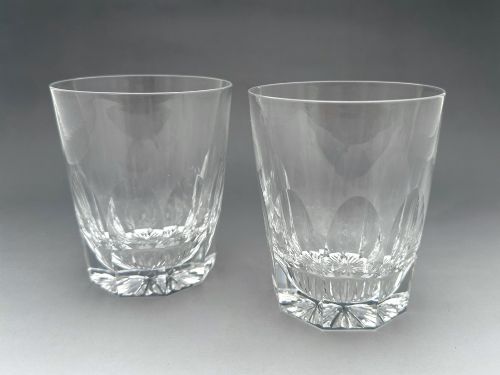
The primary material across these listings is lead crystal or heavy lead glass, which provides the necessary density and softness for deep cutting. Artisans shaped molten glass by hand before applying precise geometric facets using abrasive wheels.
Surface decoration frequently combines facet cutting with wheel engraving, depicting motifs such as hops, barley, or commemorative subjects. Master cutters ground flat planes into the glass to catch and refract light from every angle.
Materials documented across the inventory include lead crystal, cut glass, lead glass, and coloured over-crystal glass.
Distinctions in craftsmanship
Quality in lead crystal facet glass rests upon the clarity of the material and the crispness of the cut edges. Superior examples display sharp, clean geometric transitions between facets without blurring or softening.
Heavier lead content and meticulous hand-polishing differentiate finer antique vessels from standard production pieces. The balance of the object, the symmetry of the cutting, and the depth of any accompanying engraving determine the overall standard.
Charles Graffart for VSL·Joseph Simon for Val St. Lambert
The Lead Crystal Facet Glass Glossary
- Facet cut
- A decorative technique involving the grinding of flat geometric planes onto the exterior of glassware. This method enhances the brilliance and light reflection of lead crystal.
- Rummer
- A large, wide-bowled drinking glass common in the eighteenth and nineteenth centuries. These sturdy vessels typically sat on a short stem and heavy foot base.
- Decanter
- A stoppered glass vessel designed for holding and serving wine or spirits. Antique examples often feature heavy cut glass bodies and distinctive shoulder or mallet shapes.
- Champagne coupe
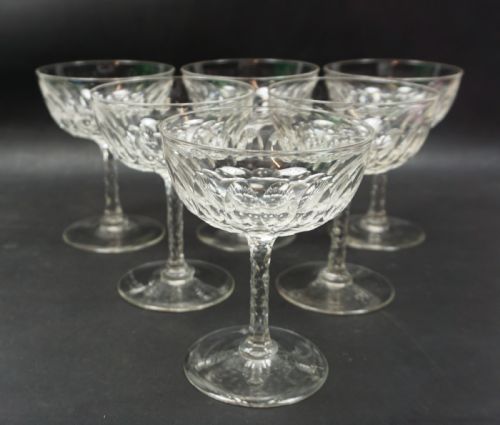
- A broad, shallow-bowled glass historically used for sparkling wines. Victorian and later versions frequently incorporate facet cut stems for added grip and visual depth.
- Ale flute
- A tall, narrow drinking glass intended for ale, often supported by a faceted stem. Georgian specimens commonly include engraved botanical motifs like hops and barley.
Lead Crystal Facet Glass: Frequently Asked Questions
How do I clean antique crystal decanters safely?
Wash antique crystal by hand in warm water with mild detergent, avoiding sudden temperature changes that can crack the glass. Use soft bottle brushes designed for glassware to reach interior residue.
Dry the pieces thoroughly with a lint-free cloth and store them without their stoppers in place to prevent sticking and moisture accumulation.
What defines Georgian facet cut glassware?
Georgian facet cut pieces typically date from the eighteenth and early nineteenth centuries, featuring hand-cut stems and polished pontil marks on the base. The glass possesses a distinct tactile weight and softer refractive quality than later Victorian production.
Engravings on these items often include Jacobite symbols or agricultural motifs such as barley and hops. The proportions reflect the specific dining and drinking customs of the period.
How do I distinguish lead crystal from normal glass?
Lead crystal generally feels noticeably heavier than standard glass due to the inclusion of metal oxides during manufacture. It also produces a resonant, prolonged musical ring when gently tapped.
Under inspection, lead crystal shows greater dispersion of light into spectral colours through its cut facets. The material is softer, allowing for deeper and sharper facet cutting.
Can I use antique wine glasses regularly?
Antique wine glasses and rummers remain functional for dining, provided they receive careful handling and hand washing. The sturdy construction of Georgian and Victorian lead crystal suits occasional use.
Avoid placing antique glassware in dishwashers or exposing them to thermal shock from hot liquids. Storing them securely prevents rim damage and preserves the cut facets.