
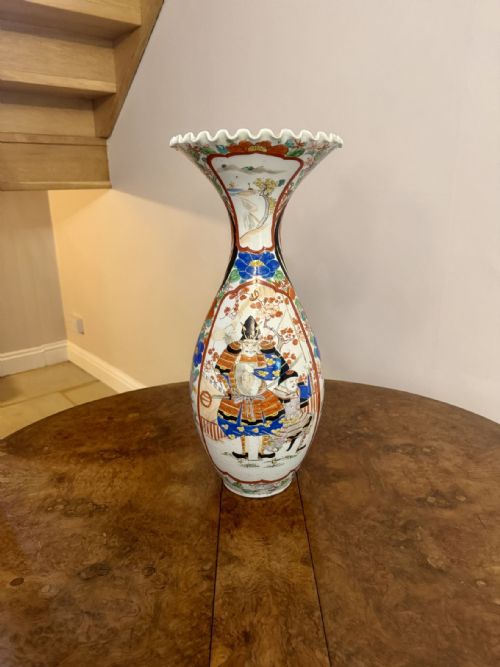


Vintage Japanese Urns
These vintage japanese urns span delicate miniature Satsuma pieces to large Imari floor vessels, offering distinct craftsmanship for collectors.
Vintage Japanese Urns
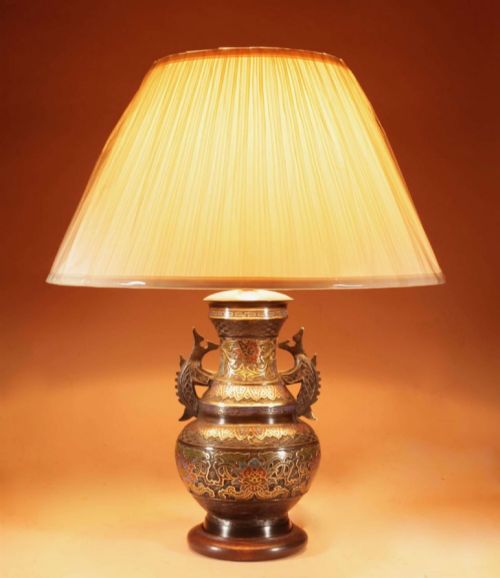
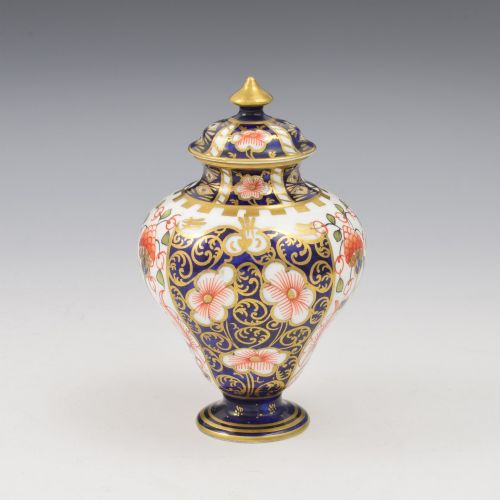
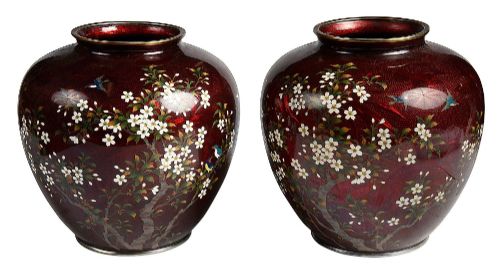
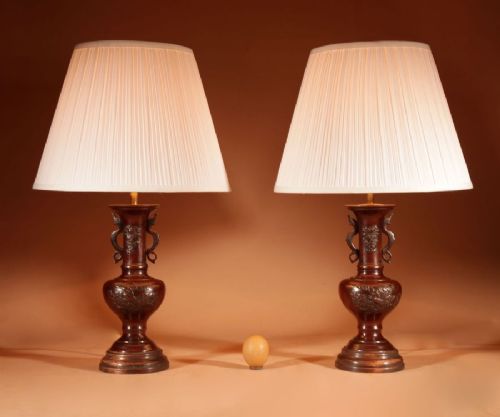
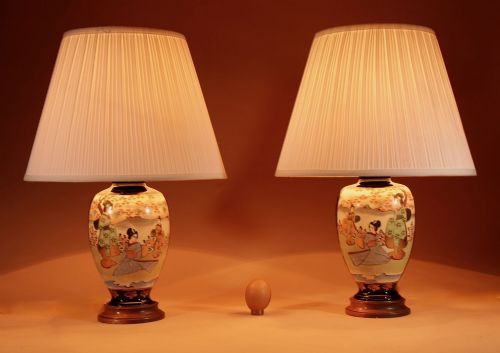
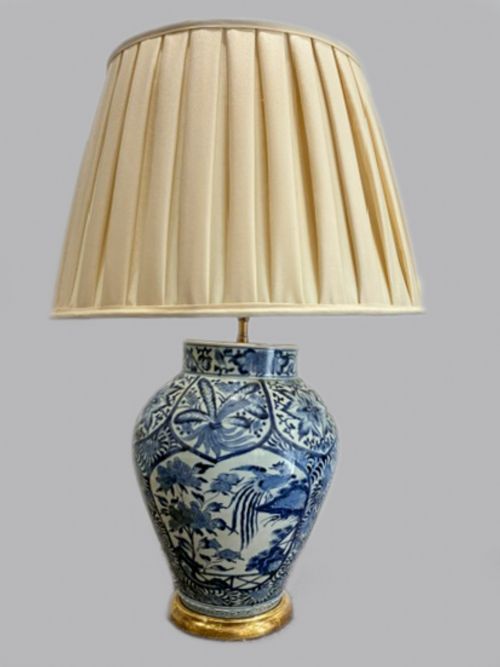
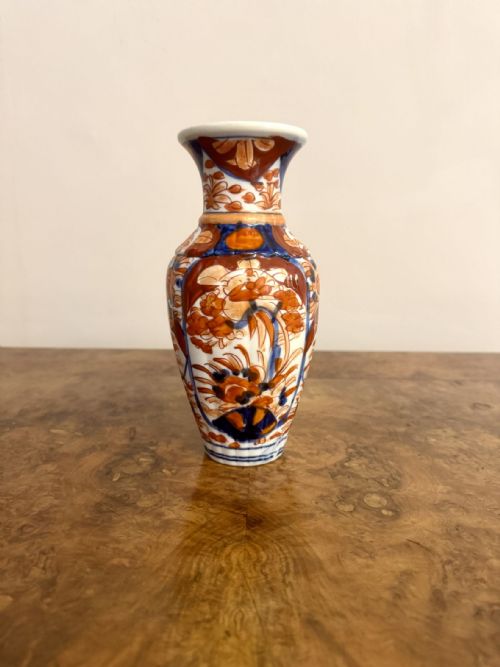
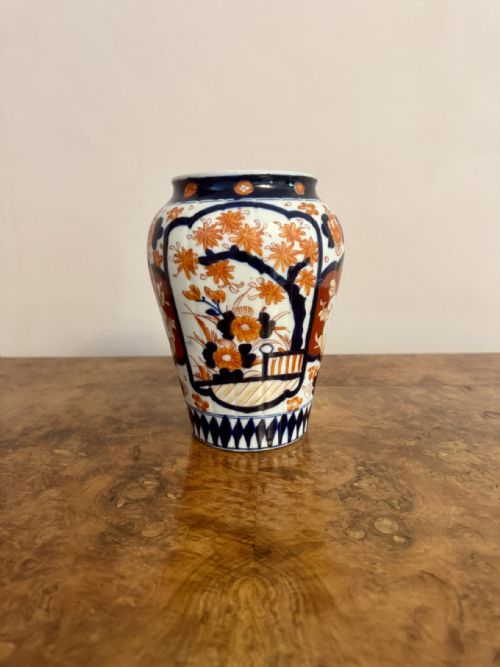
When searching for vintage japanese urns, buyers encounter a diverse selection of vessels originating from the Edo period through the Showa period, with Meiji period pieces appearing frequently. These objects include Imari porcelain ginger jars, Satsuma earthenware vases, and cloisonné containers, often repurposed as table lamps.
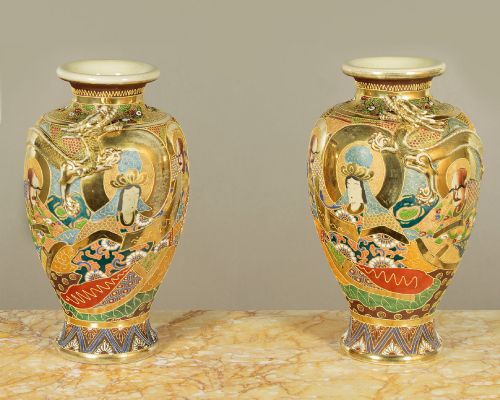
The assortment on this page ranges from tall floor-standing Imari vases to small cabinet miniatures featuring gilt figural processions and landscape scenes. Many forms serve primarily decorative purposes, whilst others demonstrate traditional vessel shapes adapted during later decades for domestic lighting.
Materials and Techniques
Potters and artisans utilised porcelain, earthenware, and clay as the foundational bodies for these vessels, applying glazes and enamel decoration before firing. Satsuma ware typically employs a cream-coloured, finely cracked earthenware base, which receives detailed hand-painted scenes finished with gold leaf accents.
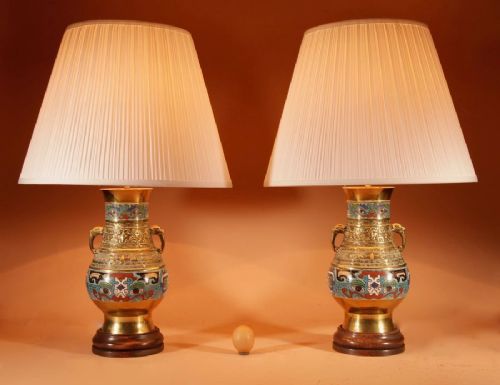
Bronze and brass provide structural support for champlevé items, where recessed channels hold coloured enamel pastes. Cloisonné pieces utilise thin wire strips soldered to metal surfaces to form compartments for glass enamels, creating complex geometric and floral patterns across the body.
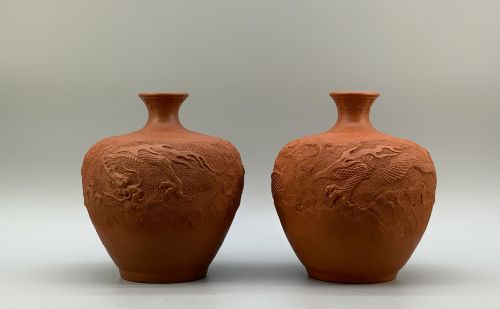
Dragons and phoenixes stare across clay surfaces while tiny painted courtiers populate miniature vases.
Craftsmanship and Detail
The distinction between standard production items and exceptional work rests on the precision of the hand-painting and the complexity of the decorative program. Miniature pieces with finely rendered figural processions or detailed landscape panels require advanced brushwork that elevates the status of the vessel.
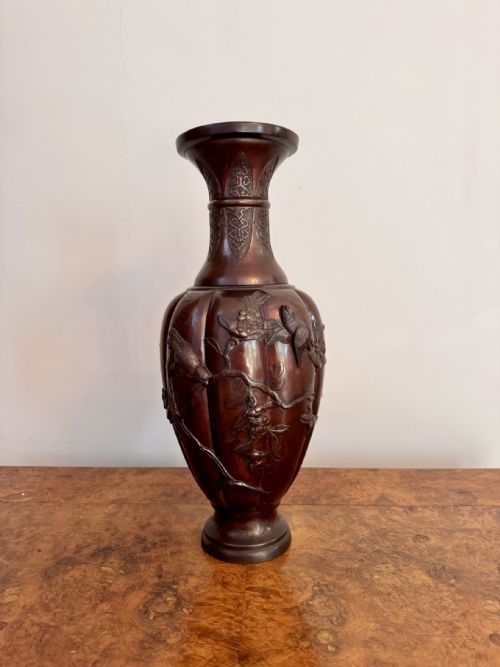
Materials and finishing contribute significantly to the overall standard of the object, particularly in the weight of the bronze casting, the clarity of the enamel work, and the registration of the cobalt blue underglaze on Imari porcelain.
Chosei·Kyoto·Hakusan·Kinkozan·Hattori
The Vintage Japanese Urns Glossary
- Imari
- A style of Japanese porcelain featuring underglaze blue and overglaze red, gold, and green decorations. This ware originated in Arita and gained popularity across Europe during the export period.
- Satsuma
- An earthenware type characterised by a pale, ivory-coloured crackle glaze and detailed polychrome enamel painting. Pieces often incorporate rich gilt highlights depicting historical figures and gardens.
- Cloisonné
- A metalwork technique using thin wire soldered to a bronze or brass base to create cells filled with enamel paste. These vessels are fired and polished to a smooth finish.
- Champlevé
- An enamelling method where troughs or cells are carved directly into a bronze or brass surface to hold coloured enamel. This creates robust decorative patterns on lamps and vases.
- Meiji Period
- The era spanning from 1868 to 1912, marking a major phase of Japanese craft production and international export. Works from this time demonstrate high technical skill in ceramics and metalwork.
Vintage Japanese Urns: Frequently Asked Questions
What is Imari porcelain?
Imari porcelain refers to Japanese export wares made in Arita and shipped through the port of Imari. They display a characteristic palette of cobalt blue underglaze combined with rust-red and gold overglaze.
The decorative schemes frequently incorporate floral panels and brocade motifs. These robust pieces were produced across the 19th century and later decades.
Are converted lamps original?
Many vintage Japanese vessels were fitted as table lamps during the late 19th and early 20th centuries to suit Western domestic interiors. Bronze champlevé urns and porcelain vases often underwent this conversion.
While altered from their original state, these lamp adaptations reflect historical usage periods. Buyers should examine the mounting method to understand how the vessel was altered.
How do I date these pieces?
Dating relies on stylistic markers, materials, and associated imperial periods such as the Meiji or Showa eras. Meiji period items typically exhibit dense, intricate decoration and refined craftsmanship.
Later pieces from the 1920s and 1930s often show stylistic shifts towards simpler geometric patterns. Examining the base and any visible studio signatures provides further context.