


Vintage Jam Basin
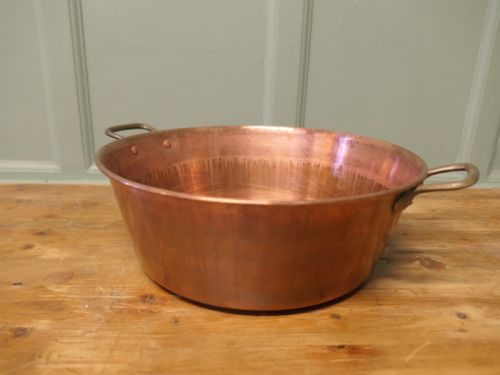
These heavy metal vessels are vintage jam basin examples designed for boiling fruit over an open fire, bringing centuries of country house utility straight to your kitchen.
Vintage Jam Basin
When you search for a vintage jam basin, you encounter sturdy metal vessels created for domestic fruit preserving and kitchenware tasks. The selection available here leans heavily towards nineteenth century copper preserving pans, George III kitchen items, and substantial Victorian cookware.
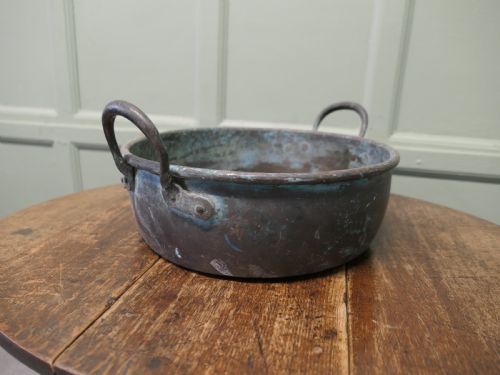
Most pieces take the form of large round bowls or pans, frequently fitted with iron handles or double handles for lifting heavy boiling batches. Alongside metal pots, occasional lead crystal and cut glass preserve pots appear, showing the range of forms used for fruit preserves.
These items originate primarily from Georgian and Victorian rustic farmhouse traditions, where sturdy utility dictated everyday design. You will find large cooking vessels and bowls that served busy kitchens long before modern canning methods existed.
Materials and Method
Copper dominates the construction of these items, selected for its ability to conduct heat evenly across the base during long preserving sessions. Skilled smiths shaped these heavy sheets by hand, often joining seams securely and attaching iron handles to bear the weight of boiling fruit.
Brass and tin also feature among the metalwork, sometimes combined with embossed details on pots or paired with iron fittings. Glass versions utilise cut glass and lead crystal, shaped into heavy pots designed for the table or pantry rather than direct heat.
A cream setting pan sits quietly among the heavy boiling pots, dreaming of dairy farms and morning cream.
Assessing Quality
The distinction between standard kitchen utility and superior pieces rests on the weight of the metal and the presence of maker details. Heavier copper walls and robust double handles indicate vessels built for sustained, demanding domestic use rather than light duty.
Finishing touches also elevate certain examples, such as crisp embossing on brass and copper pots or refined cutting on lead crystal. Pieces bearing marks from established retailers like Hodges and Sons or Asprey and Co. command particular attention from collectors.
Hodges & Sons·Asprey & Co.
The Vintage Jam Basin Glossary
- Preserving Pan
- A wide, open metal vessel designed specifically for boiling fruit and sugar into jam. The shallow shape allows steam to escape quickly.
- George III
- The period spanning from 1760 to 1820, characterised by robust domestic metalwork and early copper cookware. Pieces from this era display traditional hand-beaten construction.
- Victorian Country
- A style reflecting nineteenth century rural English domestic life. Items in this category prioritise practical utility and sturdy materials over ornate decoration.
- Lead Crystal
- A heavy, high-clarity glass containing metal oxide that increases brilliance and weight. It was utilised for finer preserve pots and tableware.
Vintage Jam Basin: Frequently Asked Questions
What were jam basins used for?
These vessels were utilised in large country kitchens for boiling seasonal soft fruits with sugar to make preserves. Their wide mouths allowed rapid evaporation during the long boiling process.
Today, they serve equally well as decorative planters, log holders, or striking kitchen centrepieces that display the rich warmth of aged metal.
How do I date a copper pan?
Dating relies on observing construction marks, handle styles, and the method by which the metal sheet was formed and joined. George III and nineteenth century examples often show hand-beaten surfaces and sturdy iron attachments.
Maker stamps or retailer marks stamped into the rim also help establish a more precise timeframe for the piece's origin.
Can I still cook with them?
Many vintage copper pans retain their structural integrity and can conduct heat effectively for traditional preserving tasks. However, older vessels often require re-tinning the interior surface before food preparation.
Many buyers choose to display them purely as decorative items rather than risking wear to historic kitchenware.
How do I clean old copper?
Maintaining these metals involves gentle cleaning to preserve the natural oxidation and dark patination accumulated over generations. Harsh abrasives should be avoided to protect the historic surface.
Standard copper cleaners work well if a bright polish is preferred, though many collectors favour the mellow tones of unpolished age.