


Brass Handled Jam Pan
A brass handled jam pan brings warmth and honest utility to a kitchen, offering solid metal construction that lasts through generations.
Brass Handled Jam Pan
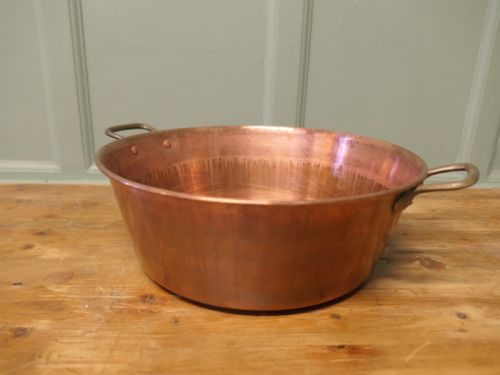
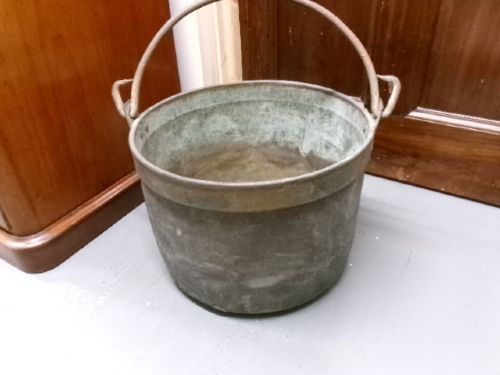
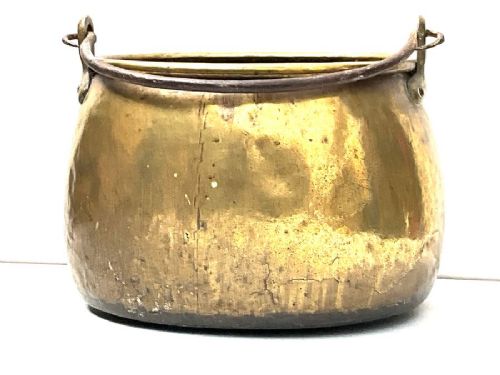
When you search for a brass handled jam pan, you are looking at substantial vessels designed for heavy domestic labour across the Georgian and Victorian periods. These pieces include preserving pans, jam pales, cauldrons, and saucepans shaped for stovetop or fireside use.
These items originate from country houses and farmhouses where they boiled fruit and sugar into preserves over open hearths or early stoves. Their sturdy construction reflects a time when kitchen utensils were built to withstand intense heat and daily scouring.
How they were made
The makers formed these vessels primarily from sheet copper or cast brass, often combining metals to utilise the strength of iron for handles and fixings. Rivets secure the handles firmly to the body, showing the practical methods of nineteenth-century metalworkers.
Surfaces bear the marks of hand-beating and shaping, resulting in mottled textures and robust walls that retained heat evenly for preserving fruit. Iron handles and wrought iron attachments provide the necessary leverage to lift heavy loads of boiling jam safely.
Some heavy brass pans spent their retirement holding logs by the hearth instead of bubbling fruit.
What varies in quality
Weight and gauge distinguish the finer specimens from standard utility ware, with heavier metal providing greater stability and durability over direct heat. Thicker walls and substantial brass or iron handles indicate a higher grade of manufacture intended for serious domestic service.
Proportion and surface finish also set pieces apart, as seen in balanced proportions and clean riveting rather than crude repairs. Pieces made for display or superior households often retain smoother patination and more deliberate shaping of the rim and base.
The Brass Handled Jam Pan Glossary
- Jam pan
- A wide, open metal vessel designed for boiling fruit and sugar to make preserves. Its shallow depth allows moisture to evaporate quickly during cooking.
- Swing handle
- A movable bail handle attached to the sides of a pan by loops or ears. This allows the vessel to hang over a fire or fold flat against the side.
- Preserving pan
- A heavy-bottomed cooking vessel used specifically for making jams and jellies. These pans distribute heat evenly to prevent sugar from burning.
- Cauldron
- A deep round pot with a large handle used for boiling over an open hearth. Earlier examples often feature rounded bases for tripod stands or direct ash placement.
Brass Handled Jam Pan: Frequently Asked Questions
What were brass handled jam pans used for?
These pans served primarily in large kitchens for boiling soft fruit with sugar to create jams, jellies, and preserves. Their wide brims allowed steam to escape efficiently while the metal distributed heat evenly.
Beyond the kitchen, some of these heavy vessels found new roles by the fireside as coal buckets or decorative display items in country homes. Their robust construction meant they transitioned easily from active cookware to decorative hearth accessories.
How do I date a brass jam pan?
Dating relies on observing the manufacturing methods, such as hand-beating marks, the presence of hand-cut rivets, and the composition of the metal handles. Georgian examples often feature heavier bronze or copper castings with distinct handle mounts.
Victorian pieces frequently display standardised rolling and riveting techniques alongside iron or swing handles. Style cues like Georgian proportions or Victorian country rustic forms also help place the vessel in its correct century.
Can I still use antique brass pans for cooking?
Most antique brass and copper pans are best appreciated for display, collection, or as decorative fireside accents rather than daily food preparation. Many older vessels lack modern lining and may require professional retinning if used for acidic foods like jam.
Using them on modern hobs can also be challenging due to uneven historical bases designed for open hearths or early ranges. Gentle cleaning preserves their historic surface without removing the accumulated patination of centuries.
What is the difference between brass and copper jam pans?
Copper jam pans generally feature high thermal conductivity, making them exceptionally responsive to temperature changes when boiling sugar mixtures. Brass pans, often containing zinc and copper alloys, tend to be heavier and more rigid in their form.
Many pieces combine both metals, utilising a copper body for cooking performance alongside brass handles and rims for structural strength. Both materials develop deep historic patinas over time through exposure to heat and air.