


Copper Preserve Pot
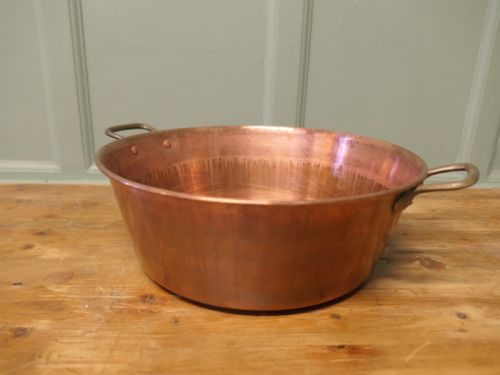
These copper preserve pot examples are hardworking kitchenware built for boiling fruit over an open fire.
Copper Preserve Pot
When you search for a copper preserve pot, you are looking at heavy kitchenware designed for boiling down fruit with sugar. The pieces available here span the Georgian and Victorian eras, taking the form of large pans, bowls, and cooking vessels intended for heavy domestic use.
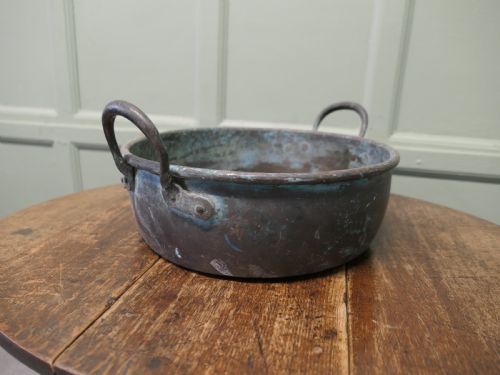
You are most likely to meet large, round vessels dating from the nineteenth century, often equipped with sturdy handles for lifting heavy loads of boiling jam. These utilitarian items served the country house and farm kitchen long before modern preserving methods took over.
How they were made
Makers fashioned these vessels primarily from heavy copper, relying on its excellent thermal conductivity to distribute heat evenly across the base during long boiling processes. Iron and brass appear frequently as well, particularly for structural handles, rivets, and reinforcement around the rims.
The construction of these pans relied on durable hand-working techniques suited to heavy cookware. Riveted joints secure handles firmly to the body, ensuring the vessel could withstand the considerable weight of hot fruit and sugar.
Listings for this phrase include items made from copper, brass, and iron, spanning the Georgian and Victorian periods.
What varies in quality
The distinction between ordinary utility items and superior examples lies in the thickness of the metal and the substance of the handles. Heavier gauge copper prevents warping over intense hearth fires and holds its shape through decades of scrubbing and use.
Details such as robust double handles, secure iron riveting, and balanced proportions mark out pieces made for serious household service rather than basic kitchen utility. Makers who invested extra labour in solid fixings produced vessels that survive in better structural condition today.
Hodges & Sons
The Copper Preserve Pot Glossary
- Preserving pan
- A wide, open vessel designed for boiling fruit and sugar to make jam. These pans feature shallow sides to allow steam to escape quickly.
- Cream setting pan
- A specialised vessel used in dairies for holding milk while the cream rises to the surface. They share the wide, open profile of preserving pans.
- Riveted handle
- A grip attached to the body of a pan using metal pins hammered flat on either side. This method provides a permanent and immensely strong joint.
- Swing handle
- A movable bail handle anchored on opposite sides of a bowl or pan, allowing the vessel to be tipped or hung easily.
Copper Preserve Pot: Frequently Asked Questions
What were copper preserve pots used for?
These vessels were specifically designed for boiling fruit with sugar over an open fire or hearth to create jams and preserves. The conductive properties of the metal allowed for rapid, even boiling without scorching the mixture.
Beyond preserving, larger bowls and vessels saw service across the Georgian and Victorian kitchen for general cooking tasks and dairy work.
How do I date an antique copper pan?
Dating relies on observing construction methods, handle styles, and general form. Georgian pieces from around eighteen hundred often display different handle attachments and hammering marks compared to later Victorian kitchenware.
Makers changed their manufacturing techniques over the nineteenth century, moving from purely bespoke hand-raising towards more standardised workshop production.
Can I still use these pots for cooking?
While these vessels were built for actual kitchen work, antique copper pans often require tinning on the interior before coming into contact with food today. Many collectors instead choose to display them as decorative pieces in country style kitchens.
If you do plan to use one for preserving, check the interior surface carefully to ensure the metal is safe for food preparation.
How do I clean antique copper?
Cleaning antique copper requires gentle polishes formulated specifically for metal to preserve the natural warmth and age of the surface. Avoid harsh abrasive pads that can scratch the heavy metal and remove centuries of character.
Regular light dusting and occasional polishing keep the exterior bright without stripping away the historical patina.