



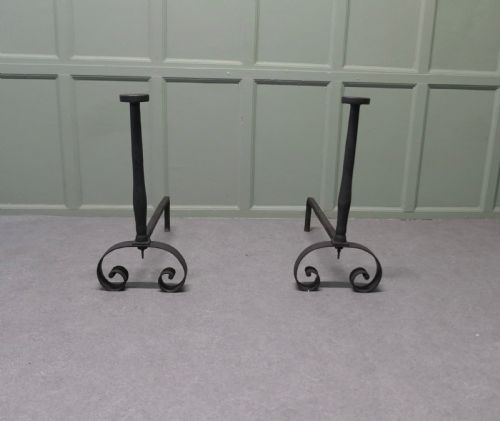
Vintage Iron Hearth Dogs
Vintage iron hearth dogs support logs in an open fireplace, combining sturdy utility with centuries of decorative ironwork.
Vintage Iron Hearth Dogs
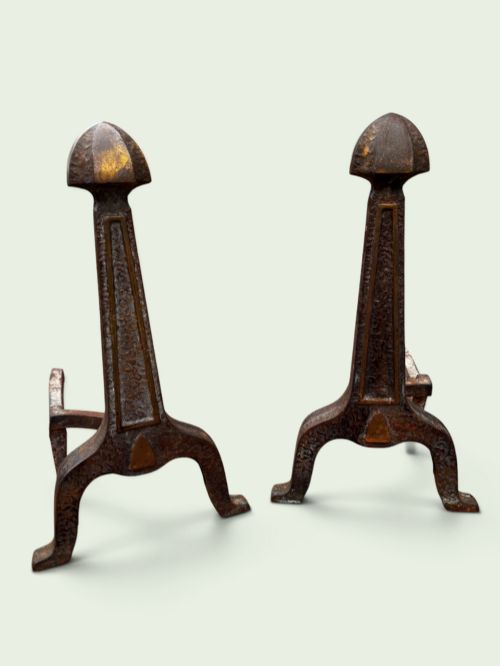
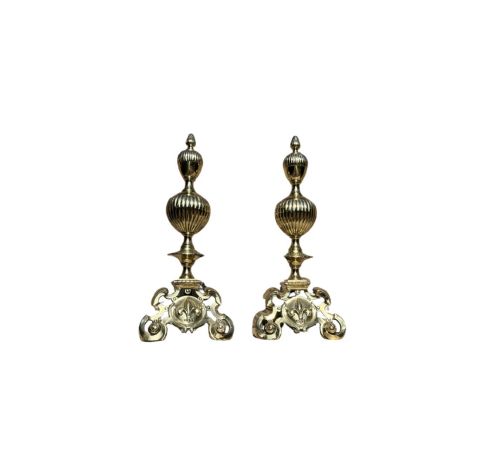
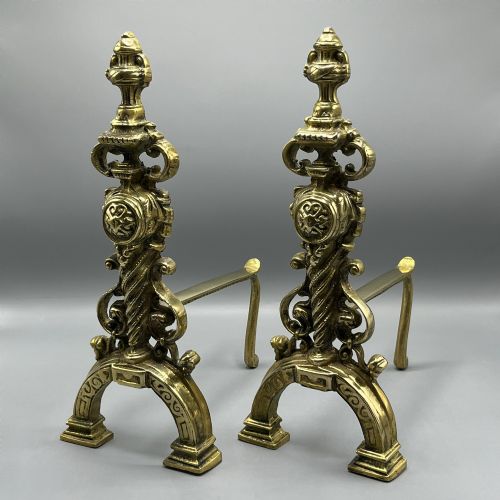
Vintage iron hearth dogs, also known as andirons or firedogs, are matching pairs of utilitarian supports placed within an open fireplace to hold burning logs above the hearth floor. When you search for this phrase, you encounter heavy functional metalwork designed to improve airflow beneath wood fires. The selection spans robust nineteenth-century utility pieces alongside earlier architectural revivals.
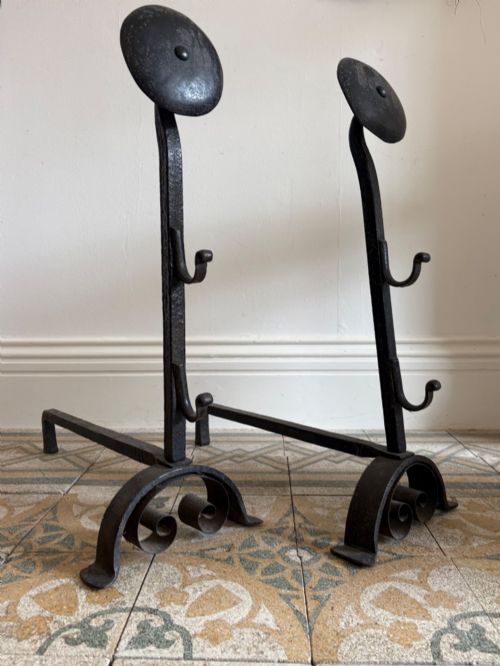
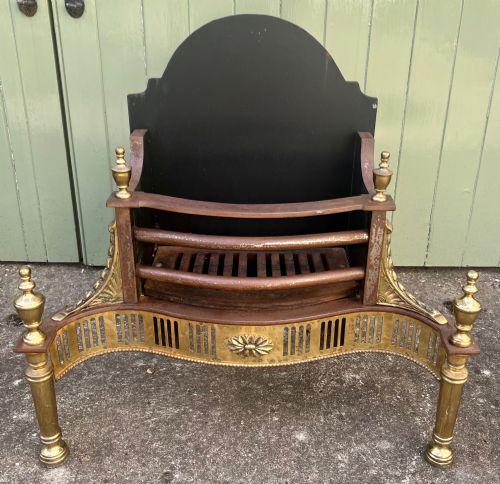
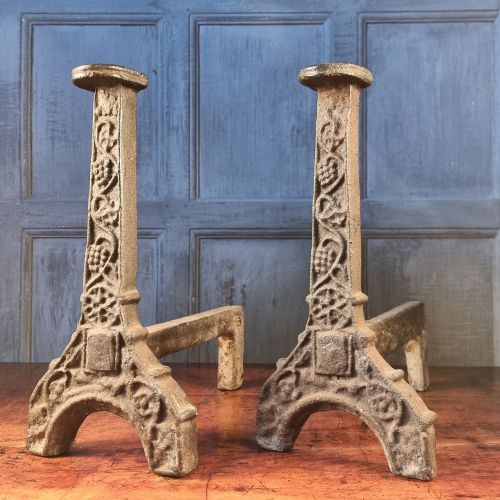
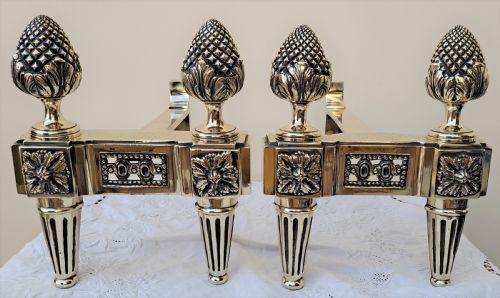
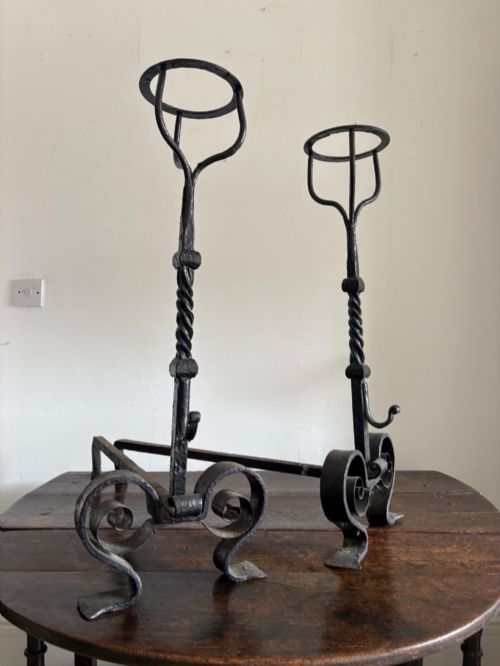
Most examples appearing here date from the nineteenth century, including Victorian, Edwardian, and arts and crafts interpretations, with occasional sixteenth-century gothic and eighteenth-century styles represented. Forms range from simple hand-forged wrought iron standards to substantial cast iron fire baskets and integrated tool rests. These pieces originate from English, French, and Italian workshops, reflecting regional preferences for heavier structural iron or ornamental brass detailing.
Materials and construction methods
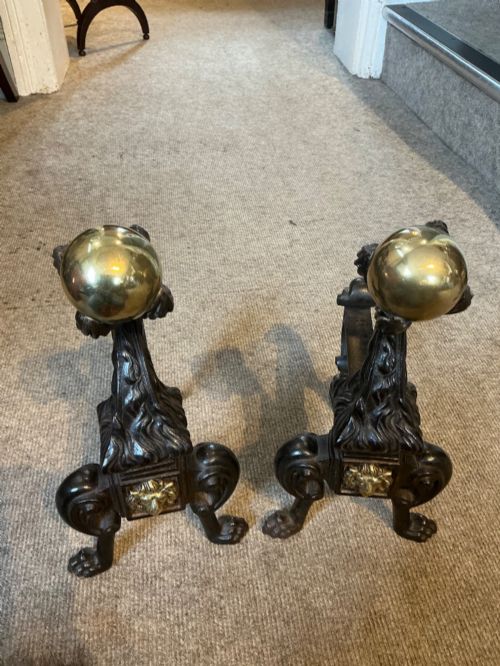
Blacksmiths and foundry workers utilised cast iron, wrought iron, and polished steel to build these durable hearth supports. Cast iron allowed makers to pour intricate molten metal into detailed moulds for decorative fronts, while wrought iron was beaten and bent by hand into resilient structural shafts. Artisans frequently combined iron bodies with cast brass or copper finials to contrast dark metal with bright metallic highlights.
Early and mid-nineteenth-century items often display hand-forged tool marks from anvil work, whereas later Victorian production favoured industrial casting techniques. Polished steel surfaces required careful finishing to resist heat tarnishing, while heavy cast iron provided the dense thermal mass needed to withstand continuous wood fires.
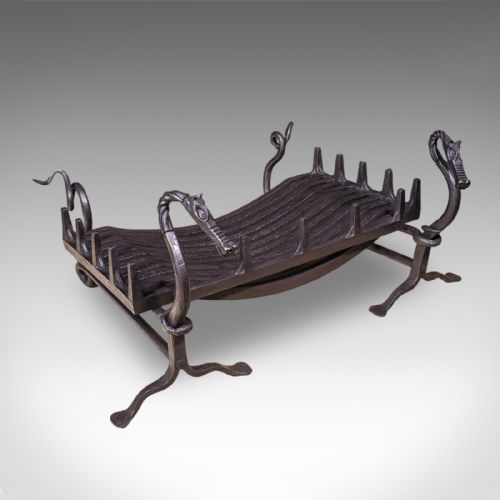
Several sets include dragon motifs and mulling attachments, proving previous generations liked their fireplace guards with a touch of mythical theatre.
Judging the standard of manufacture
Quality rests upon the weight of the metal, the integrity of the joinery, and the crispness of any cast ornamentation. Superior pairs use thick gauge iron or solid brass components that resist warping under intense heat, whereas lesser examples rely on thin sheet metal or hollow cast elements. Hand-forged joints and tightly secured horizontal billets indicate careful assembly by experienced smiths.
Proportion and stability separate standard utility items from finer decorative pairs. A well-balanced set stands firmly on the hearth without rocking, featuring shafts and feet forged or cast in harmonious scale with the intended fireplace opening.
The Vintage Iron Hearth Dogs Glossary
- Andiron
- A horizontal metal bar raised on legs, used in pairs to support logs in an open fireplace. They often feature decorative vertical fronts.
- Firedog
- An alternative term for an andiron, originating from medieval hearth equipment designed to hold fuel.
- Chenet
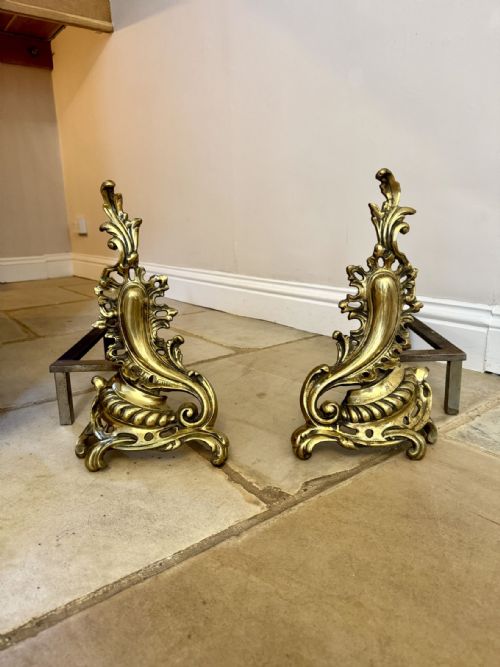
- The French term for an andiron, frequently applied to decorative brass or iron hearth dogs featuring rococo or neoclassical styling.
- Fire basket
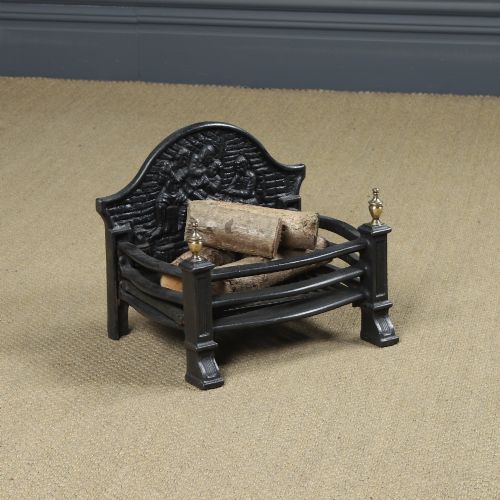
- A metal grate supported on legs that holds coal or wood, sometimes incorporating integral hearth dogs at the sides.
- Billet bar
- The horizontal crossbar connecting the front standard of an andiron to the rear support, designed to bear the weight of burning logs.
Vintage Iron Hearth Dogs: Frequently Asked Questions
How do hearth dogs differ from fire grates?
Hearth dogs are a pair of independent stands placed on either side of the fireplace to hold logs directly on the hearth floor. They allow air to circulate beneath the wood for a cleaner burn.
Fire grates form a single integrated basket structure that contains the fuel within a contained frame. Many period arrangements combine both by placing dogs beside or attached to a central basket.
Were these irons used for cooking?
Certain robust wrought iron examples included horizontal hooks or rests designed to hold spits and gridirons over the flames for food preparation. Most domestic pairs, however, were built strictly for heating rooms and supporting decorative hearth displays.
Heavier nineteenth-century versions focused on stability and aesthetic presence rather than culinary utility.
How do I clean cast iron dogs?
Maintenance requires removing accumulated ash with a soft brush and wiping surfaces with a dry cloth to prevent moisture buildup. Avoid harsh chemical cleaners that strip the protective dark patina built up over generations.
Light applications of natural oil can help protect wrought and cast iron surfaces from oxidation in damp environments.
Can I use antique andirons in active fires?
Solid cast iron and heavy wrought iron pieces tolerate regular fireplace heat provided thermal shock is avoided. Thin brass components or decorative mounts should remain outside intense flames to prevent distortion.
Checking that the metal thickness remains substantial ensures safety when stacking heavy hardwood logs.
How do I date a pair of hearth dogs?
Dating relies on identifying manufacturing techniques, metal alloys, and stylistic motifs corresponding to periods like the Victorian era or Arts and Crafts movement. Hand-forging marks often indicate earlier craftsmanship, while uniform machine casting suggests industrial nineteenth-century production.
Matching the design elements to regional English or French stylistic trends helps narrow down the decade of manufacture.