


Black Wrought Iron Andirons
Black wrought iron andirons are robust hearth supports that lift logs to draw air beneath the fire, bringing utilitarian weight and dark forge-work to an open hearth.

Black Wrought Iron Andirons
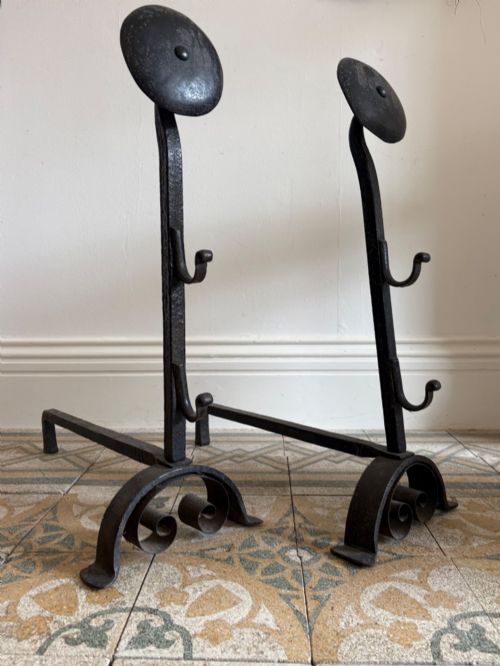
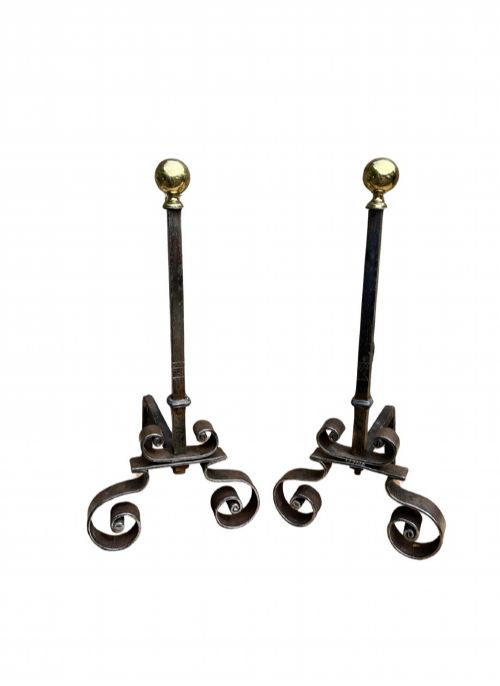
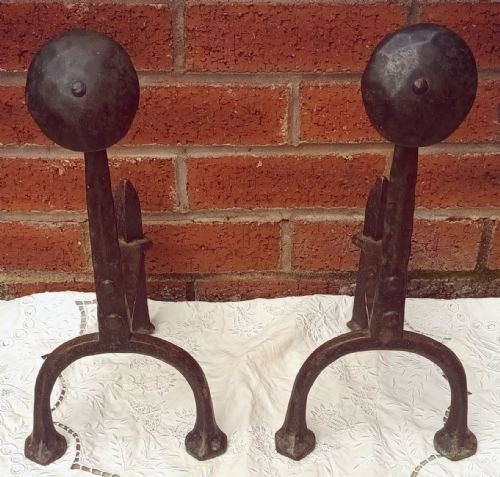
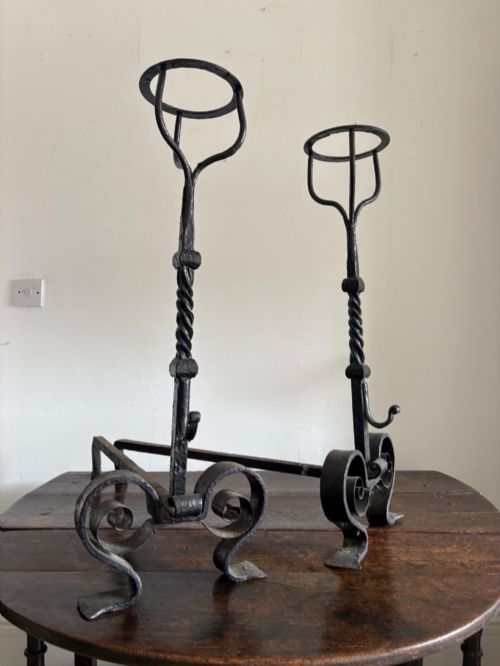
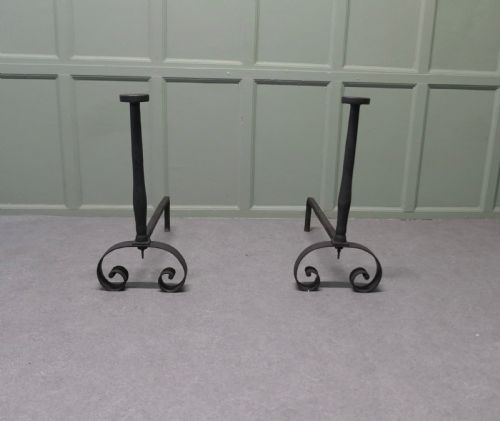
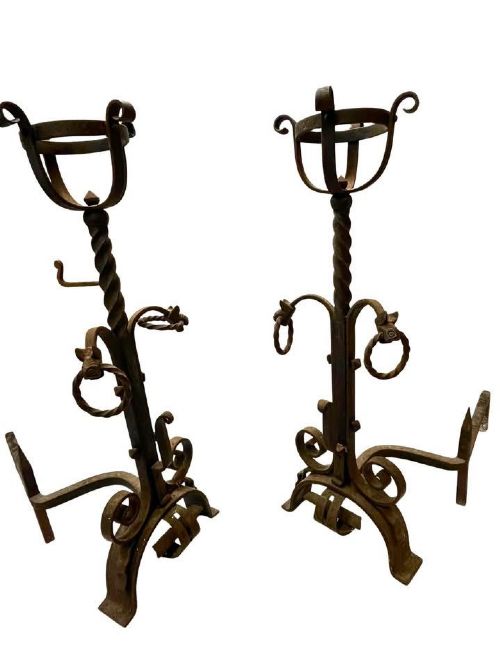
When searching for black wrought iron andirons, buyers encounter heavy fireplace supports designed to hold fuel off the hearth floor. The examples available on this page span the nineteenth century through the Edwardian era, taking forms such as standard fire dogs, monumental pairs, and components of larger fire baskets and inglenook sets.
Most pieces date from the nineteenth century or the early twentieth century, reflecting Victorian, Edwardian, and Arts and Crafts design movements. English and French origins predominate, alongside regional variations including Gothic Revival styles and hand-forged utilitarian shapes.
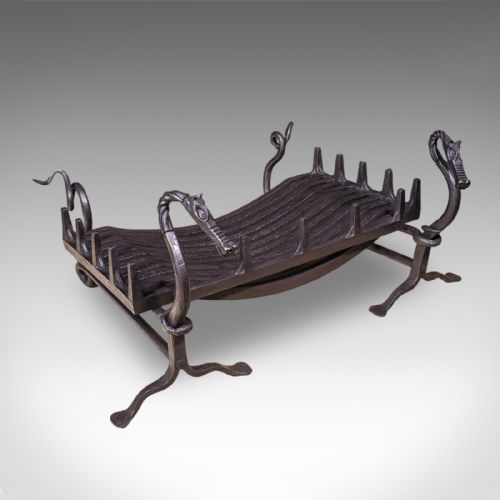
Buyers frequently find these objects paired with fire grates, fire backs, or complete fireplace sets that include tools and baskets. The simpler utilitarian pairs sit alongside more decorative pieces featuring dragon motifs or art nouveau tool rests.
Forging and metalwork methods
The objects on this page rely primarily on wrought iron and forged iron, shaped by heat and hammer to create durable structural supports. Cast iron elements appear in associated grates and frames, while occasional accents utilise brass and copper.
Hand-forged construction produces varied surface textures, from smooth nineteenth-century bars to heavily hammered arts and crafts profiles. Firebrick components occasionally line the associated grates to withstand high hearth temperatures.
One unusually versatile nineteenth-century listing doubles as an andiron and a planter.
Evaluating proportion and forge work
Quality in these hearth supports rests on the balance of proportion and the integrity of the forged joints. Monumental heights and substantial weight indicate ambitious domestic or institutional commissions, whereas smaller pairs serve compact hearths.
The refinement of the blacksmith's hand shapes the distinction between standard utilitarian hardware and artistic expressions like the arts and crafts or gothic revival styles. Clean lines, secure joins, and well-executed decorative motifs separate standard production from superior craftsmanship.
The Black Wrought Iron Andirons Glossary
- Andirons
- Supports used in pairs to raise logs above the hearth floor for better airflow. Also known as fire dogs.
- Arts and Crafts
- A design movement valuing hand-craftsmanship and simple structural forms over industrial ornamentation. This style appears frequently across the nineteenth-century and Edwardian listings.
- Fire Basket
- A metal basket holding coal or wood within the fireplace, often flanked or supported by matching andirons. These assemblies frequently include integrated grates.
- Gothic Revival
- An architectural and decorative style drawing on medieval pointed arches and structural motifs. Pieces from this movement often display pointed finials and heavy vertical lines.
Black Wrought Iron Andirons: Frequently Asked Questions
How do I choose the right size andirons?
Measure the depth and width of your fireplace opening before selecting hearth supports. Ensure the height of the pieces leaves adequate clearance for logs and matches the scale of your fire back.
Larger monumental pairs require substantial hearths, while standard heights suit typical nineteenth-century openings.
Can these andirons support real wood fires?
These forged and cast iron supports were built specifically for heavy hearth use. Wrought iron handles high heat effectively when paired with adequate ventilation and proper fuel placement.
Inspect any integrated grates or firebrick components to ensure they are stable before burning fuel.
How do I date an antique iron fire dog?
Examine the surface texture, tool marks, and stylistic indicators such as gothic revival motifs or arts and crafts simplicity. Nineteenth-century examples often display distinct hand-hammered irregularities absent in later industrial castings.
Reference the period markers in the listing details, which span from the georgian era through the edwardian period.
What is the difference between andirons and fire dogs?
The terms are generally used interchangeably to describe horizontal iron bars on vertical supports that hold logs. Some regional or historical listings prefer one term over the other.
Both serve the primary function of lifting fuel to improve combustion and draft.