
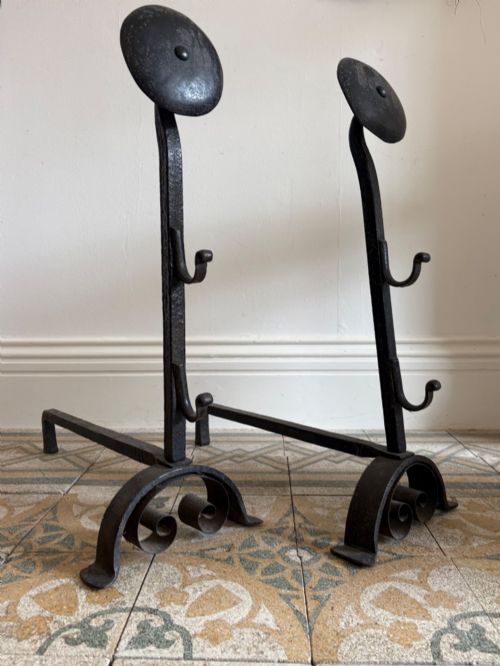
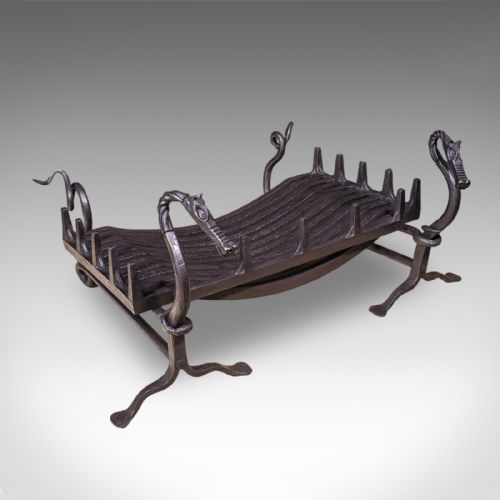


Edwardian Iron Fire Dogs
Edwardian iron fire dogs are sturdy hearth supports shaped by blacksmiths for coal and wood fires.

Edwardian Iron Fire Dogs
Edwardian iron fire dogs are essential hearth supports used alongside baskets and grates to hold burning logs securely within an open fireplace. When buyers search for edwardian iron fire dogs, they seek robust upright standards designed to keep fuel elevated for better air circulation and heat distribution.
The selections on this page span the Edwardian period alongside nineteenth-century works and later pieces, showing how makers adapted domestic hearth hardware. Wrought iron, cast iron, and forged iron dominate these functional objects, often paired with companion sets and fire baskets.
Many examples lean into Arts and Crafts and Gothic Revival aesthetics, demonstrating the period's preference for visible handwork and historical motifs. From simple hand-forged standards to elaborate sets with brass details, these pieces bring period character directly to the hearth.
Judging Quality and Execution
Quality in these fire dogs rests on the direct evidence of the maker's hand and the structural integrity of the metal. Heavier forged iron and well-proportioned castings command attention through crisp detailing and stable, balanced frames.
Superior examples show careful attention to joints, clean surface finishes on brass mounts, and robust upright shafts that bear weight without flexing. Lesser pieces display crude joins, unbalanced bases, or careless surface cleanup that diminishes the presence of the metalwork.
Listings feature items dated across the nineteenth and early twentieth centuries, including Victorian and Edwardian periods.
The Edwardian Iron Fire Dogs Glossary
- Andirons
- Supports placed on either side of a hearth to elevate logs for burning. They typically feature a vertical front standard and horizontal rear legs.
- Wrought iron
- Tough, malleable iron worked while hot by a blacksmith. It resists shock and bending under high heat.
- Cast iron
- Iron melted and poured into a mould to form rigid shapes. It provides fine decorative detail on fire grates and dogs.
- Arts and Crafts
- A design movement valuing hand-craftsmanship, simple utility, and traditional materials. It reacts against mass-produced industrial ornamentation.
- Gothic Revival
- An architectural and decorative style inspired by medieval forms. It incorporates pointed arches, tracery, and dragon motifs into metalwork.
Edwardian Iron Fire Dogs: Frequently Asked Questions
What are edwardian iron fire dogs used for?
These metal supports hold logs above the hearth floor to improve airflow beneath the fire.
They also prevent burning wood from rolling forward out of the fireplace opening.
How do I clean antique iron fire dogs?
Brush away loose soot and ash with a soft dry bristle brush after the metal cools completely.
Apply a light coat of paste wax or grate polish to protect the iron surface from moisture.
Can I use these fire dogs in a working fireplace?
Most historic iron fire dogs are built from heavy forged or cast metals suitable for active hearth use.
Check that the height and weight match your fire basket or hearth opening before burning fuel.
How do I identify Arts and Crafts fire dogs?
Look for visible hammer marks, unpolished forged surfaces, and straightforward structural joints.
These designs avoid excessive ornament in favour of honest material expression.