

Vintage Inlaid Bureau Desk
A vintage inlaid bureau desk offers a drop-front writing surface paired with delicate woodwork, bringing period craft directly into a modern study.
Vintage Inlaid Bureau Desk
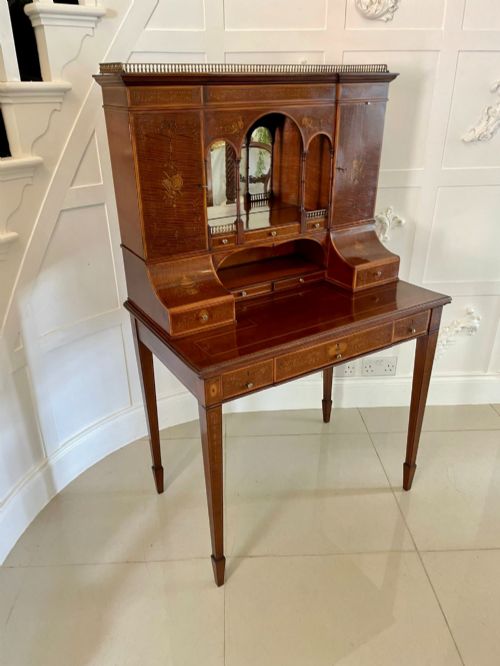
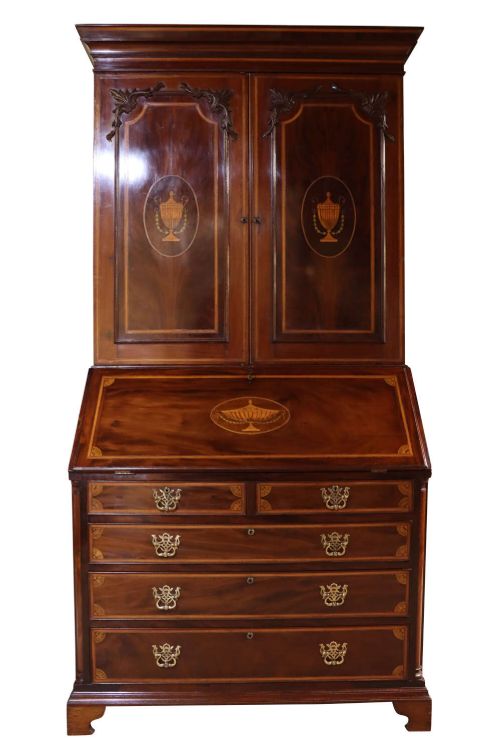
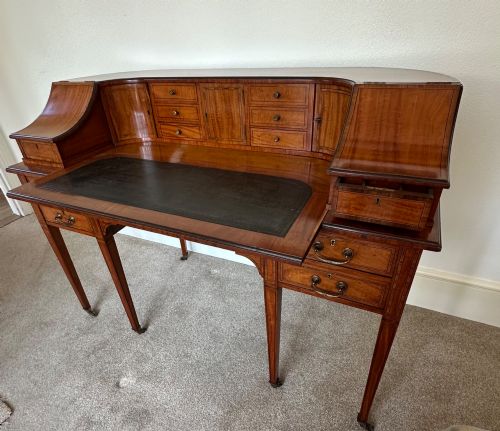
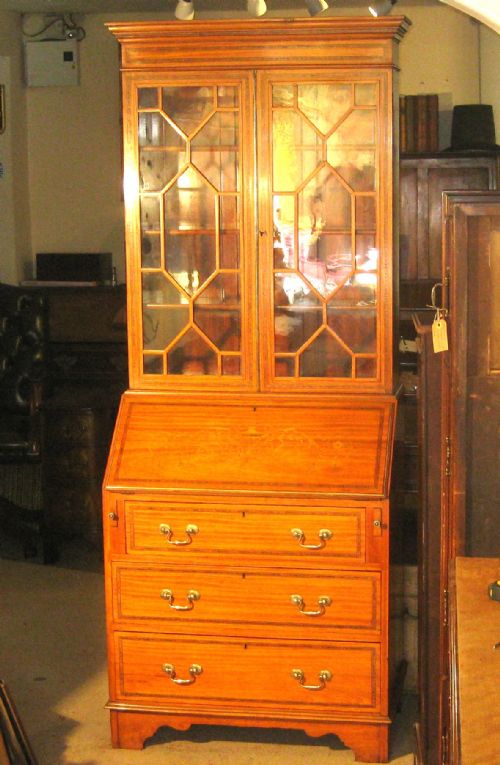
A vintage inlaid bureau desk combines a sloping fall-front writing flap with internal pigeonholes and drawers, resting atop a chest of drawers or a fitted stand. These pieces span several centuries of design, with Georgian, Victorian, and Edwardian examples forming the core of what you will encounter.
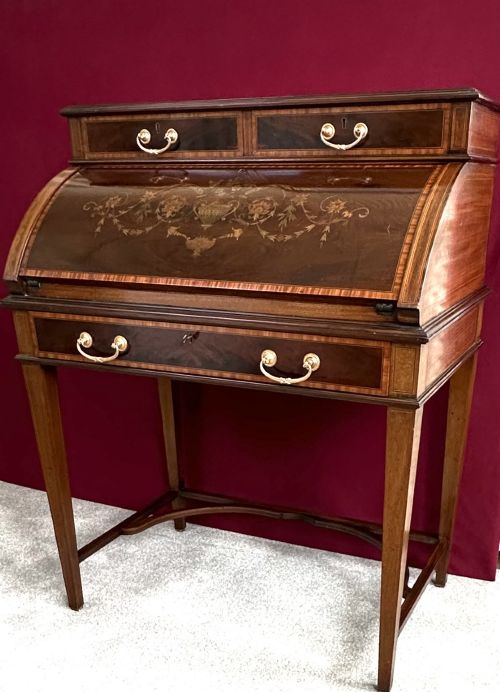
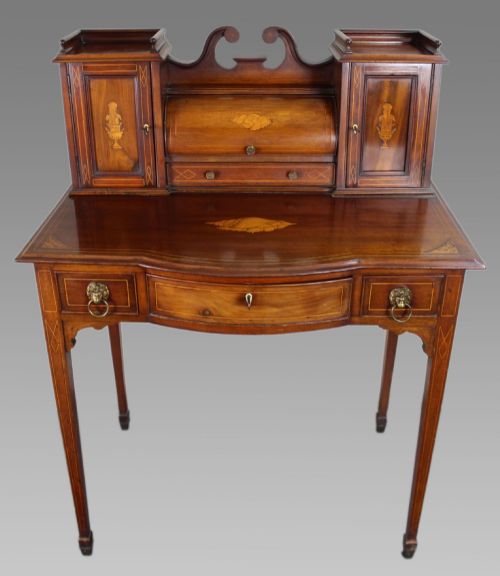
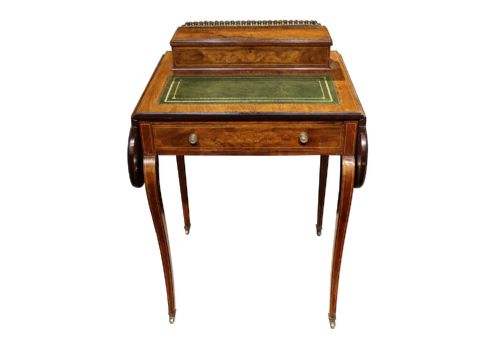
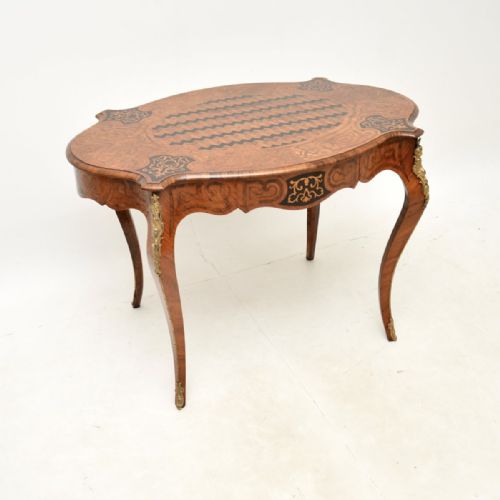
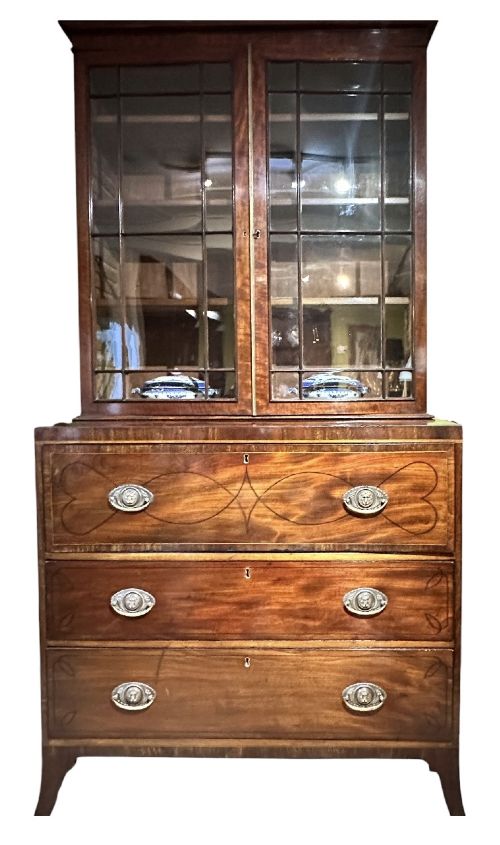
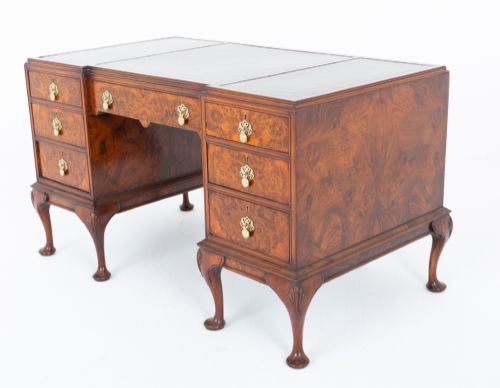
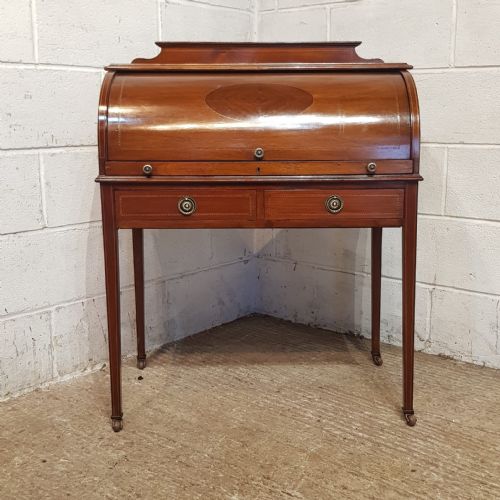
The most common pieces on this page are Edwardian creations made from mahogany and satinwood, often featuring delicate stringing and marquetry motifs. Alongside these traditional fall-front forms, the selection includes bureau bookcases, cylinder tops, and writing tables bearing similar decorative inlays.
How they were made
Cabinetmakers built these desks using solid timbers like mahogany, walnut, and yew wood, supplemented by decorative veneers on drawer fronts and fall flaps. Satinwood inlay and contrasting darker timbers created geometric borders and floral motifs.
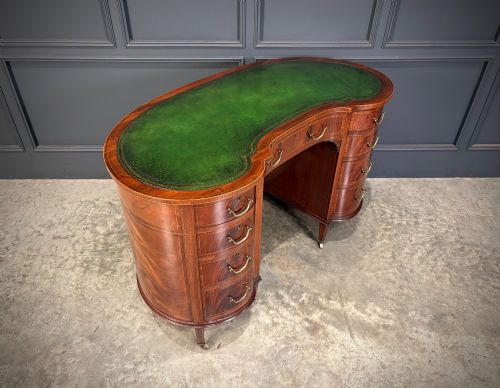
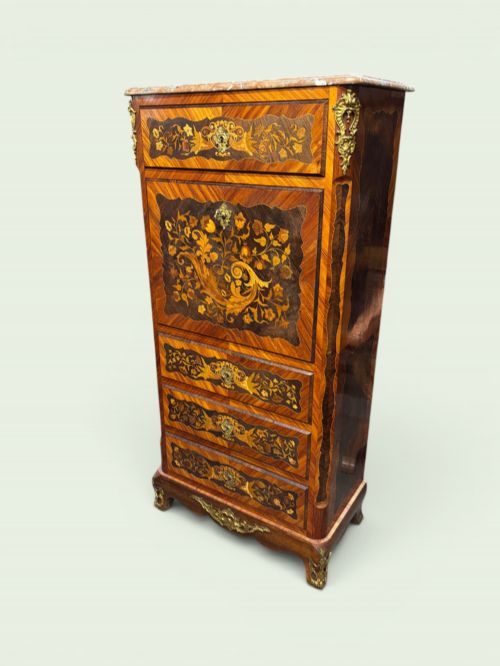
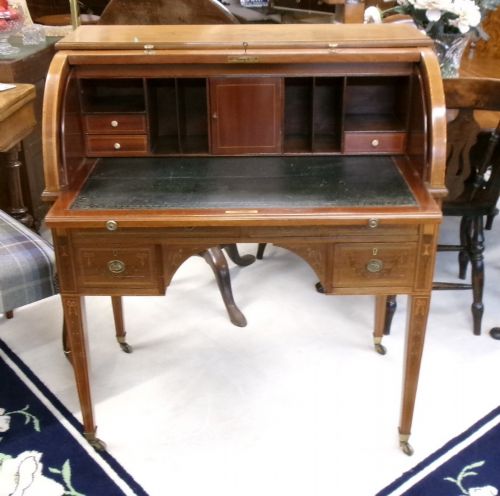
Brass handles, escutcheons, and occasional ormolu mounts finished the construction, while leather inserts provided a durable writing surface for daily correspondence.
Several pieces conceal hidden internal compartments designed for stashing love letters and missing keys.
What varies in quality
Quality rests upon the crispness of the cabinetwork and the precision of the timber matching. Superior pieces display finely figured flame mahogany or intricate floral marquetry that remains flush with the surrounding wood.
The interior arrangement dictates much of the distinction, where secondary drawers, secret compartments, and fitted pigeonholes demonstrate the maker's dedication to detail. Structural integrity in the fall-front hinges and smooth movement in the primary drawers separate standard utility furniture from finer workshops.
James Shoolbred of London·Edwards and Roberts
The Vintage Inlaid Bureau Desk Glossary
- Bureau
- A desk featuring a sloping hinged lid that opens to form a writing surface above a chest of drawers. It typically houses an arrangement of small drawers and pigeonholes inside.
- Marquetry
- Decorative patterns formed by fitting together thin slices of various coloured woods, veneers, and sometimes ivory or shell onto a structural carcass. This technique creates pictorial or geometric designs.
- Fall-front
- A hinged writing flap that drops from a vertical position to horizontal, serving as the main desk surface. When closed, it conceals the inner compartments.
- Satinwood
- A hard, durable tropical timber with a lustrous golden-yellow sheen frequently used for veneers and inlay work on Edwardian and Georgian furniture.
- Ormolu
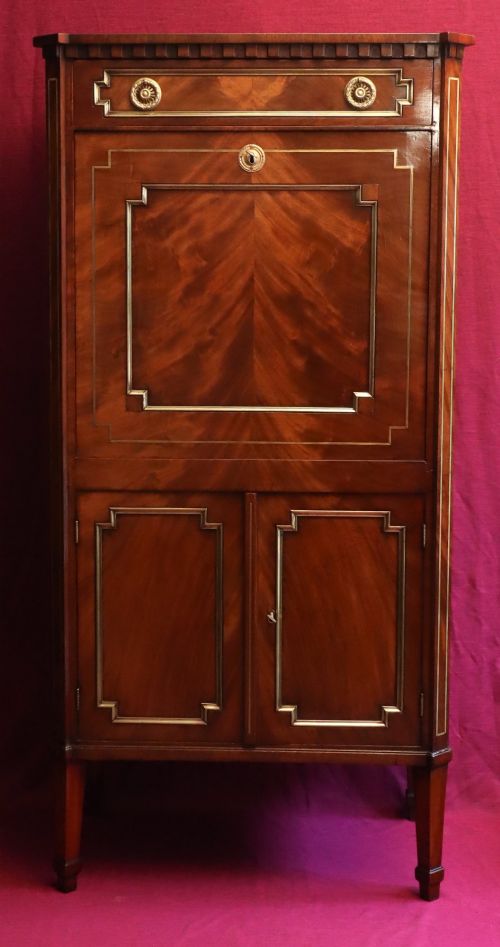
- Gilded bronze mounts and ornaments applied to furniture, common on continental European pieces from the eighteenth and nineteenth centuries.
Vintage Inlaid Bureau Desk: Frequently Asked Questions
How do I maintain the leather writing surface?
Clean the leather insert gently with a slightly damp cloth, avoiding harsh chemical cleaners that can strip the natural finish. Apply a specialised leather cream periodically to keep the material supple and prevent cracking.
Keep the desk away from direct sunlight and radiators to protect both the leather and the underlying timber from drying out or warping.
How do I distinguish Georgian from Edwardian pieces?
Georgian desks, dating from the eighteenth century, typically display heavier proportions, solid mahogany construction, and understated brassware. Their internal fittings often feature stepped drawers and secret compartments characteristic of earlier craftsmanship.
Edwardian pieces from the early twentieth century lean toward lighter satinwood or mahogany frames, featuring delicate stringing, painted motifs, and slender legs. They frequently echo earlier Sheraton or Regency styles but with a lighter domestic scale.
What is the difference between a bureau and a secretaire?
A bureau specifically relies on a sloping fall-front flap that drops forward to reveal the desk interior. The internal fittings sit directly behind this angled lid.
A secretaire generally conceals a pull-out or drop-down writing drawer disguised as a standard drawer within a chest or bookcase, keeping the external facade uniform until opened.