
Antique Cylinder Desk Bureau
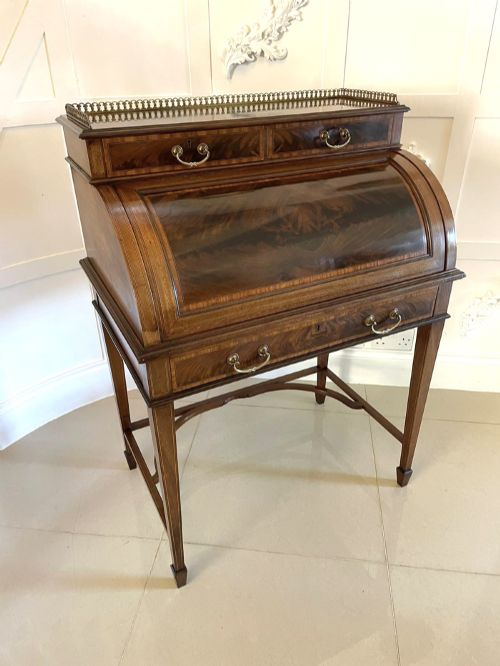
An antique cylinder desk bureau offers a curving roll front that hides your correspondence and writing papers while maintaining a refined profile in the room.
Antique Cylinder Desk Bureau
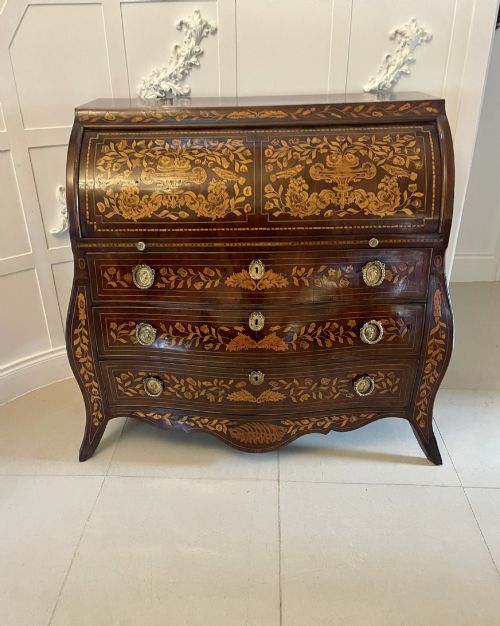
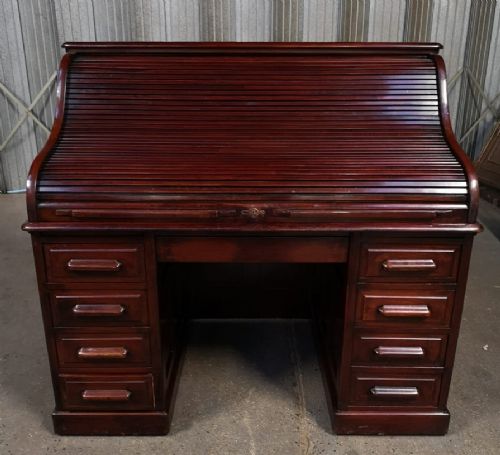
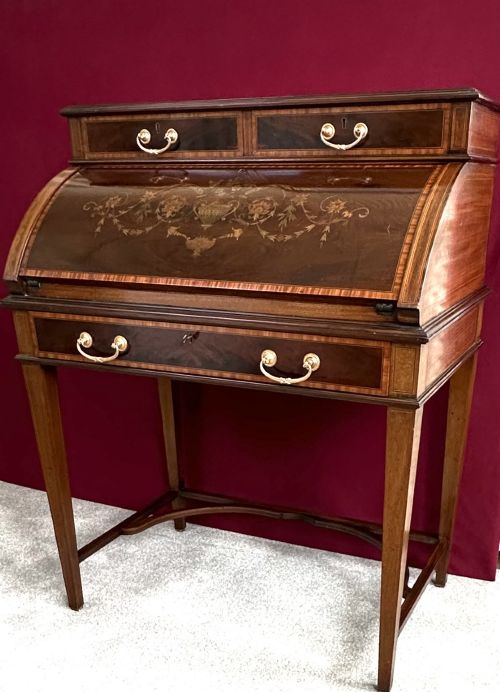
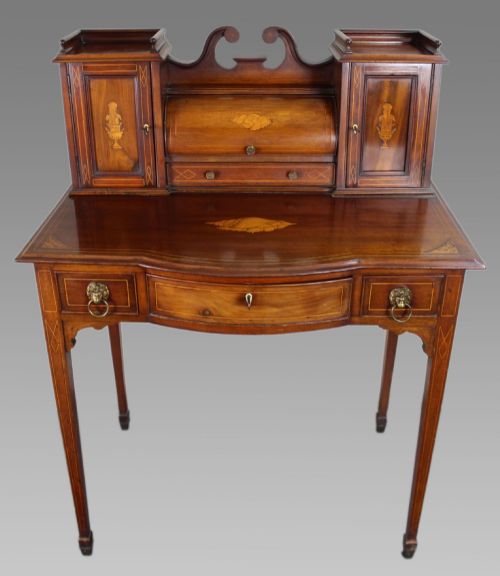
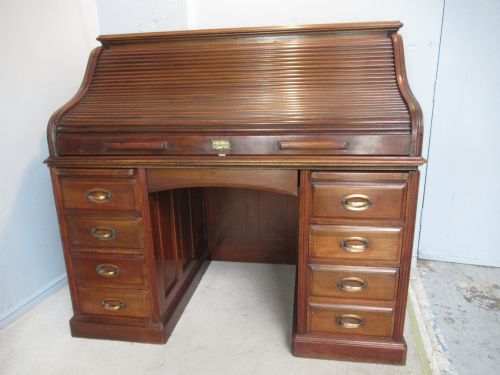
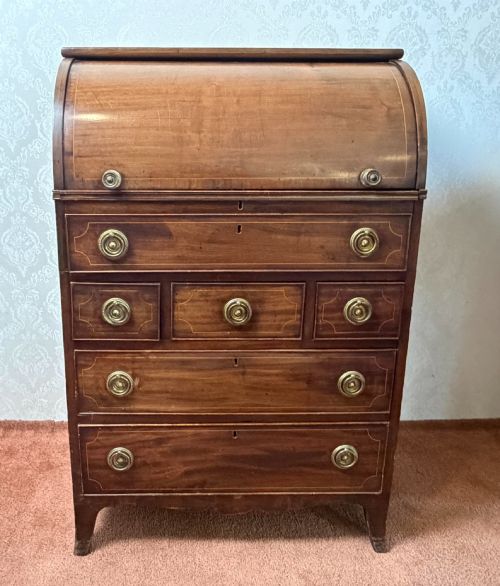
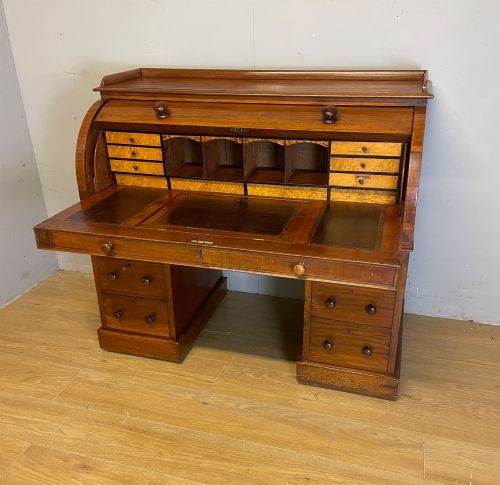
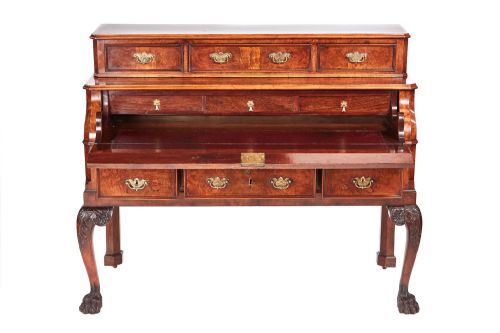
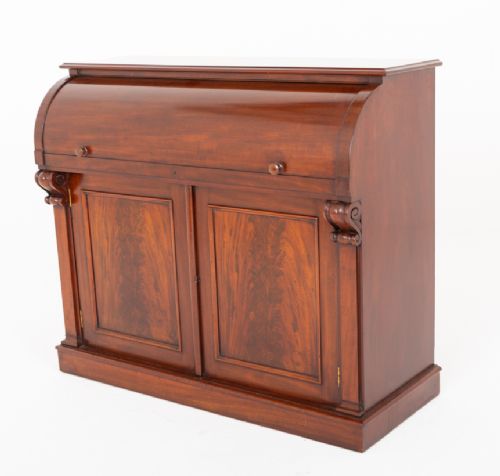
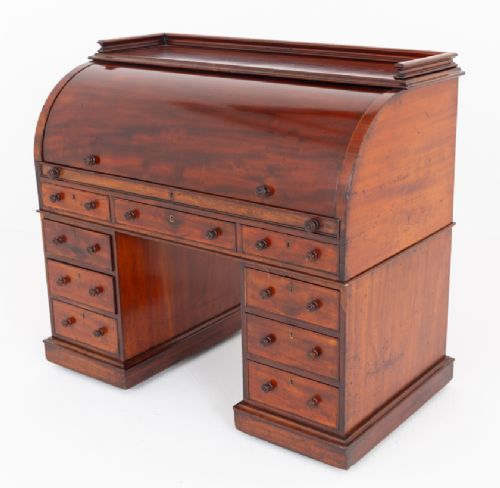
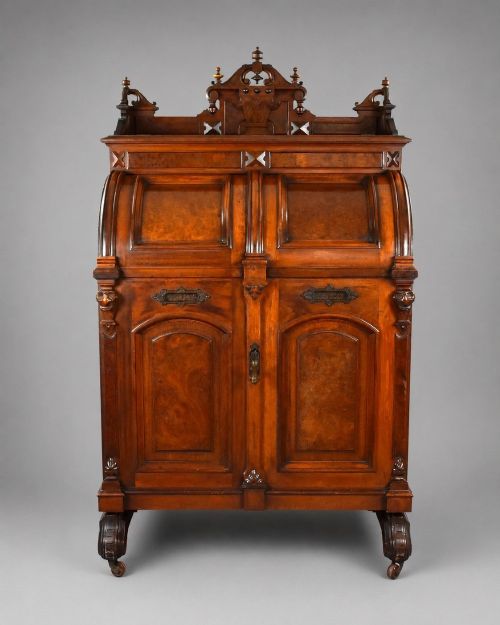
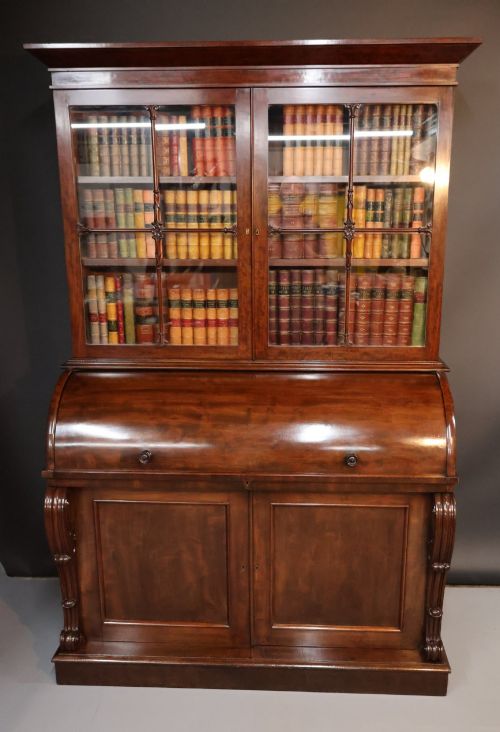
When you search for an antique cylinder desk bureau, you examine pieces designed to conceal a fitted writing interior beneath a semicircular rotating wooden shutter. The selection spans compact Edwardian ladies desks, substantial Victorian pedestal pieces, and Georgian cabinet work.
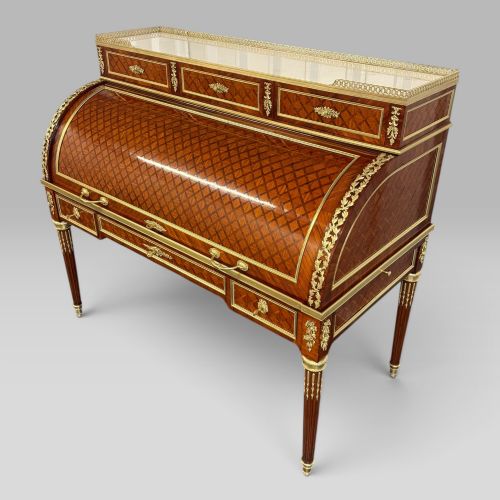
The most frequent examples on this page are mahogany cylinders from the nineteenth century, alongside satinwood and walnut variations influenced by Sheraton and Louis XVI revival styles.
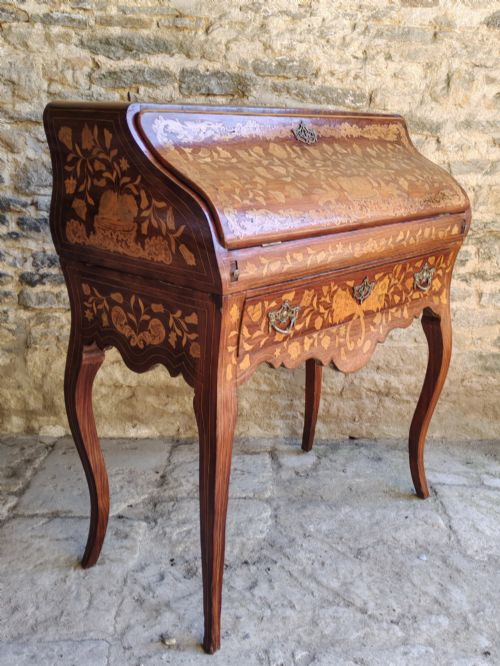
Origin points range from English workshops to French cabinet makers and Dutch marquetry centres, reflecting varied regional preferences for fitted compartments and sliding writing surfaces.
Materials and Techniques
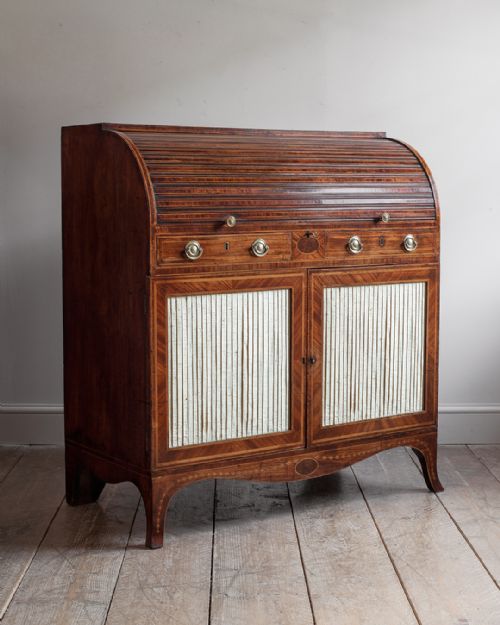
Construction relies heavily on solid mahogany, walnut, and satinwood, often enhanced with contrasting stringing, tambour slats, or elaborate floral marquetry panels.
Cabinet makers utilised brass handles, glass door panels, and applied ormolu mounts to decorate the exteriors, while incorporating leather lined pull out writing slides inside the primary compartment.
Listings feature mahogany, walnut, satinwood, and kingwood alongside brass and ormolu mounts across Georgian, Victorian, and Edwardian periods.
Markers of Excellence
Quality rests upon the smooth mechanical action of the rolling cylinder and the precision of the interior pigeonholes and small drawers.
Superior examples display figured timber grains like flame mahogany and burr walnut, matched with crisp marquetry inlay and sound structural joinery.
Maple & Co. London·Tudor & Burrey·Edwards & Roberts
The Antique Cylinder Desk Bureau Glossary
- Cylinder desk
- A writing table featuring a curving quarter or half cylinder shutter that rolls back to reveal the writing surface and drawers.
- Tambour
- A flexible sliding shutter formed from narrow vertical strips of wood glued to a canvas or leather backing.
- Marquetry
- Decorative veneer work arranged in pictorial patterns using different tinted woods and botanical specimens.
- Ormolu
- Gilt bronze mounts and decorative trimmings applied to the exterior of fine cabinet work.
- Secretaire
- A piece of furniture containing a drawer or compartment specifically equipped for writing letters.
Antique Cylinder Desk Bureau: Frequently Asked Questions
How do cylinder desks work?
The curved wooden shutter runs in a grooved track, sliding backward over the top or downward into the body of the desk when opened.
Opening the roll top often automatically releases the internal sliding writing surface or unlocks the surrounding small drawers.
Where were these desks used?
These desks served primarily in private libraries, drawing rooms, and study spaces of large townhouses and country estates.
Owners utilised them to sort correspondence and store important documents securely out of sight when not writing.
How do I date a bureau?
Cabinet construction methods, timber choices, and decorative motifs provide the clearest indicators for dating an antique piece.
Georgian examples tend to show restrained mahogany and satinwood veneers, whereas Victorian and Edwardian items often display heavier proportions or revival styling.
How do I maintain the mechanism?
Keep the sliding tracks clean of dust and debris to ensure the wooden cylinder rolls smoothly without binding.
Apply appropriate beeswax sparingly to the moving parts and maintain stable room humidity to prevent the timber from warping.