

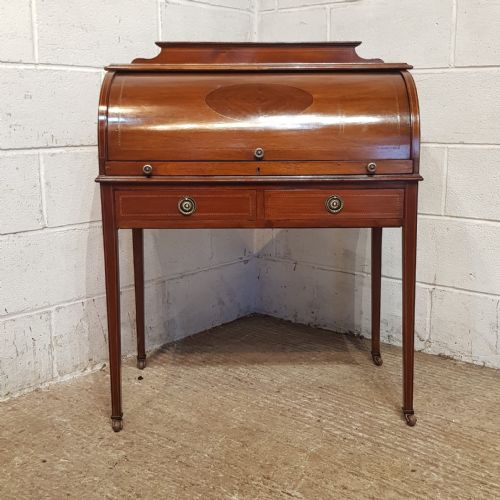
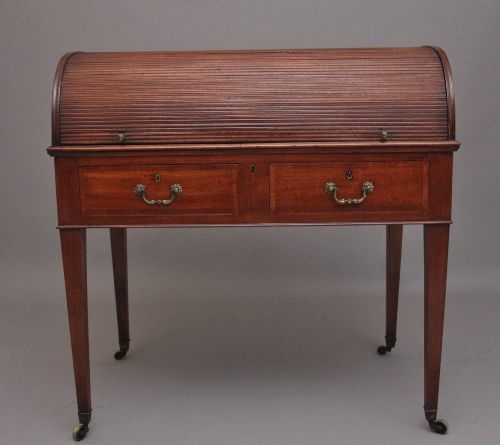
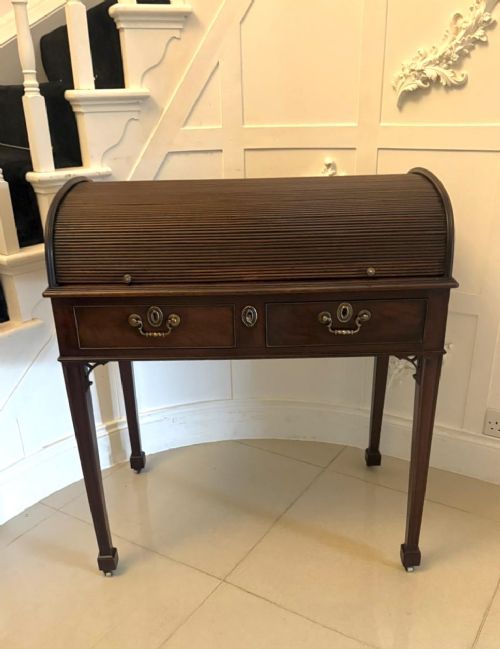
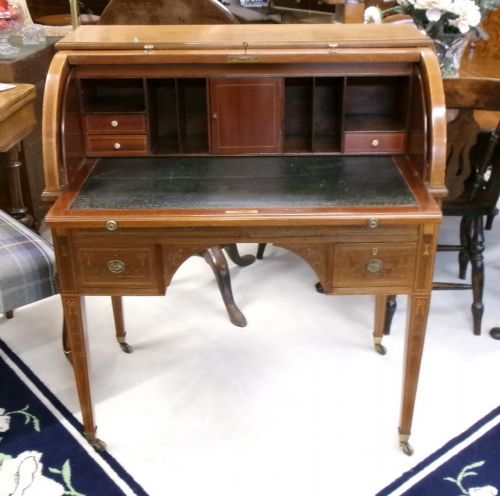


Cylinder Front Bureau Table
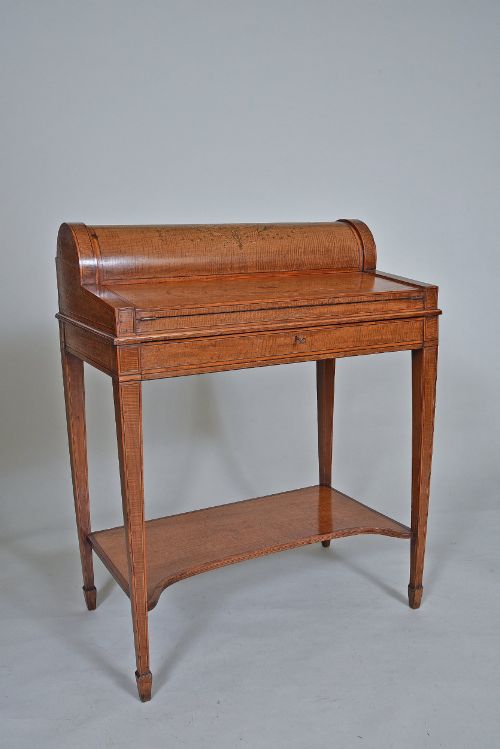
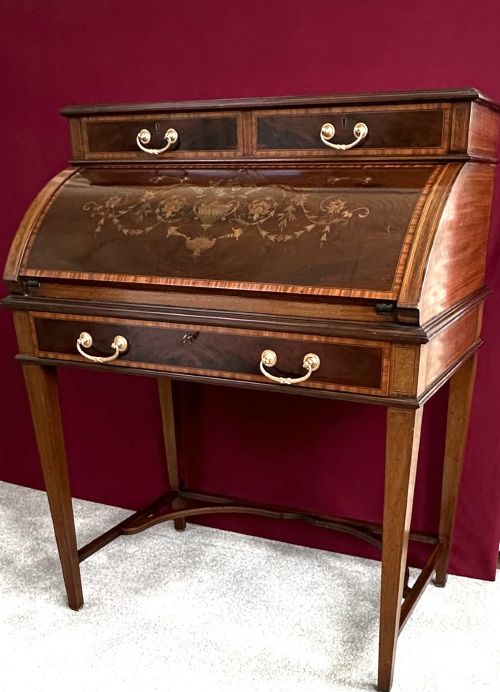
These cylinder front bureau table pieces are enclosed writing desks combining a curved fall front with hidden compartments, offering a neat surface for correspondence.
Cylinder Front Bureau Table
When you search for cylinder front bureau table, you encounter compact writing furniture designed with a rounded or cylindrical enclosure that conceals drawers and pigeonholes when closed. These pieces serve as practical workspaces that transform into tidy cabinets at the end of the day.
The selections span several distinct periods, featuring examples from the Georgian and Regency eras alongside Victorian and Edwardian iterations. Common forms include freestanding writing desks and ladies bureaus finished in rich timbers.
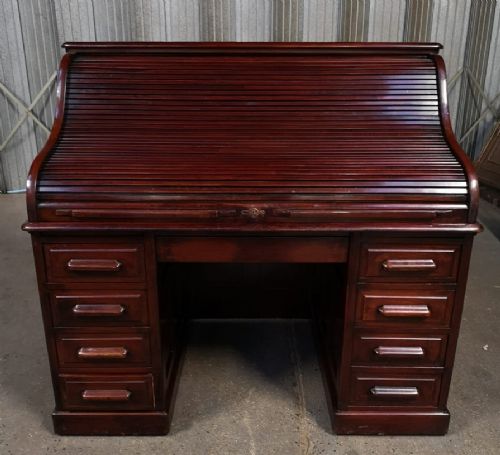
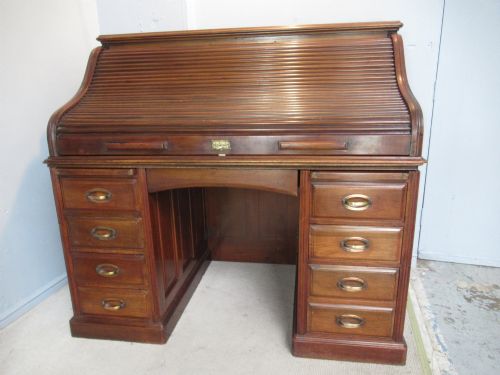
Most pieces on this page utilise traditional cabinet-making formats where a pull-out slide extends the writing surface while the curved shutter retracts. Variations range from small satinwood ladies desks to larger walnut roll top desks and estate writing desks.
Materials and construction
Cabinet makers constructed these desks primarily using solid and veneered timbers such as mahogany, walnut, satinwood, and rosewood. Finer examples incorporate contrasting stringing, marquetry, or parquetry inlay work across the exterior surfaces.
The signature cylindrical action relies on slatted tambour strips or solid curved panels that slide smoothly within vertical tracks. Additional fitted details often include leather writing inserts, brass hardware, and glass elements.
Internal compartments demand precise joinery to house small drawers and pigeonholes within the curved housing. Free standing versions feature finished backs and polished panels suited for placement away from walls.
Cylinder Front Bureau Table Retail Price Guide 2026
Typical asking prices for cylinder front bureau table among the pieces listed under this phrase on Sellingantiques today, from the lower quarter to the upper quarter. They describe what is for sale here now, not the wider market.
Materials utilised across the available inventory include mahogany, walnut, satinwood, rosewood, and brass hardware.
Distinctions in quality
The calibre of a cylinder front bureau table depends heavily on the selection of timber figures and the precision of the veneer work. Fine examples display carefully matched grain patterns across the curved cylinder and writing surface.
Mechanical execution separates standard production from superior craftsmanship. A well-made cylinder or tambour action operates with smooth resistance, aligning perfectly within its tracks without binding.
Internal complexity and secondary woods further distinguish finer pieces. Elaborate pigeonhole arrangements, secret compartments, and secondary timbers like oak or mahogany inside the drawers indicate higher workshop standards.
The Cylinder Front Bureau Table Glossary
- Cylinder front
- A curved, quarter-circle wooden shutter that rolls back into the body of the desk to reveal the interior workspace.
- Tambour
- A flexible shutter constructed from narrow strips of wood glued to a canvas backing, allowing it to curve around a radius.
- Bureau
- A desk equipped with a sloping or curved lid that covers a fitted interior of small drawers and pigeonholes.
- Parquetry
- Geometric patterns formed by fitting small pieces of contrasting veneer together on a surface.
- Satinwood
- A lustrous, hard timber native to Ceylon and the West Indies, prized for its pale yellow colour and fine grain during the Georgian and Sheraton periods.
Cylinder Front Bureau Table: Frequently Asked Questions
How do cylinder desks work?
The curved front panel slides backward along a grooved track into the body of the desk. Pulling it forward closes the cabinet over the writing surface.
Many designs link this motion to an internal mechanism that automatically unlocks or extends the writing slide as the cylinder retracts.
Where should I place a cylinder bureau?
These pieces suit home offices, studies, or living rooms where writing space is needed but desktop clutter should be hidden. Freestanding versions can sit in the middle of a room.
Ensure adequate clearance in front of the desk for the pull-out writing slide and your chair.
How do I identify a Georgian cylinder desk?
Georgian and George III examples typically feature solid mahogany or satinwood construction with delicate stringing and brass pulls. The proportions remain relatively restrained and elegant.
Look for hand-cut dovetails on the interior drawers and traditional timber framing beneath the polished surfaces.
What is the difference between a roll top and a cylinder desk?
A cylinder desk uses a solid curved panel that forms a smooth quarter circle when closed. A roll top desk uses flexible tambour slats.
Both serve the same function of concealing the desk interior, but the solid cylinder represents an earlier, more formal cabinet-making technique.