


Vintage Inlaid Bedside Tables
Vintage inlaid bedside tables offer practical bedside storage enriched by period marquetry, satinwood, and mahogany craftsmanship.
Vintage Inlaid Bedside Tables
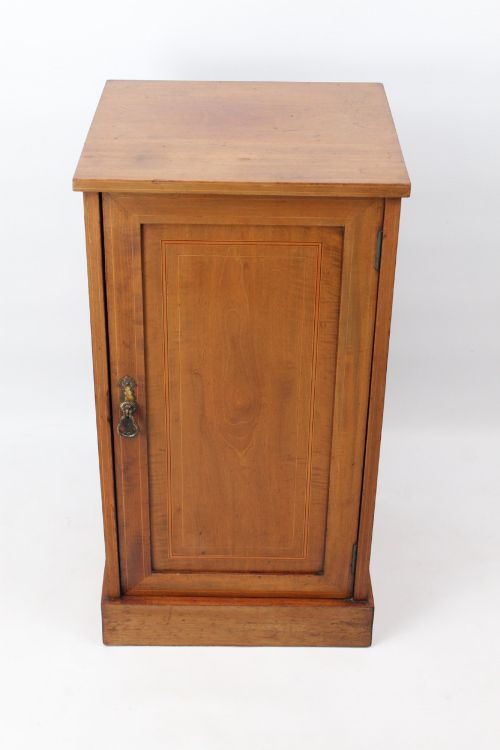
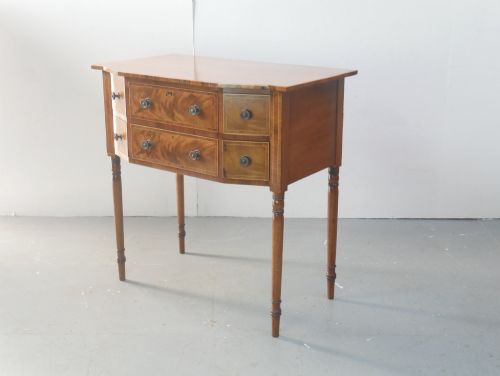
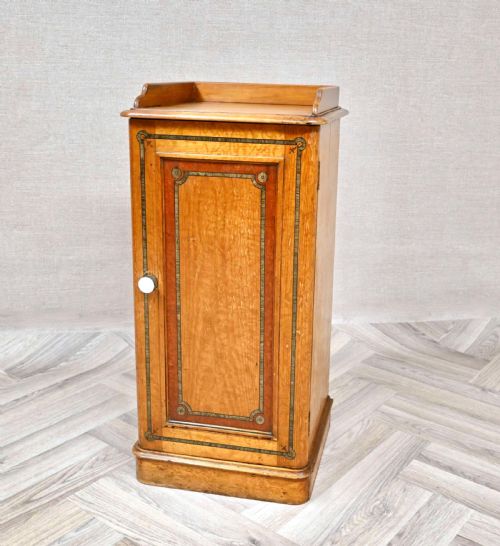
Vintage inlaid bedside tables encompass compact cabinets, chests of drawers, and lamp tables designed to sit beside a bed. The selection on this page relies heavily on Edwardian and 1920s examples alongside nineteenth-century predecessors.
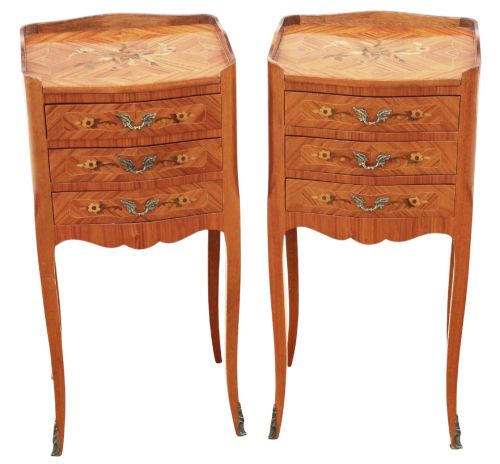
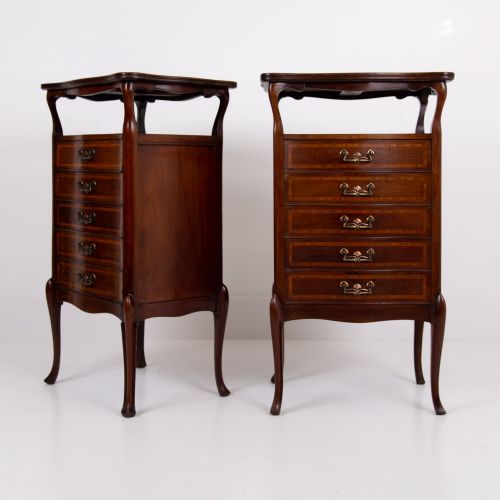
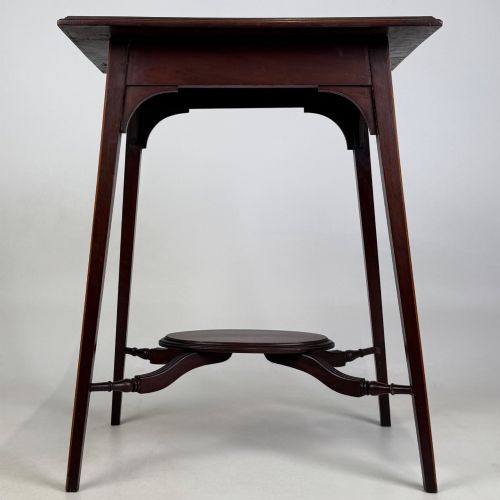
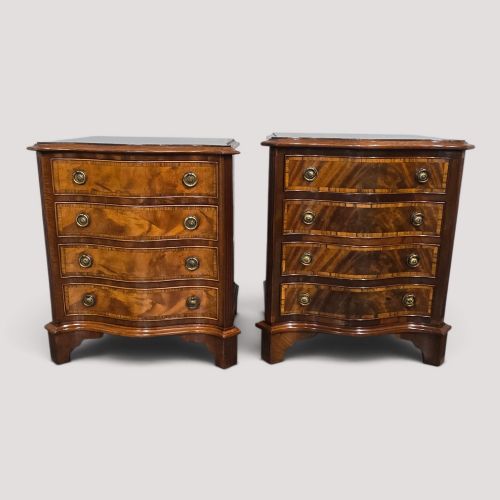
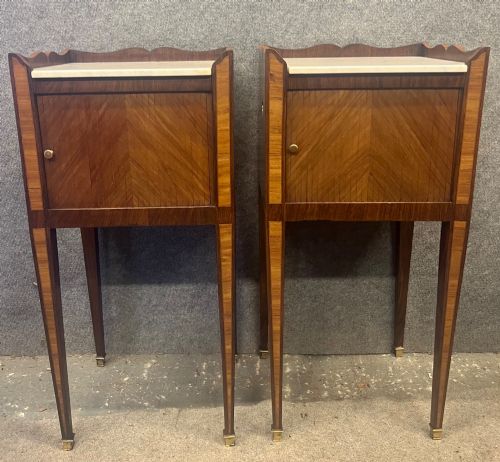
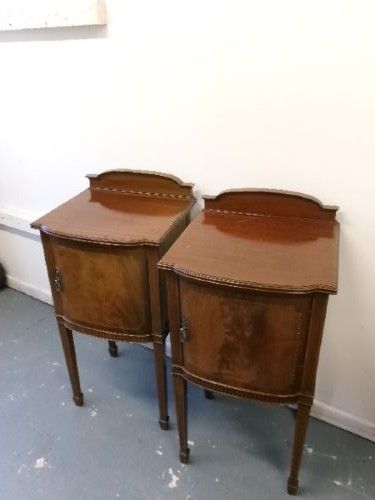
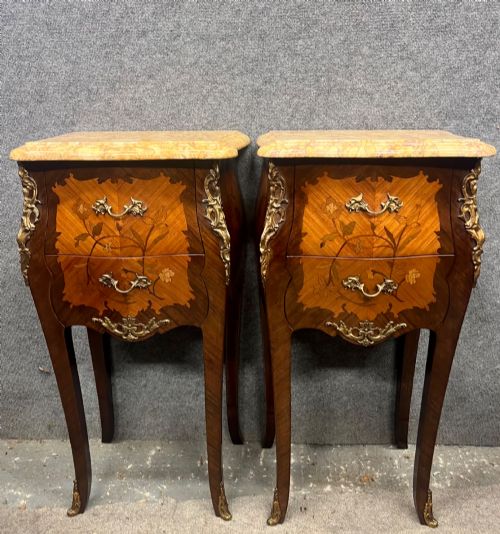
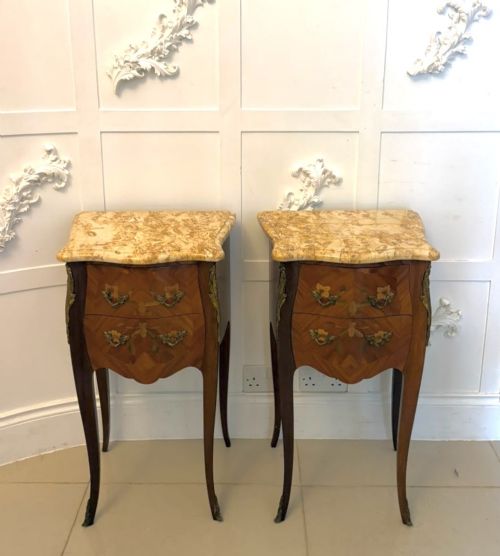
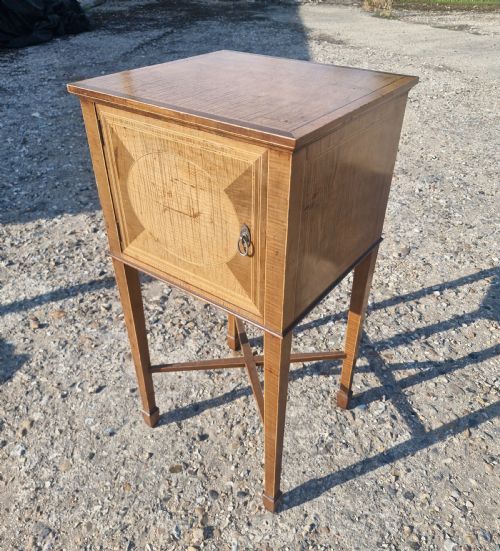
Most pieces combine functional storage drawers or cupboards with decorative wood surfaces. Forms range from straightforward mahogany cabinets to French marble-topped marquetry nightstands and serpentine chests.
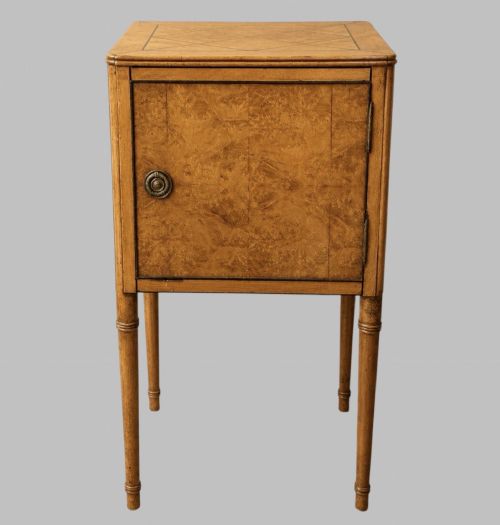
Makers often drew upon Sheraton Revival and Louis XV styles to shape these small pieces. Buyers frequently encounter pairs alongside single lamp tables suited for diverse bedroom layouts.
How they were made
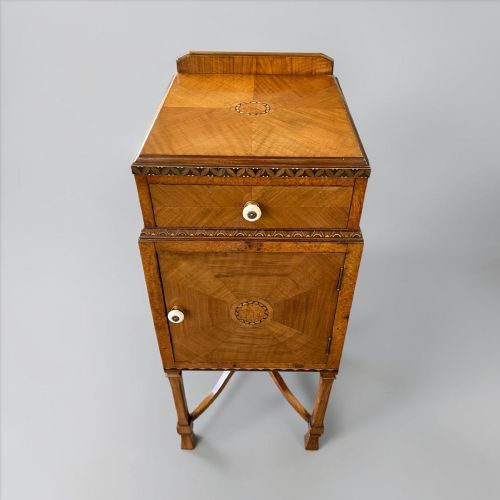
Cabinetmakers constructed the carcases using dense timbers such as mahogany, walnut, and kingwood, frequently applying finer veneers of satinwood and rosewood over secondary woods like pine. Marquetry and contrasting wood stringing provided intricate surface patterns across drawer fronts and top panels.
Many French and continental specimens integrated heavy marble tops above wooden bodies, while brass handles and gallery rails supplied functional hardware details.
Listings span periods from the nineteenth century through the 1930s, incorporating Edwardian, Victorian, and Art Deco design influences.
What varies in quality
Quality rests upon the precision of the marquetry inlay and the crispness of the timber selection. Finer pieces demonstrate seamless veneer matching and tightly fitted joints without excessive modern intervention.
The integrity of secondary materials, such as intact marble slabs and original brass hardware, elevates certain examples above standard utility pieces.
Walter Carter Harrods·Morant And Co London·Heals
The Vintage Inlaid Bedside Tables Glossary
- Marquetry
- Decorative patterns formed by fitting small pieces of veneer into a wooden background. This technique defines the visual character of many Edwardian and 1920s nightstands.
- Satinwood
- A lustrous, pale yellow timber native to India and Sri Lanka. Cabinetmakers utilised it during the eighteenth and nineteenth centuries for contrasting stringing and geometric inlays.
- Serpentine
- A curved shape resembling a snake, featuring a convex centre flanked by concave curves. It appears frequently on the drawer fronts of mid-tier and top-tier bedside chests.
- Kingwood
- A heavily figured, dense tropical wood showing dark purple-brown markings. French makers favoured it for high-end Louis XV style bedside cabinets.
- Sheraton Revival
- A late nineteenth and early twentieth century design movement inspired by the furniture of George Sheraton. Pieces from this style emphasise refined classical proportions and delicate inlay.
Vintage Inlaid Bedside Tables: Frequently Asked Questions
Are vintage bedside tables sold as pairs?
Many listings present matching pairs of bedside tables, particularly among twentieth-century French and Edwardian examples.
Single cabinets also appear regularly for buyers requiring only one lamp table.
What materials are common in these tables?
Mahogany and walnut form the structural core for the majority of pieces on this page.
Satinwood, kingwood, and rosewood appear as decorative veneers alongside boxwood stringing and brass handles.
How do I identify an Edwardian piece?
Edwardian bedside tables typically feature light mahogany construction with subtle satinwood inlay and Sheraton Revival influences.
Their proportions remain neat and upright, reflecting domestic bedroom requirements from the early nineteen hundreds.
Do these tables include marble tops?
Several French cabinets incorporate fitted marble tops above their wooden storage compartments.
These stone surfaces provided durable, washable finishes for nineteenth-century and 1920s nightstands.