
Inlaid Wood Bedside Cabinets
These inlaid wood bedside cabinets combine practical bedside storage with decorative cabinet work from the Victorian, Edwardian and early twentieth century periods.
Inlaid Wood Bedside Cabinets
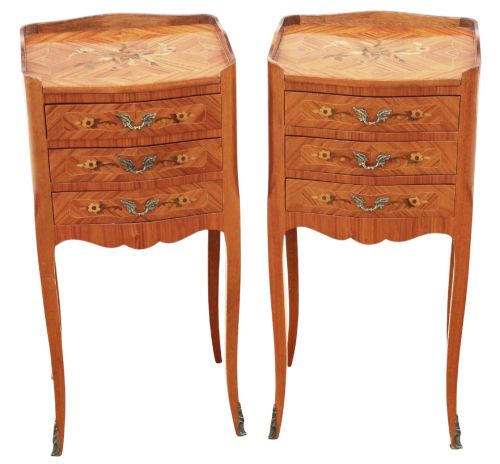
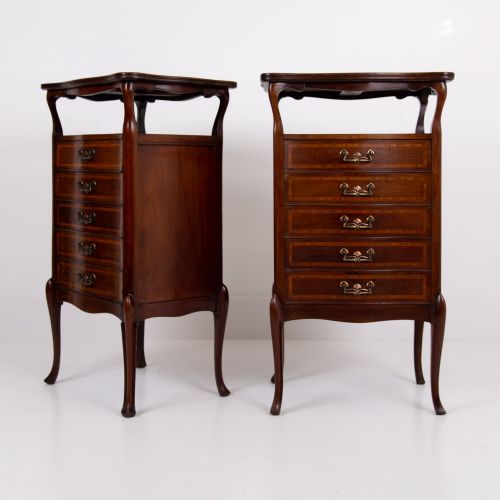
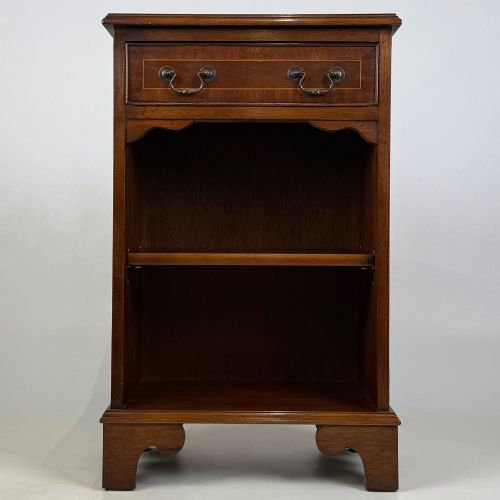
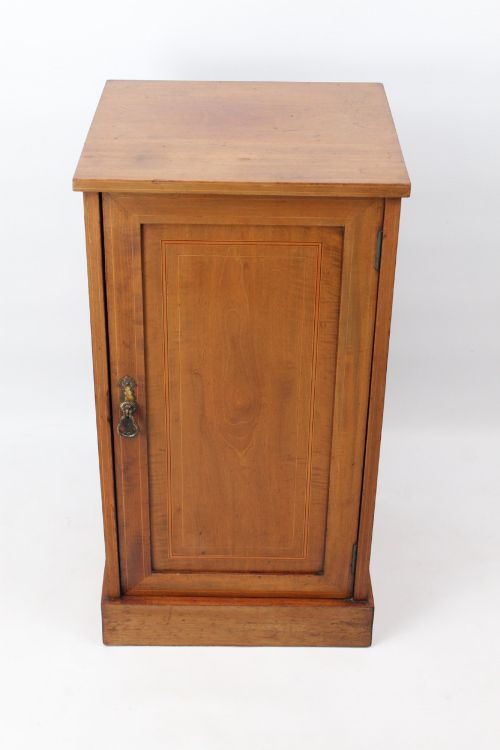
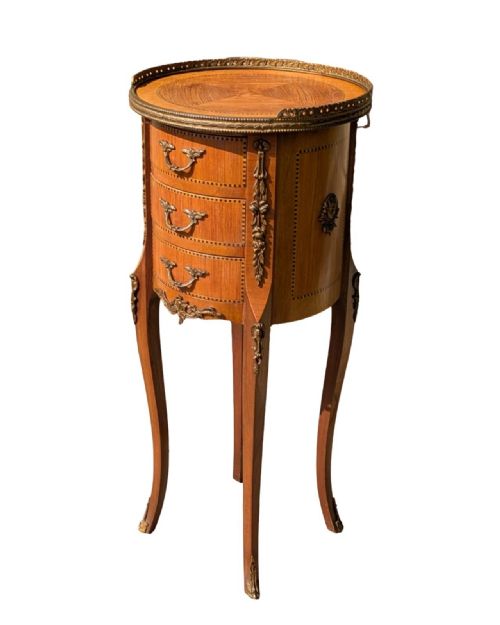
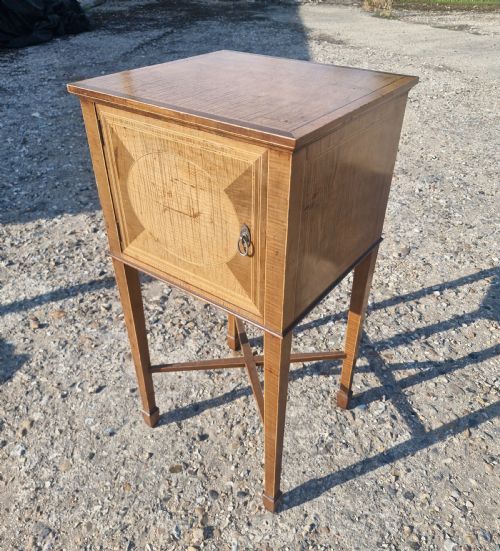
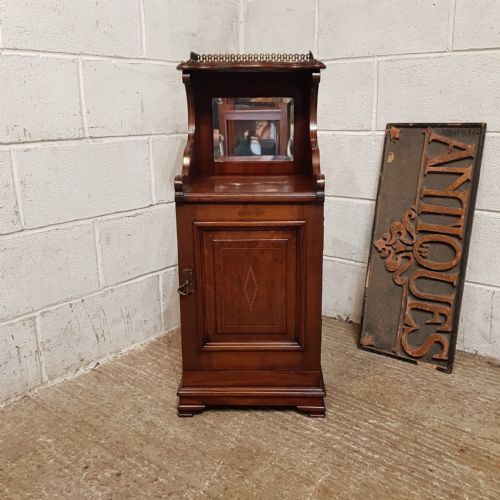
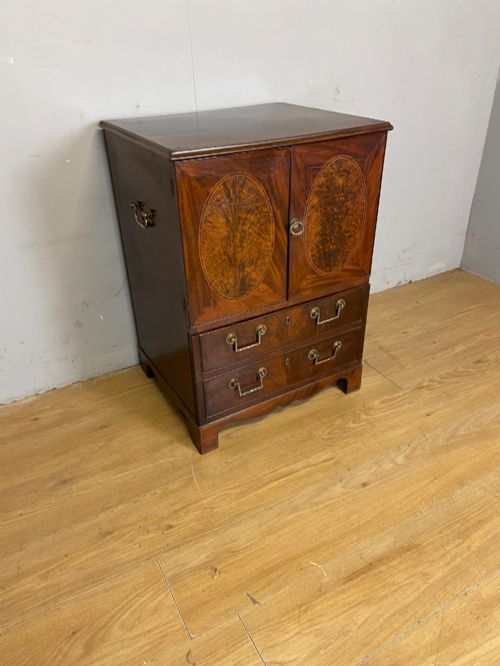
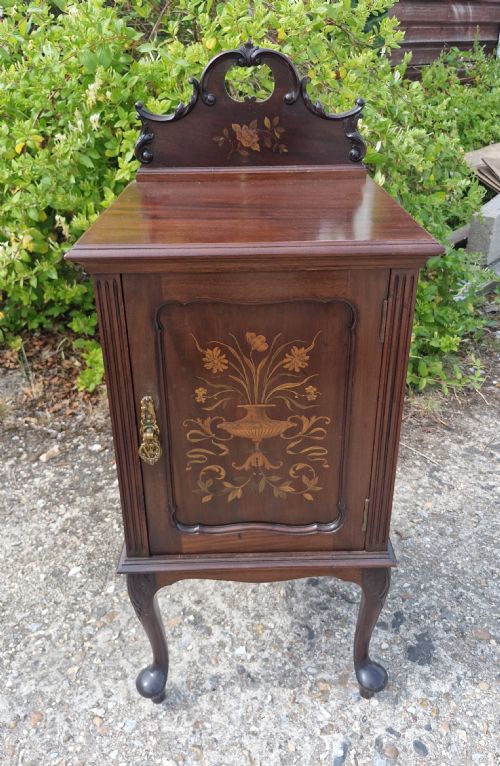
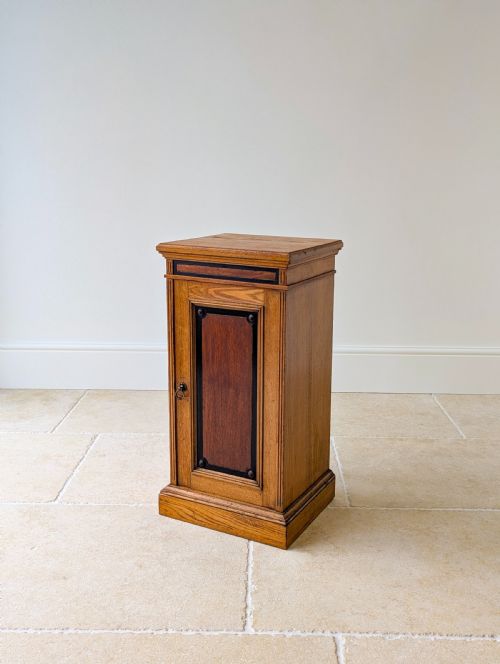
Inlaid wood bedside cabinets serve as compact bedside storage units, taking the form of small cupboards, nightstands or pot cupboards designed to sit beside a bed. When exploring inlaid wood bedside cabinets, buyers encounter both English mahogany and satinwood pieces alongside continental French marquetry and parquetry examples.
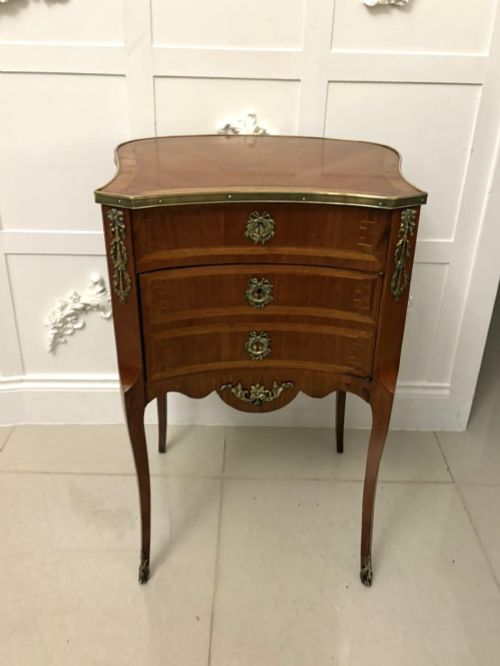
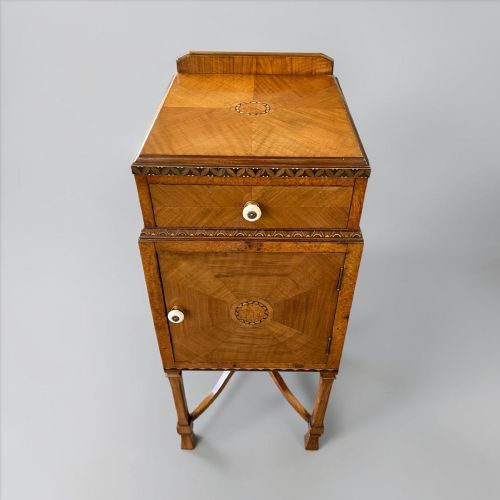
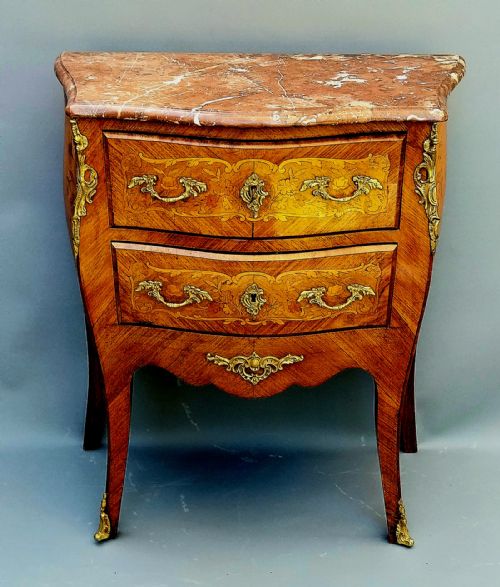
The selection ranges from neat Edwardian and Victorian iterations to later French pieces featuring marble tops and shaped bodies. These cabinets provide enclosed storage behind a single door, often accompanied by a drawer above.
How they were made
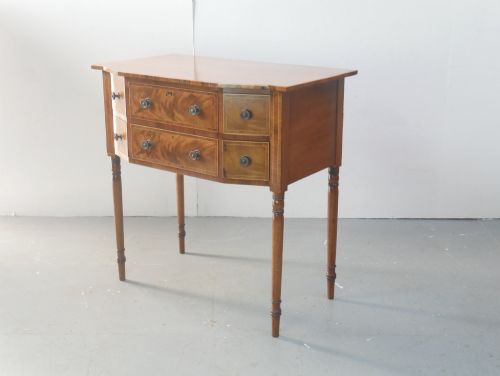
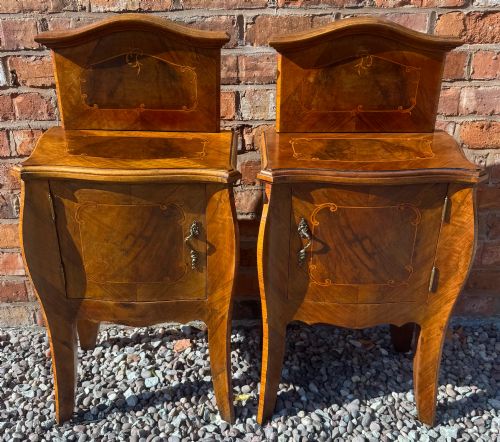
Cabinet makers utilised dense hardwoods such as mahogany, walnut and rosewood as a foundation, applying contrasting veneers of satinwood, kingwood and boxwood to create geometric parquetry or pictorial marquetry patterns. Complex shapes, including serpentine and bombe profiles, required skilled bending of timber and careful application of veneer over softwood carcases.
Details like brass handles, mounts and marble tops were integrated into the design, particularly on French Louis XV style and twentieth-century nightstands. Fretwork panels, stringing and contrasting inlay work define the surface ornamentation across both English and continental workshops.
Some Victorian bedside cupboards secretly housed chamber pots behind neatly panelled doors.
What varies in quality
The standard of timber selection and the precision of the veneer work largely dictate the quality of these cabinets. Finer examples display tightly figured flame mahogany or carefully matched kingwood veneers with crisp, unblemished boxwood stringing.
Construction methods also separate standard production from superior pieces, seen in the neatness of dovetail joints on drawers and the integration of fitted marble slabs. The finesse of the marquetry cutting and the symmetry of the parquetry patterns reflect the skill invested by the original maker.
Morant And Co London·Gillows
The Inlaid Wood Bedside Cabinets Glossary
- Marquetry
- Decorative veneer work arranged to form pictorial designs or scenes using various coloured woods. This technique requires meticulous hand-cutting of thin wood sheets.
- Parquetry
- Geometric patterns formed by small pieces of wood fitted together on a surface. It frequently appears on twentieth-century continental tabletops and cabinet doors.
- Kingwood
- A dense, richly grained exotic timber used extensively for cabinet making and decorative veneers. It often shows dark violet-brown markings.
- Satinwood
- A luminous yellowish timber prized for its lustrous grain and pale colour. Makers utilised it for stringing, banding and full veneer surfaces during the eighteenth and nineteenth centuries.
- Bombe
- A swelling, outward-curving shape characteristic of continental furniture styles. This contour demands advanced woodworking ability to construct securely.
Inlaid Wood Bedside Cabinets: Frequently Asked Questions
Are these cabinets usually sold as pairs?
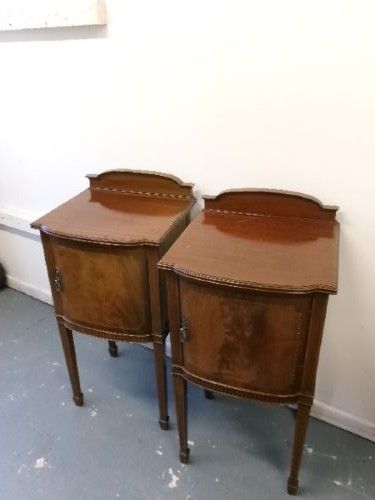
Many French and Edwardian examples survive as matching pairs, particularly those finished in kingwood and fruitwood. These matched sets were originally produced to flank a double bed.
Single cabinets also appear frequently, reflecting English furnishing habits of the Victorian period where individual bedside cupboards sufficed.
What is the difference between a bedside cabinet and a nightstand?
Bedside cabinets typically feature an enclosed cupboard space behind a door, sometimes incorporating an interior shelf or chamber pot compartment. They offer substantial enclosed storage for nighttime essentials.
Nightstands often present a more open profile, occasionally combining a small drawer with an open shelf below for books and lamps.
How do I distinguish Edwardian pieces from Victorian ones?
Victorian cabinets generally employ heavier timbers like rosewood and dark mahogany, frequently displaying robust proportions and Aesthetic Movement or Revival influences. They lean towards deeper colouration and solid structural forms.
Edwardian pieces often favour lighter satinwood and mahogany with delicate stringing, Sheraton Revival motifs, and a brighter, more restrained aesthetic.
Did these pieces always have marble tops?
Marble tops appear predominantly on continental pieces, especially French cabinets from the late nineteenth and early twentieth centuries. The stone provided a durable, wipe-clean surface for water jugs and wash basins.
English cabinets almost exclusively feature timber tops, finished to match the primary mahogany or satinwood of the carcase.