





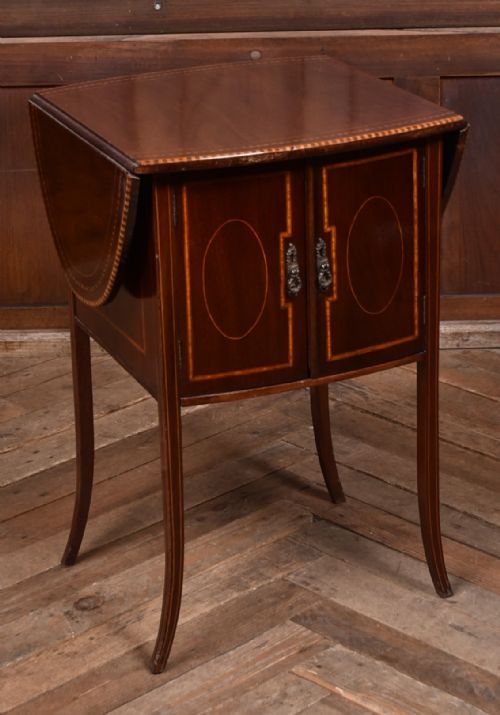
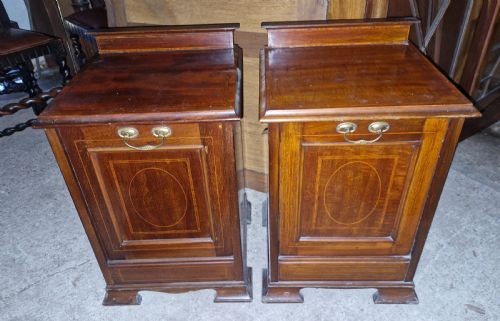

Inlaid Satinwood Nightstand
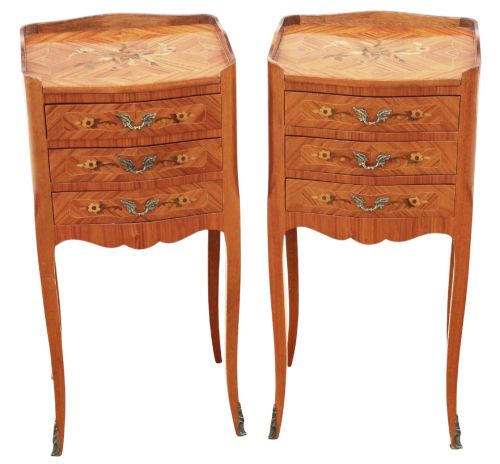
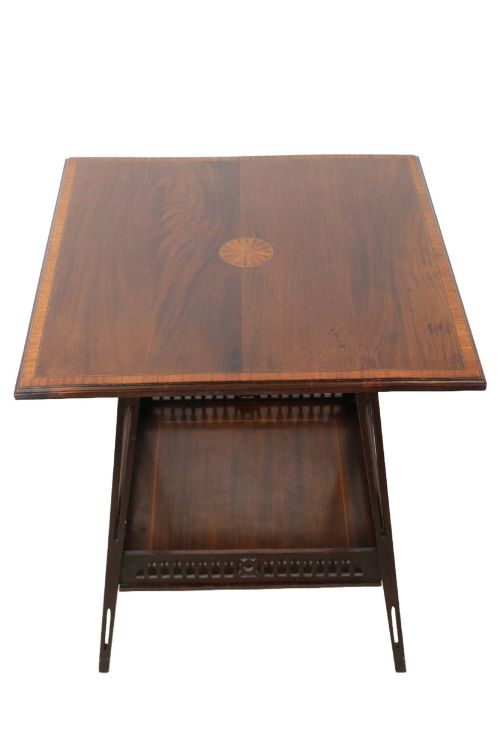
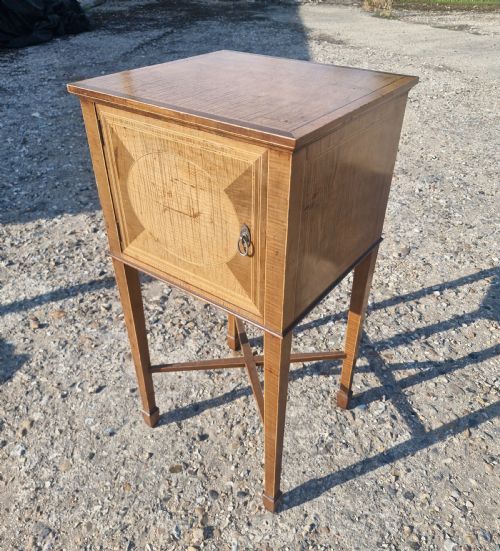
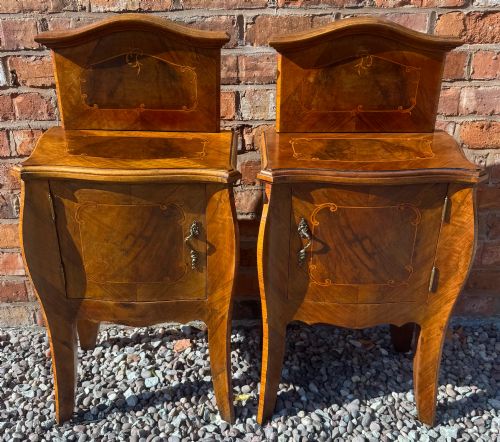
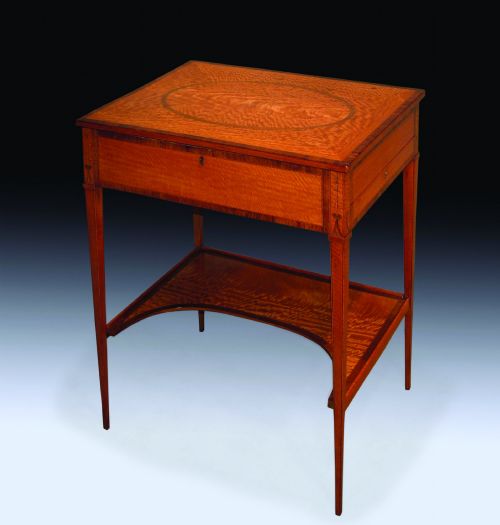
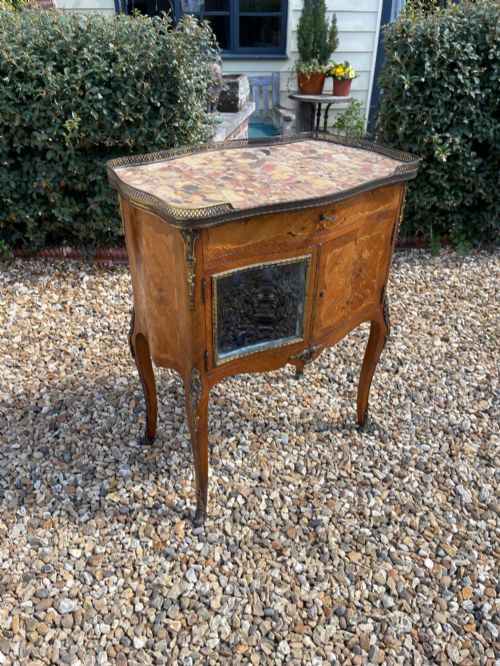
An inlaid satinwood nightstand brings a bright, figured timber and delicate marquetry to the bedside.
Inlaid Satinwood Nightstand
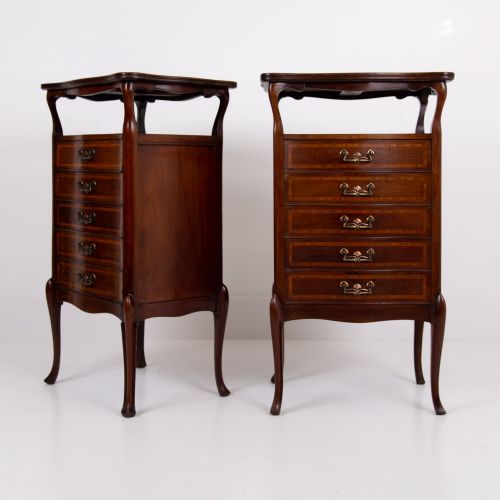
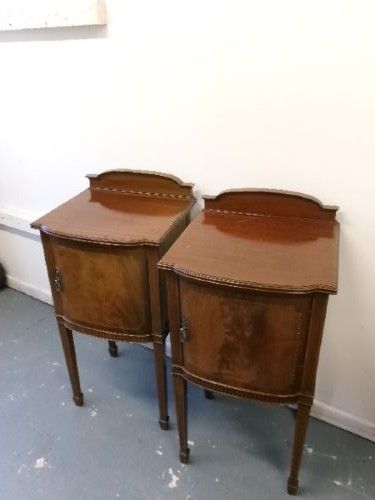
Edwardian interpretations dominate the selection alongside late nineteenth century examples, often drawing on Sheraton Revival and Neo-Classical Revival aesthetics. Alongside true bedside cabinets, buyers regularly encounter related forms such as occasional tables, lamp tables, and Pembroke tables.
Timbers alternate between solid foundational woods and decorative surface treatments, balancing utility with decorative marquetry and bandings. The scale remains domestic and restrained, designed to sit beside a bed or in a corner as a lamp or side table.
Materials and construction
Cabinet makers utilised mahogany or structural pine as a carcass timber, applying veneers of satinwood to external surfaces to create a light, reflective finish. Contrasting borders employed boxwood, walnut, and rosewood for stringing and geometric banding.
Marquetry and parquetry ornamentation involved hand-cutting thin sections of tinted and natural woods to form floral or classical motifs. Brass hardware, including handles, hinges, and occasional castors, provided functional detailing to doors, drop-leaves, and drawers.
Markers of distinction
The refinement of the marquetry and the crispness of the contrasting inlay separate standard production from exceptional cabinet work. Subtle tonal variations in the satinwood veneer and the precision of the mitre joints indicate the original maker's skill.
The integrity of the structural carcase and the retention of original brass fittings dictate the piece's preservation state. Maker signatures or stamps from established workshops provide definitive proof of origin that elevates a piece.
Trevor Page & Co·Morant & Co·Maple & Co·Gillows·Charles Topino
The Inlaid Satinwood Nightstand Glossary
- Satinwood
- A pale, dense tropical timber prized for its lustrous, reflective grain and smooth texture. It serves as the primary veneered surface on many revival pieces.
- Marquetry
- The art of forming decorative patterns using fitted veneers of various woods, shells, or ivory. Craftsmen assemble these pictorial designs onto the carcass surface.
- Pembroke table
- A small occasional table featuring two hinged drop leaves on opposing sides. It often includes a single small drawer beneath the top.
- Parquetry
- A geometric mosaic of wood pieces used for floor or furniture decoration. This technique creates repeating patterns like cubes or chequers.
- Sheraton Revival
- A late nineteenth and early twentieth century design movement that reinterpreted the light, neoclassical furniture forms of the eighteenth century designer Thomas Sheraton.
Inlaid Satinwood Nightstand: Frequently Asked Questions
What is an inlaid satinwood nightstand?
It is a small bedroom cabinet or table constructed with pale satinwood veneers and decorative wood inlays. These pieces provide compact bedside storage or surface space.
Most surviving examples date from the Edwardian period and the late Victorian era. They often incorporate revival styles inspired by eighteenth-century designers.
How do I date an inlaid satinwood nightstand?
Dating relies on examining the construction methods, secondary timbers, and prevailing stylistic revivals present in the piece. Edwardian examples often feature lighter proportions and machine-assisted veneers compared to earlier Victorian work.
Cabinet maker stamps, paper labels, and brass hardware styles offer additional chronological clues. Secondary woods inside drawers can also help narrow the manufacturing decade.
Were these tables used only as nightstands?
Period makers produced these compact forms to serve multiple domestic functions around the home. They frequently doubled as lamp tables, sewing tables, or occasional side tables in sitting rooms.
Drop-leaf variants like Pembroke tables provided flexible surface area that could expand when needed. Cupboard interiors accommodated chamber pots or general bedroom storage.
How do I care for satinwood furniture?
Satinwood requires protection from direct sunlight to prevent the pale timber from darkening or bleaching unevenly. Consistent indoor humidity levels prevent the veneer from lifting or cracking.
Gentle dusting with a soft, dry cloth maintains the finish without stripping natural waxes. Modern chemical polishes should be avoided in favour of traditional beeswax formulations.