
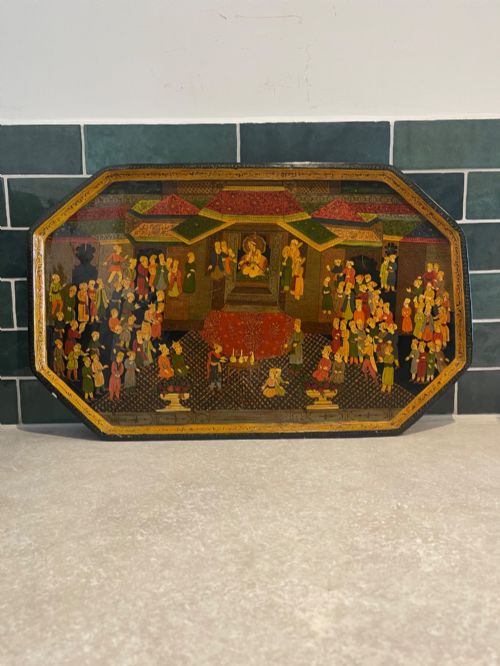


Vintage Indian Tray
A vintage indian tray brings hand-beaten metal and carved timber into a room, offering both decorative presence and everyday utility.
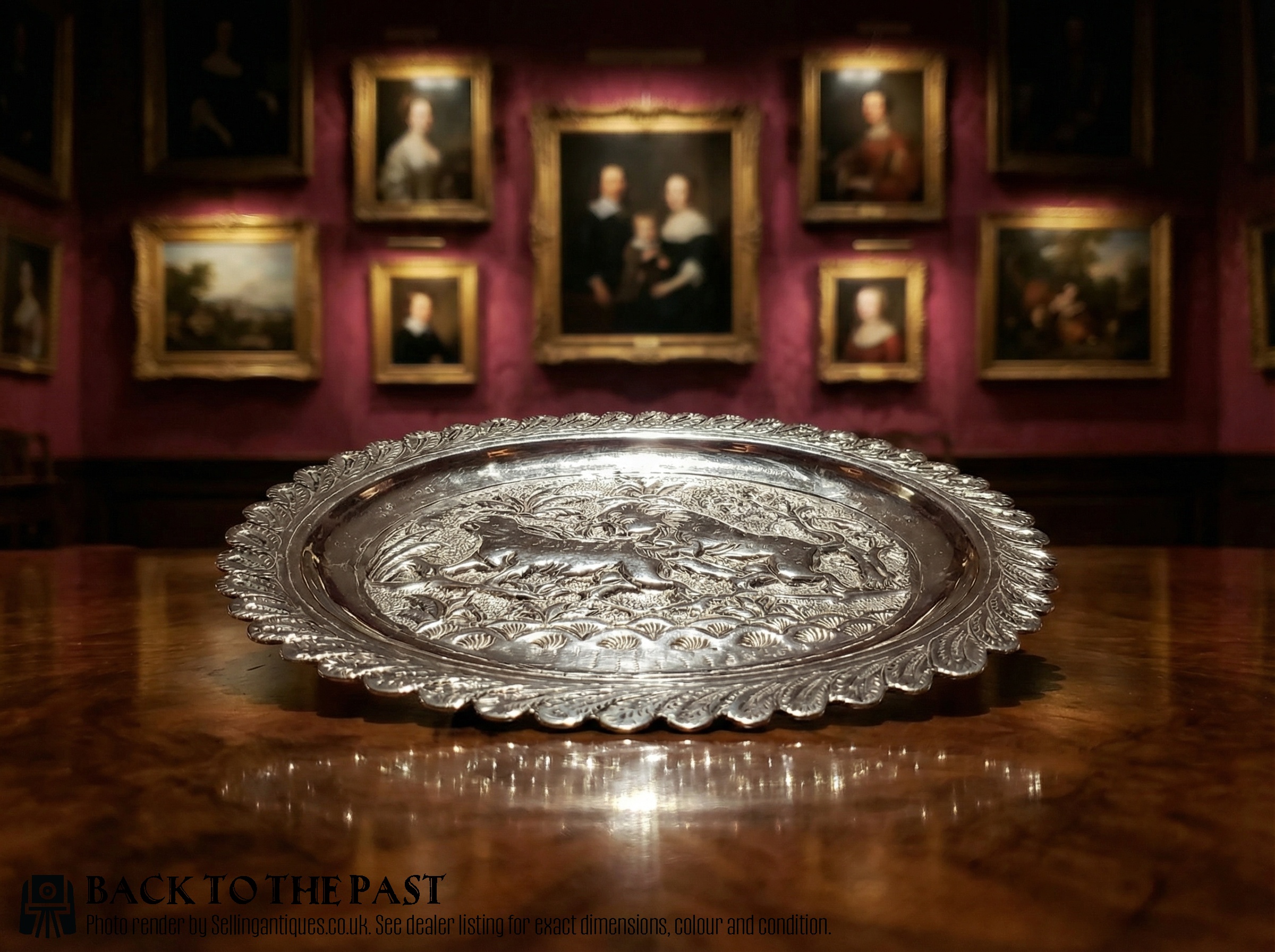
Vintage Indian Tray
The vintage indian tray encompasses a broad selection of serving pieces, chargers, desk accessories, and low tables produced across the nineteenth and early twentieth centuries. These objects range from heavy brass and copper platters to intricately carved teak and walnut serving slides.
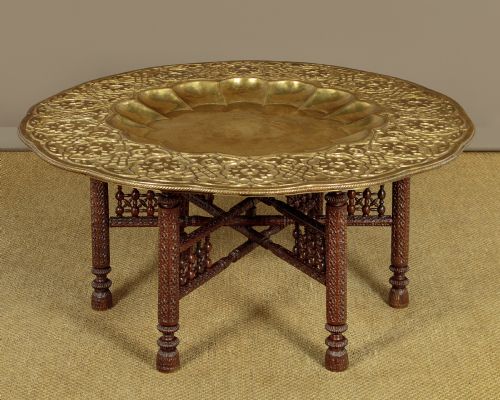
Regional styles such as Anglo-Indian, Kashmiri, and Persian influence the design, utilising brass, copper, teak, hardwood, and papier-mâché. Buyers frequently encounter foldable coffee tables featuring removable brass trays alongside hand-painted papier-mâché desk tidies and platters.
Pieces span several decades, including Victorian examples and items dated from the eighteen-sixties through to the nineteen-thirties. The selection demonstrates diverse craftsmanship, blending traditional local motifs with British colonial forms.
Assessing quality
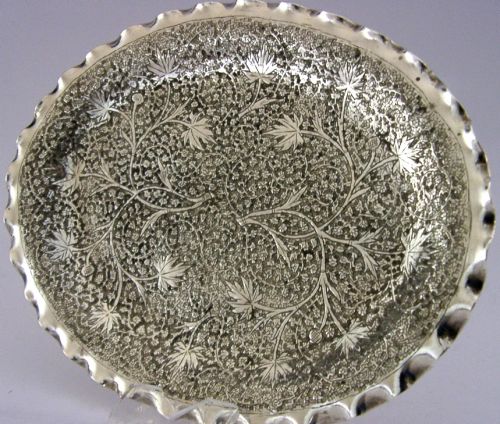
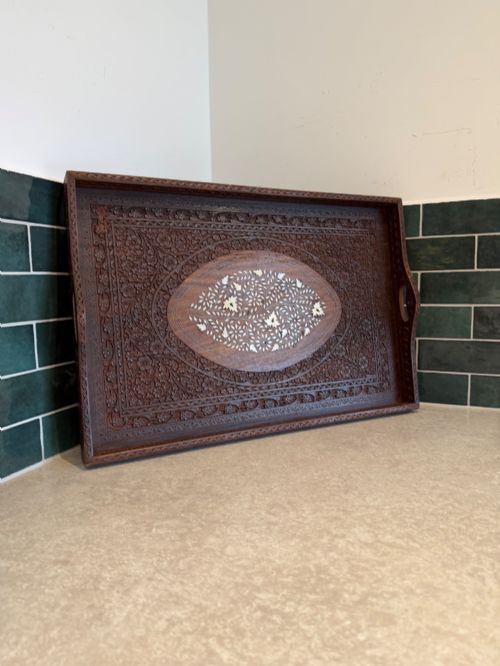
Quality rests upon the depth and crispness of the hand-carved woodwork or the precision of the repoussé metalwork. Superior pieces display finely articulated chased details and substantial metal weight rather than shallow stamping.
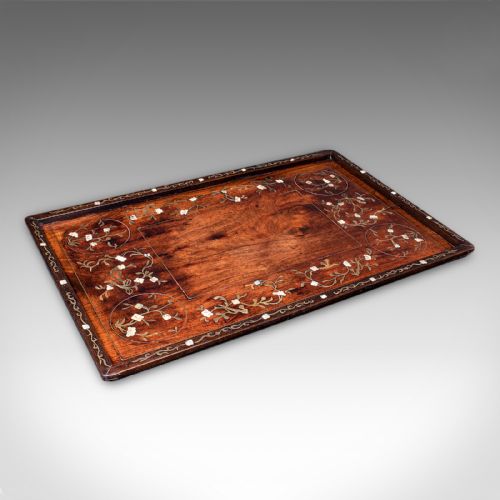
Material selection divides standard utility items from finer decorative pieces, with dense hardwoods like teak and heavy-gauge brass or copper marking the upper tier of production. Intact hand-painted surfaces on papier-mâché also indicate better preservation.
Current listings feature items spanning the nineteenth century through the nineteen-thirties, including Victorian pieces.
The Vintage Indian Tray Glossary
- Repoussé
- A metalworking technique where the artist hammers the design from the reverse side to raise relief details on the front. This method creates the tactile surface textures seen on brass and copper trays.
- Anglo-Indian
- A style descriptor for items produced during the British colonial period in India, combining traditional local craftsmanship with British domestic forms such as tea slides and coffee tables.
- Papier-mâché
- A composite material made from paper pulp or reinforced paper sheets, moulded and dried before receiving hand-painted lacquer decoration.
- Shisham wood
- A durable Indian hardwood, also known as Indian rosewood, utilised for carved platters and furniture due to its rich grain and strength.
- Charger
- A large ornamental platter used traditionally for service or display, frequently rendered in heavy brass or mixed metals.
Vintage Indian Tray: Frequently Asked Questions
How do I use a vintage indian tray today?
These trays function well as decorative centrepieces on coffee tables, or mounted on folding bases to serve as occasional tables.
Smaller dishes and desk accessories suit practical desktop organisation or display on sideboards.
Are brass tray top tables stable?
Many tables feature collapsible or folding wooden stands designed to support removable metal trays securely.
While suitable for drinks and display, the folding mechanism requires careful handling when moving the complete piece.
How do I clean antique brass and copper?
Dust regularly with a soft cloth and avoid harsh chemical dips that strip away the aged patina accumulated over decades.
Gentle cleaning preserves the surface character developed since the nineteenth or early twentieth century.
What is the difference between Kashmiri and Anglo-Indian pieces?
Kashmiri items frequently showcase hand-painted papier-mâché or finely carved walnut timber reflecting Himalayan craftsmanship.
Anglo-Indian pieces typically combine British furniture forms with local carving traditions, often utilising teak and brass.