
Vintage Indian Side Table
A vintage indian side table brings dense carvings, inlaid bone, and rich hardwoods into a room.
Vintage Indian Side Table
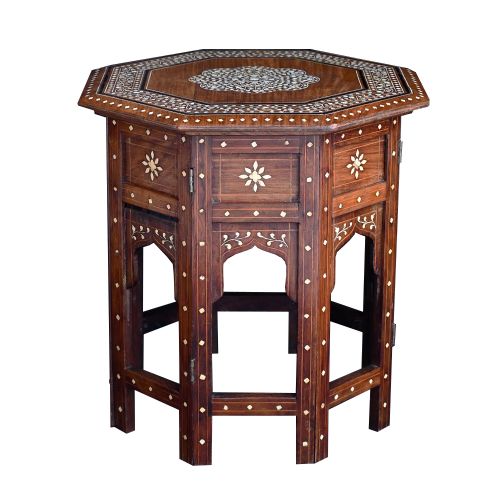
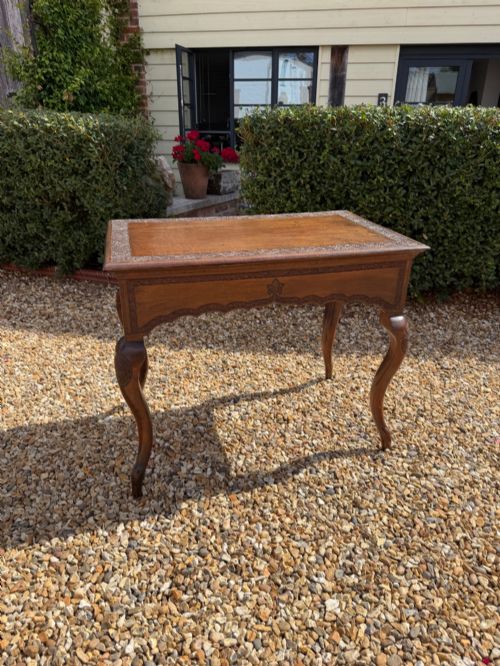
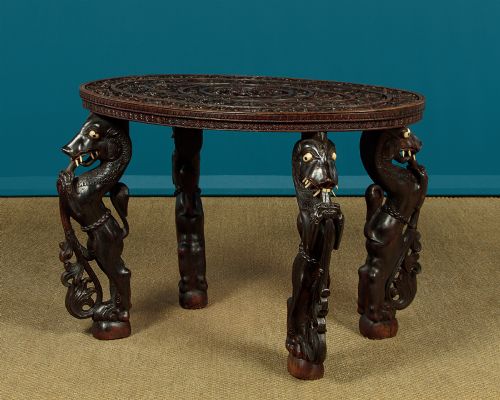
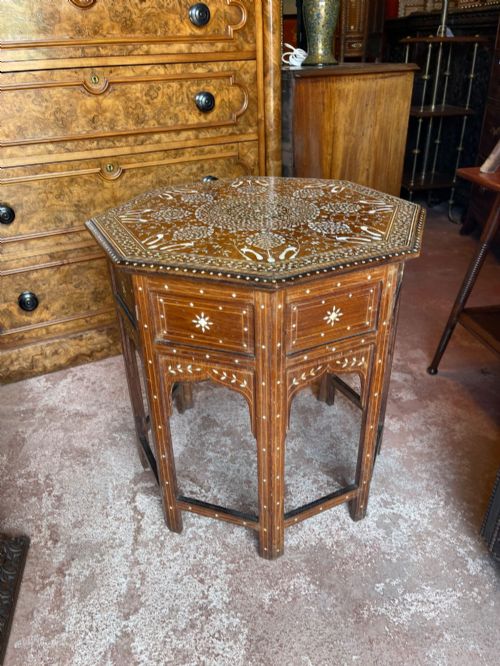
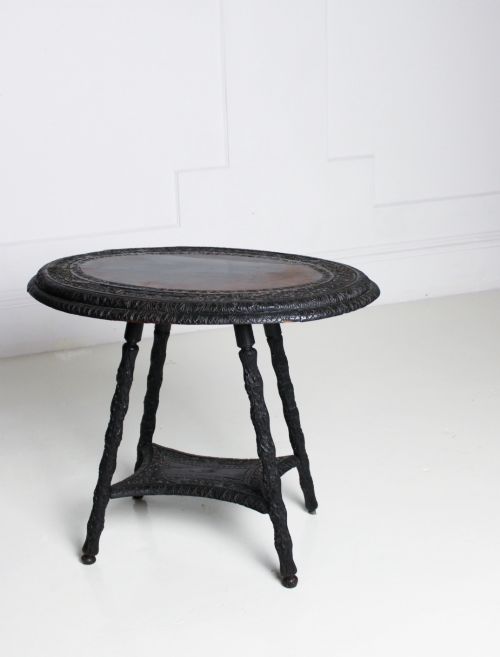
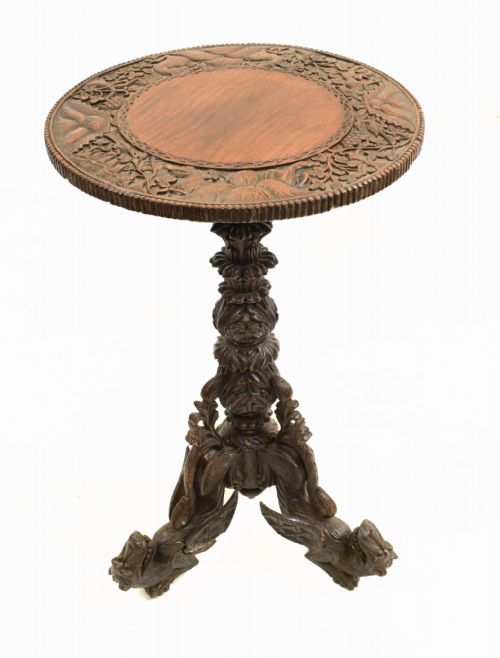
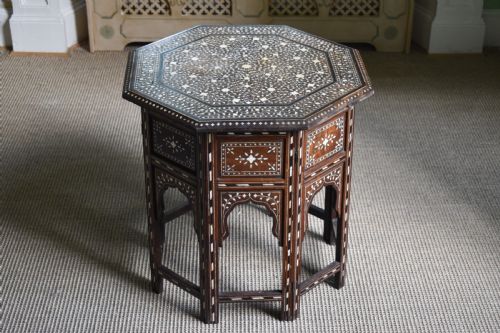
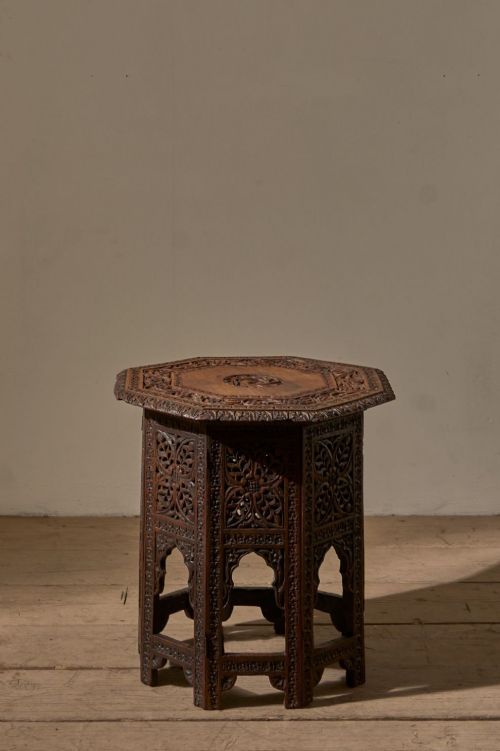
The most common examples on this page are carved occasional tables and octagonal folding pieces originating from centres like Hoshiarpur or Kashmir. Buyers frequently encounter teak, rosewood, and hardwood structures enriched with detailed surface work, ranging from geometric inlay to figurative carving.
How they were made
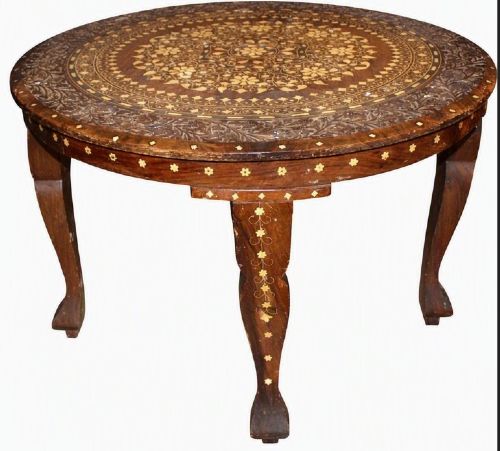
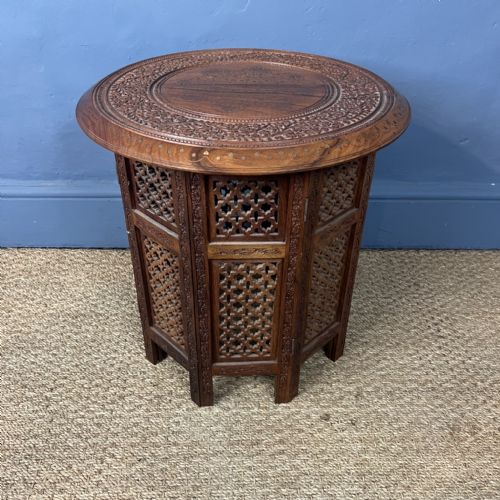
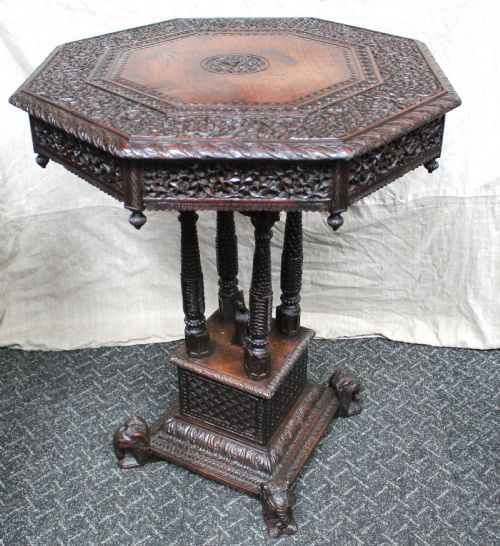
Maker workshops built these tables using dense tropical timbers such as teak, padauk, and rosewood, paired with walnut in Kashmiri examples. Artisans shaped these heavy woods through intricate hand-carving, hollowing out deep relief patterns of foliage, scrolls, and figures.
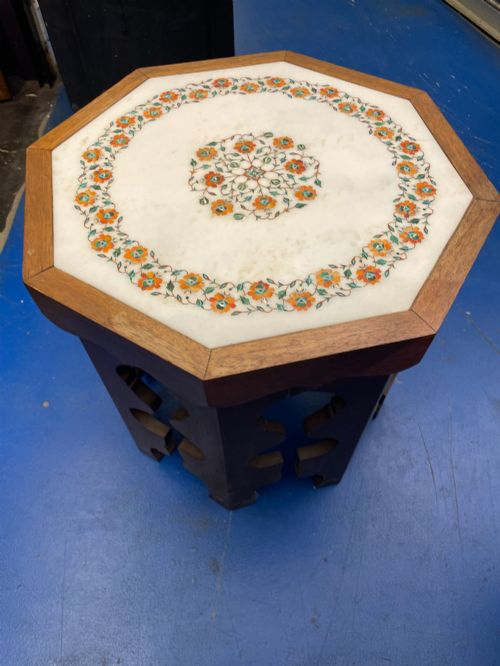
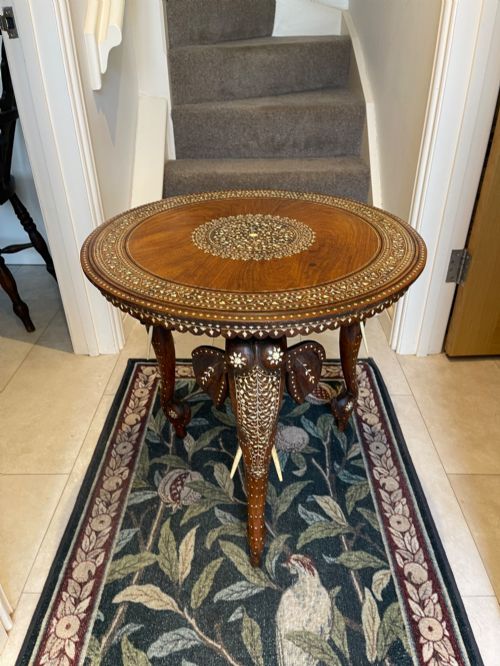
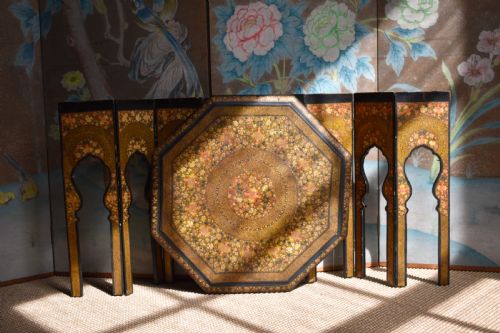
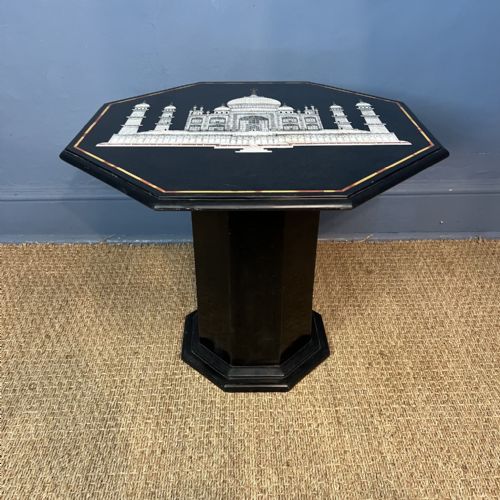
Surface ornamentation relied on contrasting materials embedded directly into the timber. Bone, mother-of-pearl, and brass wire formed elaborate geometric and floral mosaics, while other pieces utilised painted lacquer or inlaid black marble.
Vintage Indian Side Table Retail Price Guide 2026
Typical asking prices for vintage indian side table among the pieces listed under this phrase on Sellingantiques today, from the lower quarter to the upper quarter. They describe what is for sale here now, not the wider market.
Listings feature pieces spanning the nineteenth century up to the 1930s, constructed in teak, rosewood, padauk, and walnut.
What varies in quality
The degree of refinement in the hand-carving separates standard production from exceptional work. Crisp, deep relief work with sharp undercut details demonstrates superior workshop skill compared to shallow, mechanical scoring.
The integrity of the inlay work dictates overall standard. Securely fitted bone, brass, or mother-of-pearl flush with the surrounding timber shows better original construction than excessive filler and missing sections.
Liberty and Co
The Vintage Indian Side Table Glossary
- Hoshiarpur
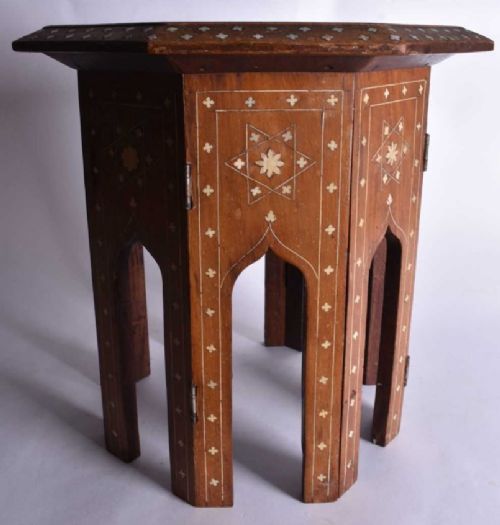
- A district in Punjab known for intricate woodwork featuring dense bone and brass inlay on teak or shisham wood. Pieces from this tradition often utilise folding octagonal tops.
- Anglo-Indian
- A designation for furniture made in India during the British period, combining local artisan techniques with European furniture forms such as side tables and nests.
- Padauk
- A heavy, durable tropical hardwood with a reddish hue utilised in nineteenth-century colonial furniture. It accepts fine carving without splintering.
- Inlay
- A decorative technique where contrasting materials like bone, brass, or mother-of-pearl are embedded into recesses cut into the wooden surface.
Vintage Indian Side Table: Frequently Asked Questions
How were these tables used originally?
These pieces served practical functions in domestic interiors as surfaces for tea, lamps, or displaying decorative objects. Folding designs allowed them to be stored away when space was required.
In colonial settings, they adapted traditional craftsmanship to suit European room layouts, functioning as occasional, coffee, or games tables.
How do I live with an inlaid table?
Placing these surfaces away from direct sunlight and extreme humidity protects the delicate natural wood and bone or mother-of-pearl inlay elements. Regular dusting with a dry cloth keeps the deep carvings clean without dampening the timber.
Their compact scale allows them to sit beside sofas or armchairs, functioning as versatile side or lamp tables in contemporary spaces.
How do I identify Hoshiarpur work?
Hoshiarpur tables typically present dense, overall surface decoration consisting of geometric or floral motifs created with bone and brass inlay. The structural wood is frequently teak, shaped into folding octagonal forms.
The intricate patterns leave very little plain timber visible, distinguishing them from simpler carved regional pieces.