


Vintage Indian Rug
A vintage indian rug brings rich motifs and history into a room, offering tactile warmth and centuries of textile tradition.
Vintage Indian Rug
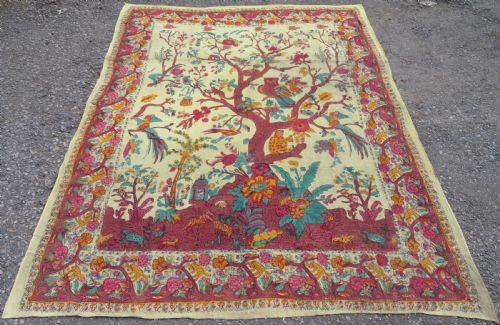
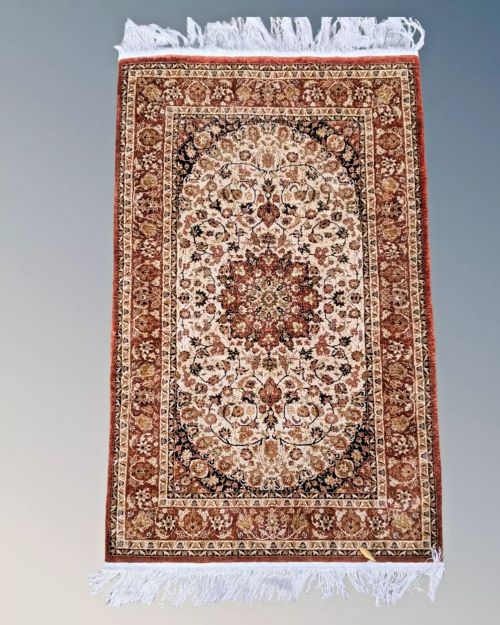
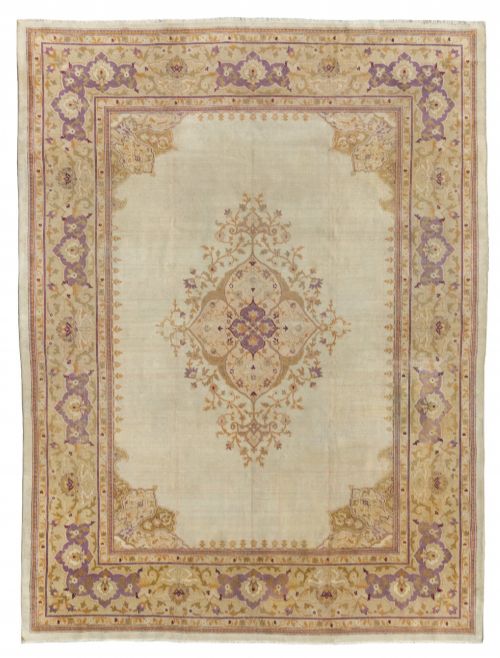
A vintage indian rug encompasses diverse textile traditions, ranging from grand floor coverings to intricate wall hangings and wedding shawls. When searching for a vintage indian rug, buyers encounter varied regional styles such as Amritsar, Agra, and Kashmir.
The pieces span from the mid-nineteenth century through the early twentieth century, including pieces from the Victorian era and 1930s productions. Floor carpets sit alongside delicate silk embroideries and cotton dhurries.
Mughal and traditional Kashmiri influences dominate the aesthetic, featuring all-over designs and intricate botanical motifs. Buyers frequently find large room-size carpets alongside smaller area rugs and decorative textiles.
Assessing craftsmanship
The handling of natural dyes and the depth of colour create distinction between pieces, alongside the density of the weave in pile carpets and the precision of needlework in embroidered shawls and wall hangings.
The integrity of the material foundation, whether wool, silk, or cotton, influences how well the structure holds its form over decades of existence.
Listings feature textiles spanning from eighteen-sixty through nineteen-thirty, encompassing wool, cotton, silk, and velvet.
The Vintage Indian Rug Glossary
- Agra carpet
- A woven floor covering originating from the city of Agra in northern India. These pieces often date to the nineteenth century and feature traditional large-scale designs.
- Amritsar
- A style and origin associated with carpets produced in the Punjab region. They are known for distinct palettes and detailed knotting.
- Chain stitch
- An embroidery technique executed with a hook or needle to form a looped chain of stitches. It appears frequently on Kashmir rugs and wall hangings.
- Dhurrie
- A flat-woven cotton or wool rug produced across India. These pieces lack a pile and offer a durable, reversible surface.
- Palampore
- A type of hand-painted or embroidered bed cover or hanging. They typically display elaborate tree-of-life or floral motifs.
Vintage Indian Rug: Frequently Asked Questions
Where should I place a vintage indian rug?
These textiles suit low-traffic drawing rooms, studies, or bedrooms where foot traffic remains gentle. Smaller formats function well as wall hangings or decorative throws.
Protect delicate silk and embroidered pieces from direct sunlight to preserve the natural dyes. Rotating the textile periodically ensures even exposure and wear.
How do I care for a cotton dhurrie?
Flat-woven cotton dhurries benefit from regular, gentle vacuuming without a rotating brush bar. Shake them outside occasionally to dislodge trapped dust particles.
Address spills immediately by blotting with a clean, dry cloth rather than rubbing. Professional cleaning is recommended for deeper maintenance.
What defines an Agra carpet?
Agra carpets originate from workshops in northern India dating back to the nineteenth century. They often employ sturdy wool foundations and balanced, all-over botanical designs.
Their substantial weight and rich colour saturation make them enduring centerpieces for traditional interiors.
How can I distinguish Kashmir chain stitch rugs?
Kashmir chain stitch rugs rely on dense surface embroidery over a cotton or wool canvas rather than a traditional knotted pile. The texture feels distinctly looped and soft beneath the hand.
They frequently showcase vibrant floral motifs influenced by traditional shawl designs.