


Antique Indian Rug
An antique indian rug brings centuries of textile tradition into a room through rich natural dyes and intricate wool work.

Antique Indian Rug
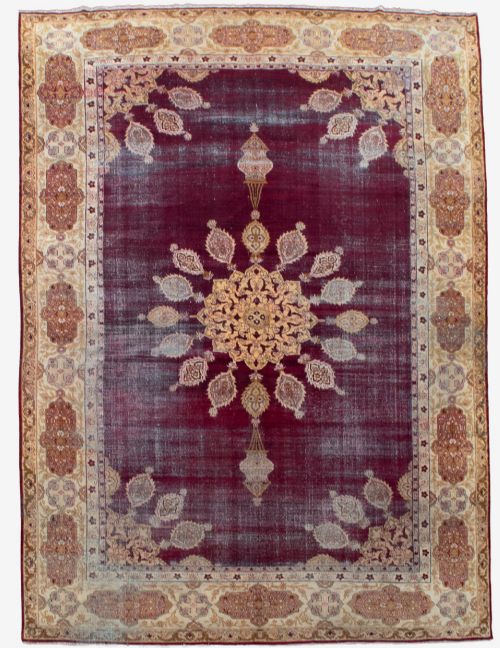
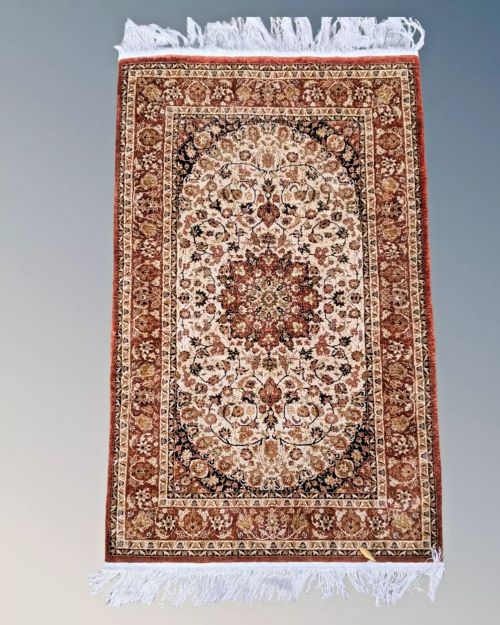
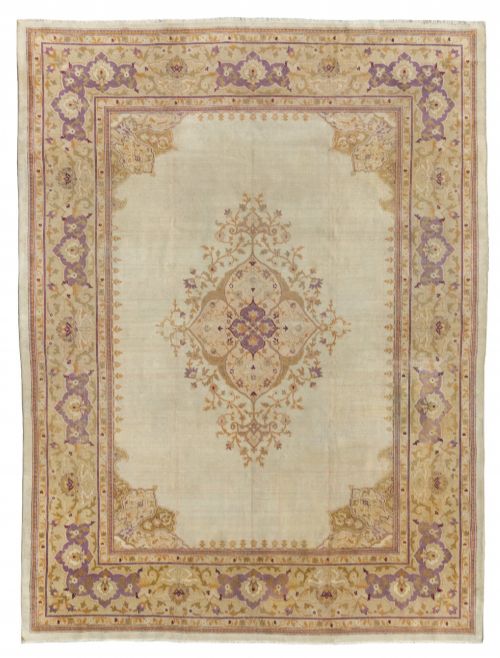
An antique indian rug encompasses large country house carpets, smaller area rugs, and detailed fragments hailing from northern weaving centres. Pieces carrying an antique indian rug label date from the eighteenth century through to the early decades of the twentieth century, reflecting diverse regional aesthetics.
Amritsar and Agra examples dominate the selections, alongside Kashmiri chain stitch pieces and Mughal fragments. Buyers encounter various formats ranging from expansive carpets exceeding five metres to smaller prayer rugs and bed covers.
Evaluating craftsmanship and condition
Quality rests upon knot density, the clarity of traditional designs such as the boteh or Timuri Baluch patterns, and the preservation of the pile. Finer examples display meticulous execution in the border details and balanced proportions across the field.
The integrity of the foundation materials and the vibrancy of the natural dyes distinguish superior survivals from standard domestic examples.
The documented pieces span from the eighteenth century to 1930, utilising wool, silk, cotton, velvet, and metallic thread.
The Antique Indian Rug Glossary
- Amritsar
- A major weaving centre in northern India known for large decorative carpets produced in the nineteenth and early twentieth centuries. These pieces often adapt traditional Persian motifs into expansive country house formats.
- Agra
- A prominent production location associated with carpet manufacture, frequently utilising robust wool and distinctive overall designs. Agra pieces span from mid-nineteenth-century works to later examples.
- Boteh
- A traditional teardrop or almond-shaped motif with a curved upper end, frequently repeated within the field or borders of woven rugs. This ancient pattern appears across numerous regional textile traditions.
- Palampore
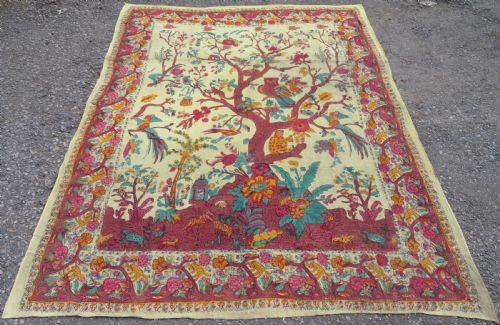
- A large, hand-painted or embroidered bed cover or hanging originating from trade traditions. These textiles display elaborate floral and tree-of-life compositions.
- Chain stitch
- An embroidery technique forming a succession of looped stitches resembling a chain. This method creates textured surface designs on Kashmiri rugs and textiles.
Antique Indian Rug: Frequently Asked Questions
How do I care for an antique indian rug?
Vacuum gently using a suction-only attachment without a rotating brush to protect the wool pile and delicate foundation threads.
Keep the textile out of direct sunlight to prevent natural dyes from fading over time.
Where were these rugs made?
Production centred in northern regional hubs such as Amritsar, Agra, and Kashmir, where traditional workshops flourished.
Specific pieces reflect stylistic influences from Mughal court traditions and classical Persian designs adapted by local weavers.
What materials are standard in these pieces?
Most examples combine wool pile with cotton foundations, utilising natural dyes to achieve deep colour saturation.
Certain textiles incorporate silk, metallic thread, velvet grounds, or chain stitch embroidery depending on their specific regional origin.
How do I identify an Amritsar carpet?
Amritsar carpets typically feature large-scale decorative formats designed for substantial country houses, often utilising muted or rich natural colour palettes.
They frequently adapt classic medallion or all-over designs with distinctive Indian interpretations in the borders.