
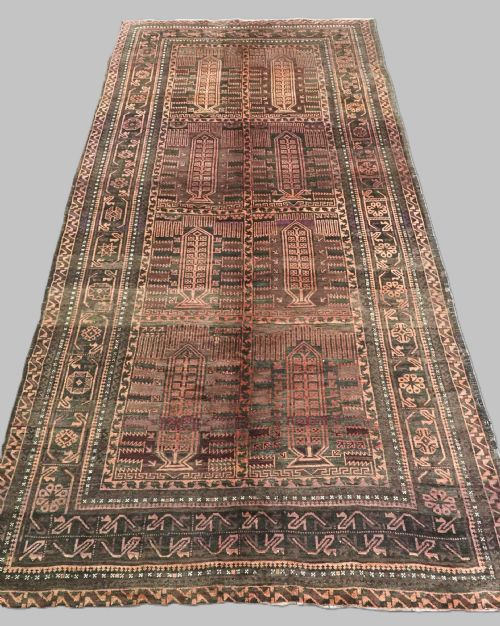
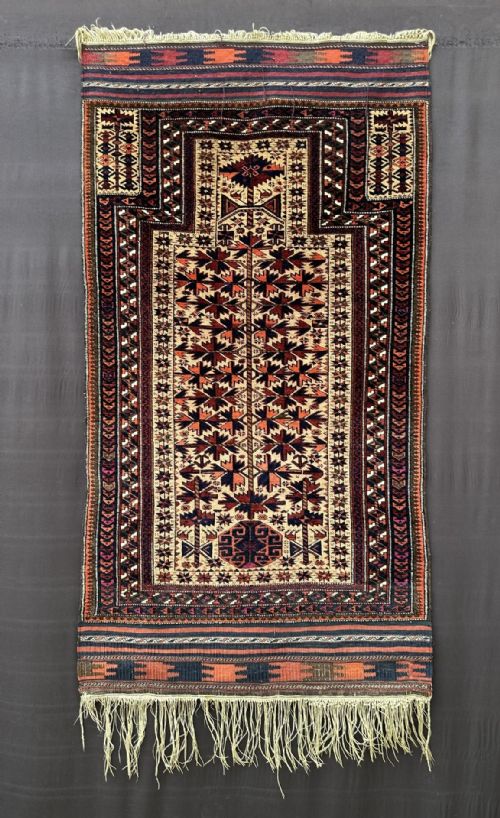


Timuri Baluch Carpet
When you search for a timuri baluch carpet, you are stepping into the rich weaving traditions of the borderlands between north-east Persia and north-west Afghanistan.

Timuri Baluch Carpet
A timuri baluch carpet represents the nomadic and tribal textile output originating primarily from western Afghanistan and the borderlands of north-east Persia and north-west Afghanistan. These hand-knotted pieces span from the late nineteenth century into the early twentieth century, encompassing periods from eighteen seventy to nineteen ten.
The selections on this page appear in various formats, predominantly as main carpets, smaller area rugs, and prayer rugs. Specialised functional items such as salt bags and tribal textiles also emerge within this weaving tradition.
Meticulous tribal designs define these pieces, including classic motifs, medallion layouts, and distinct patterns such as the pencil box or kalam donneh design, shrub patterns, and the dokhtar-e-qazi layout. Specific subgroups like the Yaqoub Khani tribe and the Bahluli Baluch contribute distinct regional variations to the grouping.
How They Were Made
Weavers utilised natural dyes to achieve deep rich colours across a foundation of hand-spun wool, cotton, and camel hair. Supplementary materials such as goat hair frequently appear in the construction, adding structural durability to the edges and borders of the rugs.
Nomadic artisans knotted these textiles by hand on portable looms set up across western Afghanistan and the Persian borderlands. The interplay of natural dyestuffs with varied wool qualities produces the characteristic palette seen on blue grounds and camel grounds.
The listings on this page span production dates from eighteen seventy up to nineteen ten, recording materials such as natural dyes, goat hair, and camel hair.
What Varies in Quality
The handling of natural dyes and the depth of colour dictate the visual impact of an example, where certain pieces display deep rich tones or characteristic corroded browns. The vibrancy and saturation of the palette elevate specific main carpets and prayer rugs above standard production.
Design clarity and format rarity distinguish individual pieces within the tribal corpus. Unusual shrub motifs, scarce formats, and well-executed classical layouts demonstrate the weaver's proficiency and set apart the most compelling examples.
The Timuri Baluch Carpet Glossary
- Prayer rug
- A small format textile featuring a mihrab or niche design used historically for daily Islamic prayers. These pieces often incorporate tree of life or repeat leaf motifs within the field.
- Main carpet
- A larger floor covering produced for tribal domestic use rather than export markets. These textiles typically display expansive medallion or repeating geometric layouts.
- Kalam donneh
- A traditional design motif translating to pencil box, characterised by stacked triangular or compartmented shrub patterns. This pattern remains a hallmark of specific tribal workshops.
- Dokhtar-e-qazi
- A recognised tribal rug design featuring small shrub or plant motifs arranged symmetrically within the field. The name connects the pattern to specific regional weaving groups.
- Ru korssi
- A specialised square or rectangular cover designed to be draped over a low table heated by a brazier during winter months. These textiles served domestic warming functions in nomadic households.
- Salt bag
- A utilitarian woven pouch utilised by nomads for storing salt and household provisions. These items feature intricate face designs executed in the same technique as larger carpets.
Timuri Baluch Carpet: Frequently Asked Questions
What is a timuri baluch carpet?
A timuri baluch carpet is a hand-knotted tribal textile produced by nomadic groups in the borderlands of north-eastern Persia and north-western Afghanistan. These rugs date primarily from the nineteenth and early twentieth centuries.
They reflect the traditional aesthetics and practical craft of weavers working within the Timuri and Baluch tribal spheres, utilising locally sourced materials and distinct regional motifs.
How were these carpets used?
Nomadic families used these textiles primarily as floor coverings within tents and dwellings, while specific formats like prayer rugs served ritual purposes. Utility items such as salt bags functioned as storage containers for daily camp life.
Larger main carpets anchored the central living space of the household, whereas specialised pieces like ru korssi covers interacted directly with domestic heating furniture.
How do I live with a tribal rug?
Living with these textiles involves placing them in low-to-medium traffic areas to preserve the historical wool pile and natural dyes. Gentle rotation and professional cleaning suited to antique wool ensure the rug remains stable.
Pairing them with a breathable underlay protects the foundation structure from friction against modern flooring surfaces while maintaining a comfortable step.
How can I tell the age of a piece?
Dating relies on assessing the structural materials, such as hand-spun wool and camel hair, alongside the specific chemical composition of the natural dyes. Structural density and regional weaving characteristics also provide a reliable window into the period of origin.
Pieces originating from the mid-nineteenth century exhibit distinct handle and wool characteristics compared to those produced around nineteen ten.