
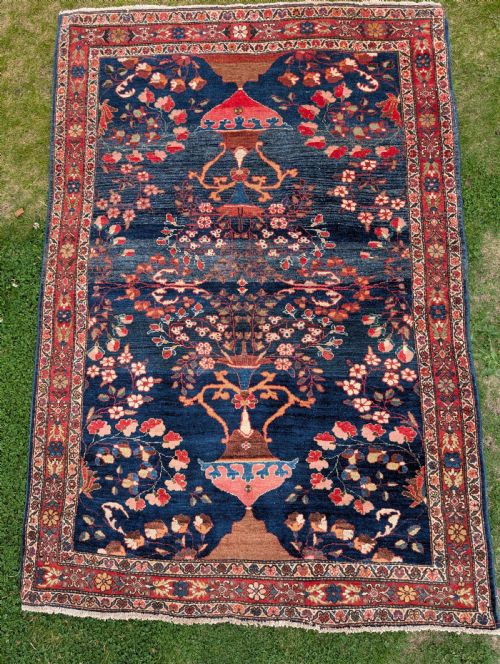


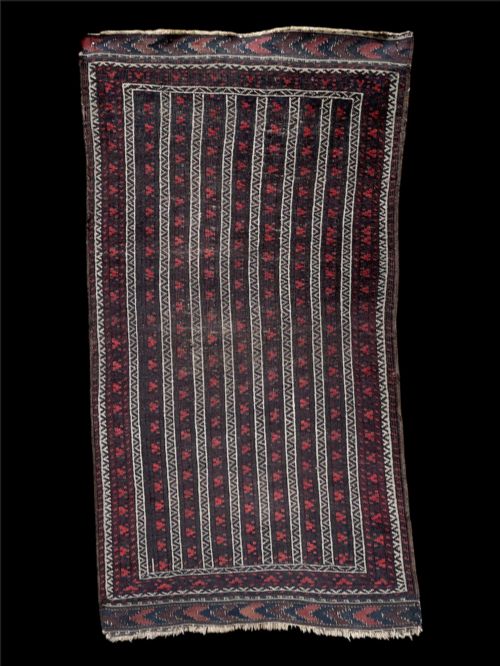

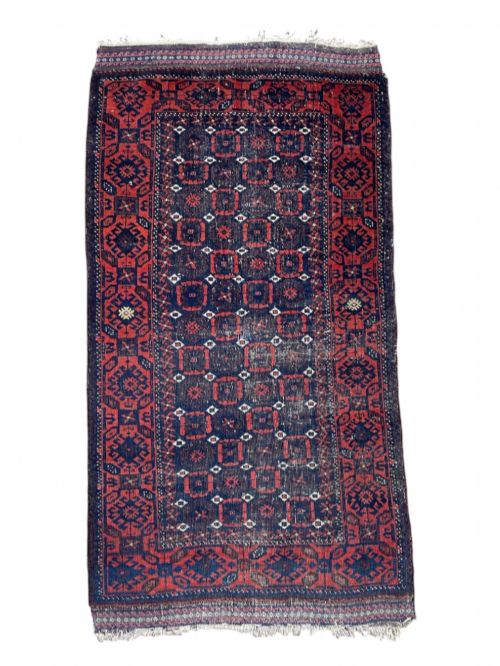


Dark Blue Oriental Carpet
These hand-knotted textiles gathered under the search phrase dark blue oriental carpet bring deep indigo dye grounds and centuries of weaving traditions into a modern room.
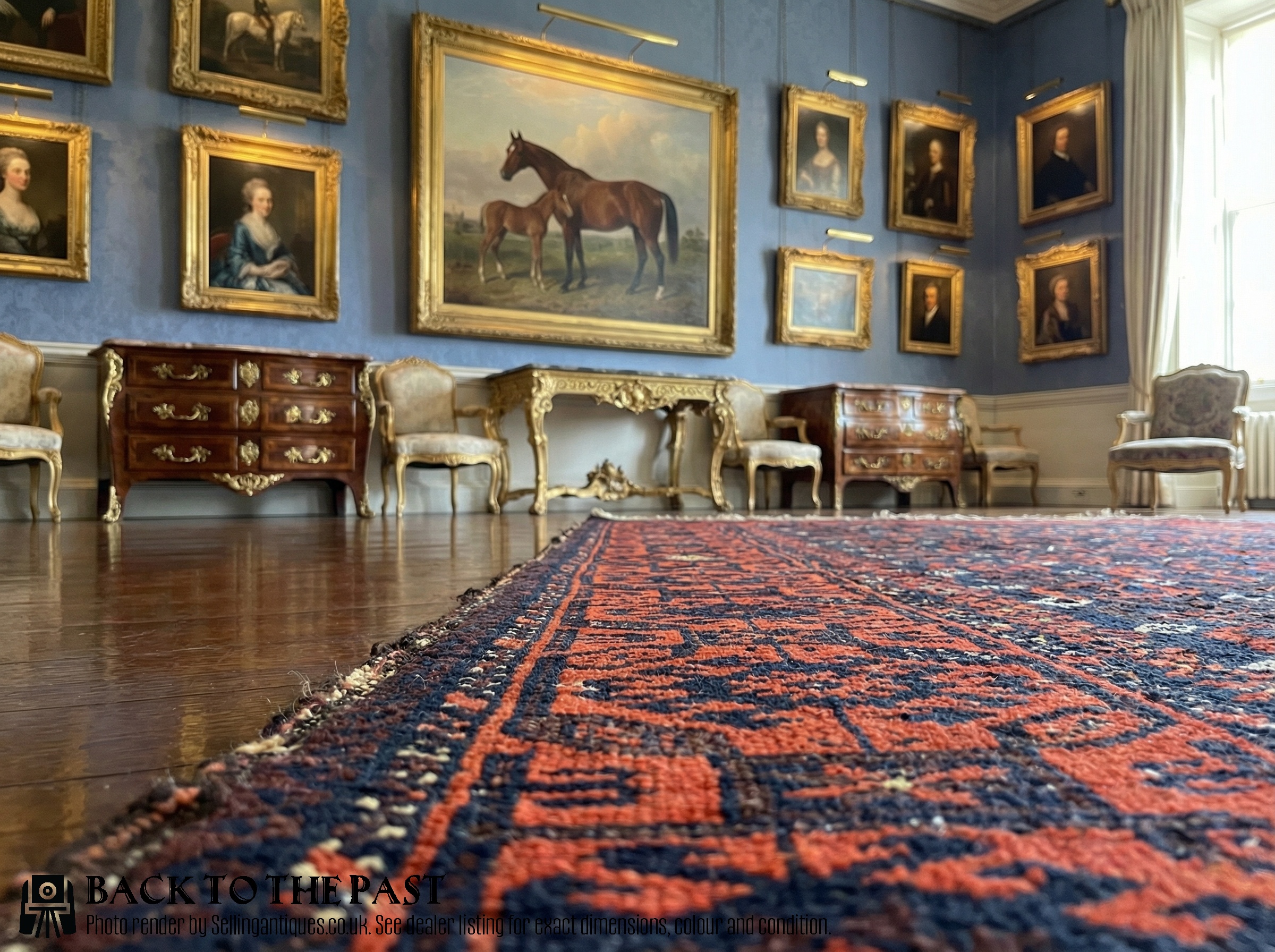
Dark Blue Oriental Carpet
A dark blue oriental carpet brings together floor coverings and wall hangings originating from Persia, the Caucasus, and surrounding regions, dating primarily from the late nineteenth century through the early decades of the twentieth century. These textiles encompass varied formats such as runners, area rugs, prayer rugs, and square torbas created by tribal groups and urban workshops alike.
The pieces on this page are defined by their deep indigo or dark blue ground colours, which serve as the canvas for complex geometric medallions, floral motifs, and stylised animal or plant designs. Collectors encounter specific regional types ranging from Baluch and Kurdish weaves to Heriz, Kashan, and Caucasian formats.
Most examples rely on wool foundations and piles, sometimes incorporating cotton or goat hair for structural integrity and contrasting details. Each rug reflects the specific cultural lexicon of the weavers who knotted them, preserved through surviving antique specimens.
How they were made
Weavers constructed these carpets using hand-spun wool for the pile, tied tightly to warp and weft foundations typically made of wool or cotton. Goat hair occasionally appears in the selvages or structural elements of tribal pieces for added durability.
Natural dyes provide the enduring palette, with rich indigo furnishing the dark blue grounds that characterise these textiles. Artisans sourced plant and insect materials to achieve the reds, browns, and ivory tones that contrast against the dark fields.
Some Baluch weavers tucked stray goat hairs into the wool pile, leaving a rustic signature in the dark blue field.
What varies in quality
Quality rests upon the fineness of the weave and the precision with which intricate patterns like the mina khani or prayer mihrabs are executed. Tightly packed knots create a denser pile that holds detail sharply and withstands generations of use.
The depth and saturation of the natural dyes distinguish superior examples, as rich indigo patinates gracefully over time. Coarser wools and simpler regional styles sit at a different tier of craftsmanship compared to finely detailed city workshop carpets.
The Dark Blue Oriental Carpet Glossary
- Mina khani
- A repeating pattern of daisy-like flowers connected by curved lattices, frequently seen across Persian and Baluch rugs.
- Mihrab
- The arched niche design found on prayer rugs, orienting the textile towards Mecca during Islamic worship.
- Gul
- A medallion or octagonal motif used extensively by Turkmen and related tribal groups to signify specific lineages or clans.
- Torba
- A small storage bag face, often highly decorated, produced by nomadic tribes for domestic use inside tents.
- Selvage
- The reinforced outer edge of a rug, finished to prevent the knotted pile from unravelling along the sides.
Dark Blue Oriental Carpet: Frequently Asked Questions
How do I care for an antique wool rug?
Vacuum gently without using a rotating brush roll to protect the fragile hand-spun wool pile and ancient foundations.
Keep the textile out of direct sunlight to prevent the natural indigo dyes and secondary colours from fading over the decades.
What is a Baluch rug?
Baluch rugs are woven by nomadic and semi-nomadic tribes inhabiting the borderlands of Iran, Afghanistan, and Pakistan.
They are typically smaller in format, featuring dark blue or deep brown grounds dominated by geometric prayer designs and tribal motifs.
How do I distinguish regional styles?
Examine the specific geometry of the medallions, the structure of the border guards, and the palette of secondary colours.
Kashan and Tabriz pieces show refined urban floral curves, whereas Caucasian and Baluch rugs favour crisp, angular tribal geometry.
Are these carpets suitable for heavy foot traffic?
Sturdier room-sized carpets and runners with dense wool piles handle moderate walking areas when supported by a proper underlay.
Older or more delicate prayer rugs and tribal torbas are better suited for low-traffic spaces or display as wall hangings.