






Traditional Baluch Prayer Rug
These traditional baluch prayer rug examples are tribal wool carpets featuring distinctive mihrab designs and natural dyes that bring authentic nomadic character to a room.
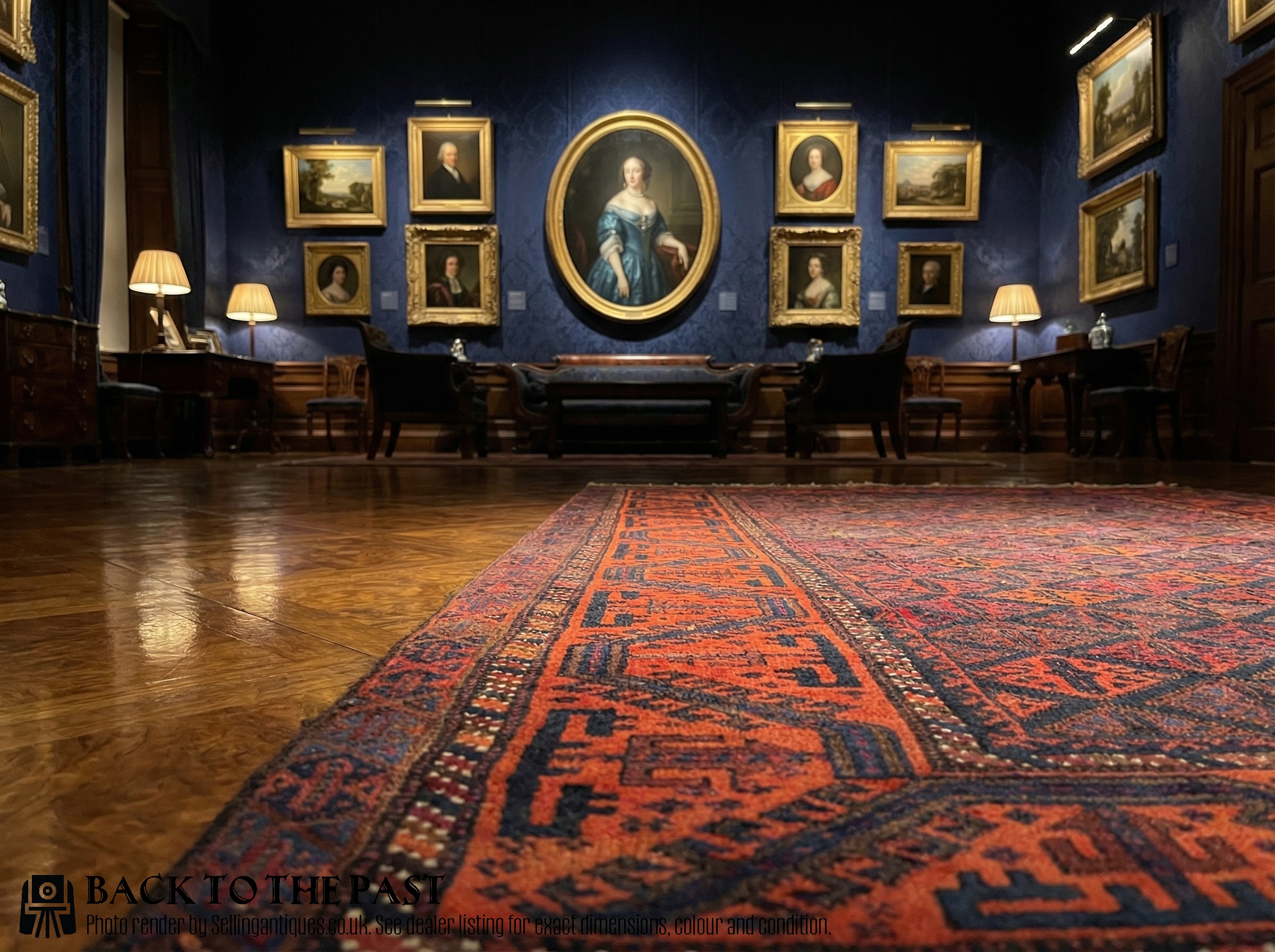
Traditional Baluch Prayer Rug
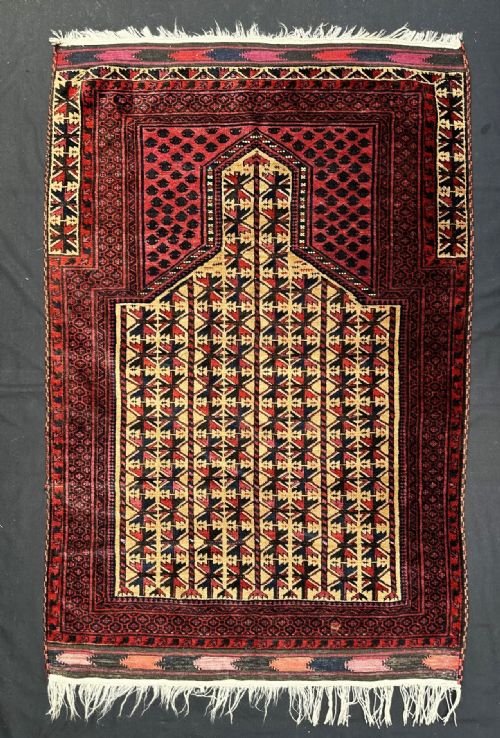
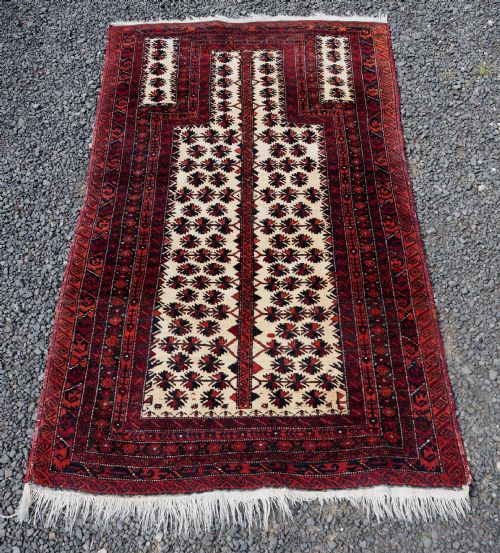
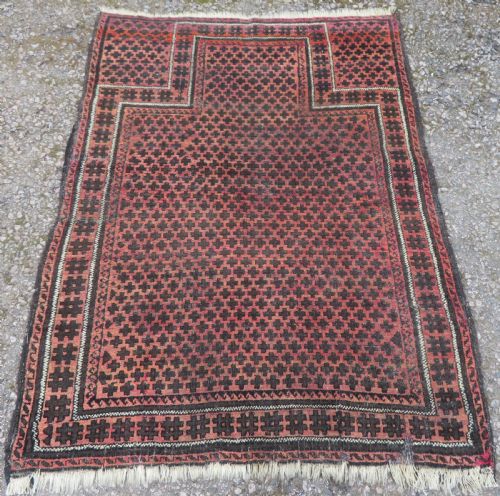
A traditional baluch prayer rug is a handwoven textile originating from tribal and nomadic makers in regions such as Afghanistan, Persia, and Khorasan. These pieces span periods from the nineteenth century through the early decades of the twentieth century, including items dated around 1880, 1890, 1900, 1910, 1920, and 1930. The most frequent form encountered on this page is the prayer rug featuring a specific mihrab arch design.
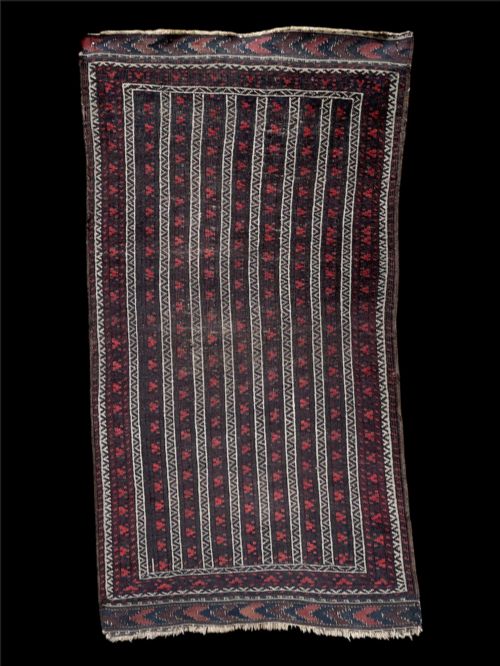
Makers utilised various traditional layouts, including double mihrabs, seh mihrabs, and rams horn mihrabs, often complemented by lotus leaf motifs and stars. Alongside dedicated prayer rugs, the selection includes broader categories such as rugs and carpets, tribal rugs, and pieces associated with Timuri traditions. These items serve as functional floor coverings with deep historical roots in village and nomadic craftsmanship.
How traditional baluch prayer rug items were made
Weavers constructed these textiles primarily using wool, hand-spun wool, and cotton foundations, occasionally incorporating goat hair for durability along the edges. The reliance on natural dyes produces the deep rich colours characteristic of these antique village and nomadic floor coverings. Each piece is handwoven, reflecting traditional tribal techniques passed down through generations of weavers.
The structure combines resilient animal fibres with careful knotting to withstand daily use. Artisans utilised local materials gathered from their immediate environment to dye the wool before weaving intricate tribal and geometric patterns into the carpet surface.
Traditional Baluch Prayer Rug Retail Price Guide 2026
Typical asking prices for traditional baluch prayer rug among the pieces listed under this phrase on Sellingantiques today, from the lower quarter to the upper quarter. They describe what is for sale here now, not the wider market.
Listings span periods from the nineteenth century to 1930, featuring wool, cotton, goat hair, and natural dyes.
What varies in quality in a traditional baluch prayer rug
Quality differences stem from the fineness of the hand-spun wool and the complexity of the woven design, such as intricate lotus leaf motifs or multiple mihrabs. The depth and vibrancy of the natural dyes also distinguish finer examples, alongside the integrity of the cotton or wool foundation. Condition plays a role, with some items showing heavy distressing while others retain denser piles.
The precision of the tribal execution and the clarity of symbolic elements like stars and rams horn arches separate standard village production from exceptional weaving. Artisanal skill in balancing deep rich colours determines the visual impact of each carpet.
The Traditional Baluch Prayer Rug Glossary
- Mihrab
- The arched niche in a prayer rug design that indicates the direction of prayer. It often appears as a single, double, or seh structure.
- Seh Mihrab
- A design layout featuring three arched niches rather than a single arch. This triple arrangement holds specific traditional significance in tribal prayer rugs.
- Timuri
- A tribal group associated with weaving traditions closely linked to Baluch carpets. Pieces from this origin share similar wool materials and deep colour palettes.
- Natural Dyes
- Colourants derived from plants, minerals, and insects rather than synthetic chemicals. They yield the characteristic rich hues seen in antique nomadic textiles.
- Lotus Leaf
- A recurring botanical motif woven into the field or border of these carpets. It adds a stylised organic element to the geometric tribal designs.
Traditional Baluch Prayer Rug: Frequently Asked Questions
What is a traditional baluch prayer rug?
It is a handwoven nomadic textile featuring a distinct arched mihrab designed for prayer.
These pieces originate from tribal makers in Afghanistan and Persia during the nineteenth and early twentieth centuries.
How do I identify a mihrab?
The mihrab is the arched niche at one end of the rug that points toward Mecca during prayer.
Variations include single arches, double mihrabs, and seh mihrabs with three distinct points.
Are these rugs made with natural dyes?
Yes, traditional examples utilise natural dyes derived from local organic sources.
This method creates the deep rich colours found in antique wool and hand-spun pieces.
How should I live with an antique rug?
Place the textile in a low-traffic area or use it as a wall hanging to preserve the handwoven wool pile.
Pairing the rug with a suitable underlay protects the cotton and goat hair foundation from wear.