
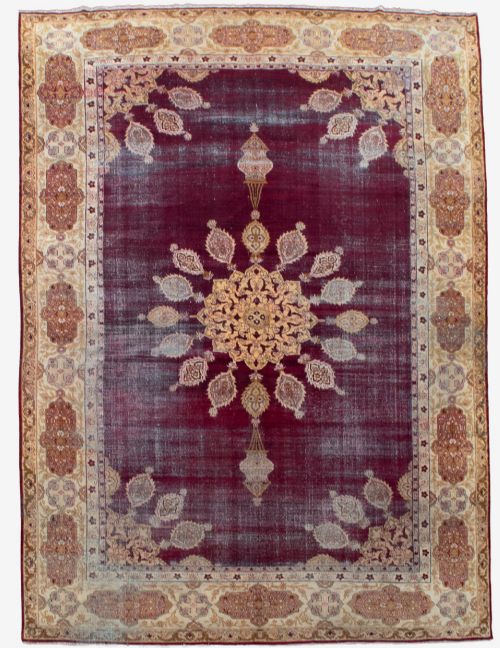
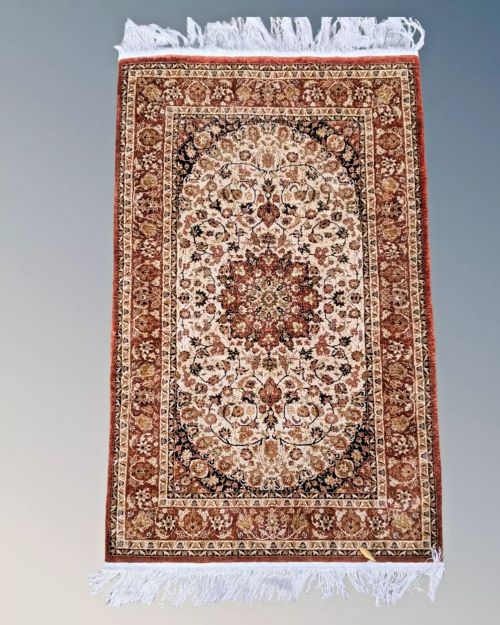
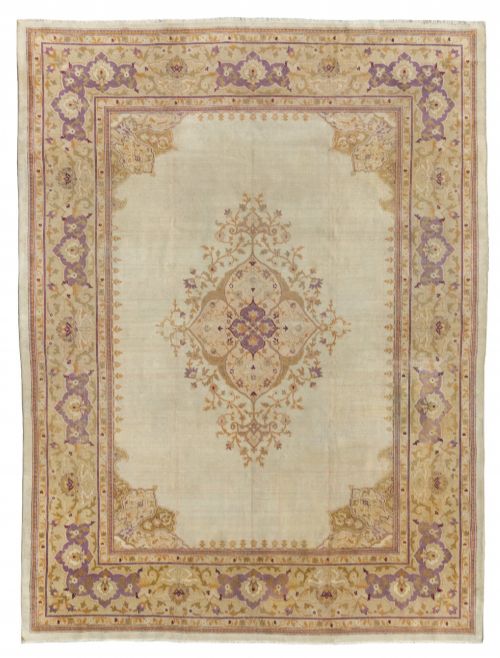


Hand Knotted Indian Rug
A hand knotted indian rug brings deep historical pattern and rich texture into a room, offering enduring warmth underfoot.
Hand Knotted Indian Rug
A hand knotted indian rug encompasses a diverse range of floor coverings originating from the Indian subcontinent, spanning eras from the eighteenth century through to the early twentieth century. Buyers seeking this phrase will encounter grand room-sized carpets alongside smaller area rugs, reflecting varied regional traditions and workshops.
The selections available on this page most frequently include large Amritsar and Agra carpets dating from the late nineteenth century, alongside refined Kashmiri silk pieces from the 1930s. These pieces manifest distinct traditional Indian, Mughal, and Indo-Persian design vocabularies across formats ranging from country house proportions to compact rugs.
How they were made
The construction of a hand knotted indian rug relies on traditional fibre combinations recorded across the listings, primarily utilising wool and cotton, with select examples worked in silk. Weavers secured these materials by hand knotting piles onto structural foundations to create durable floor coverings.
Regional workshops employed distinct stylistic idioms, such as the grand scale of Amritsar and Agra productions or the fine detail of Kashmiri oriental weaving. These construction methods allowed makers to execute complex all-over patterns, traditional Indian motifs, and classic Persian-influenced designs.
One remarkably large country house carpet stretches over five metres, proving that nineteenth-century weavers loved a grand gesture.
What varies in quality
The distinction between tiers of a hand knotted indian rug lies in the fineness of the knotting and the complexity of the design execution. Superior examples demonstrate meticulous precision in the layout of intricate motifs and a harmonious balance of natural tones.
The condition of the pile and the integrity of the foundation fabrics also define the standing of a piece, from substantial country house carpets to fragmentary Mughal survivals. Depth of dye saturation and clarity of regional attribution further elevate the standing of better examples.
The Hand Knotted Indian Rug Glossary
- Amritsar
- A style of carpet originating from the Punjab region, known for large-scale designs and softer colour palettes that suit expansive spaces.
- Agra
- A weaving tradition associated with North Indian production, frequently characterised by dense floral patterns and robust wool construction.
- Mughal
- A historic style reflecting the aesthetic of the Mughal Empire, featuring sophisticated botanical layouts and classical courtly motifs.
- Indo-Persian
- A hybrid design category blending traditional Persian compositional structures with distinct regional Indian weaving techniques and colour choices.
Hand Knotted Indian Rug: Frequently Asked Questions
Where were these rugs made?
These rugs were produced across various workshops and regions in the Indian subcontinent, including centres such as Amritsar, Agra, and Kashmir. Each region developed distinct stylistic characteristics influenced by local weaving traditions and historical design exchanges.
Production spans multiple centuries, with significant output originating during the nineteenth and early twentieth centuries under diverse regional aesthetics.
What materials are used?
The primary materials found in these pieces are wool and cotton, which form the durable pile and foundational structure of the majority of carpets. Selected finer examples incorporate silk, particularly within regional traditions like Kashmiri weaving.
These natural fibres were dyed to achieve the rich colour palettes visible across the different stylistic groups.
How do I date a carpet?
Dating a carpet involves examining the stylistic traits, structural materials, and regional weaving characteristics recorded in the piece. Evidence points to periods ranging from the eighteenth century to the 1930s, with distinct markers appearing in Victorian Indian and Mughal-influenced designs.
Comparison with documented examples from specific eras helps narrow down the probable decade or century of origin.
How do I care for a rug?
Living with a hand knotted indian rug requires gentle maintenance, such as regular light vacuuming without a rotating brush to protect the wool or silk pile. Professional cleaning suited to antique textiles ensures the structural integrity of the foundation remains undisturbed.
Placing the rug out of direct, harsh sunlight helps preserve the richness of the natural dyes over time.