



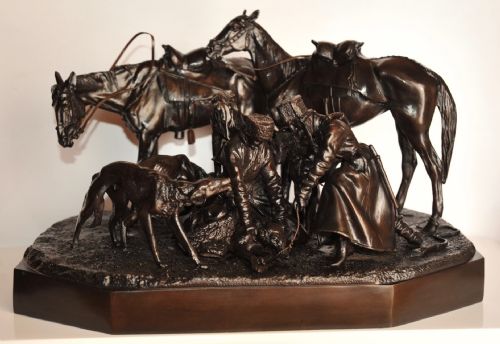


Vintage Hunting Statue
A vintage hunting statue brings the kinetic energy and anatomical precision of the field directly into an interior.
Vintage Hunting Statue
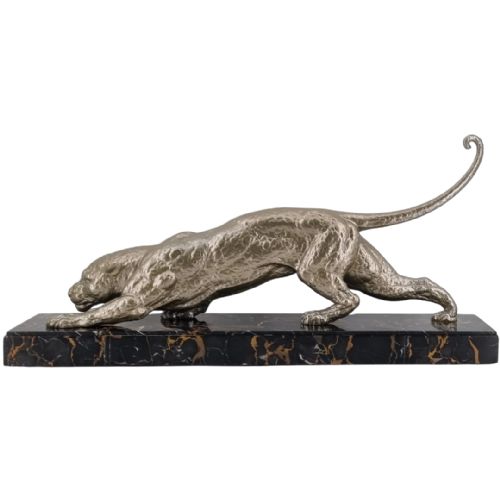
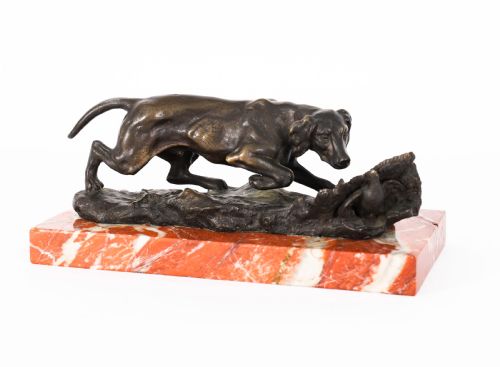
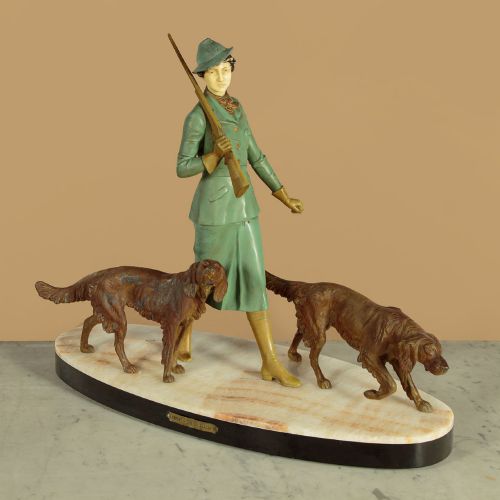
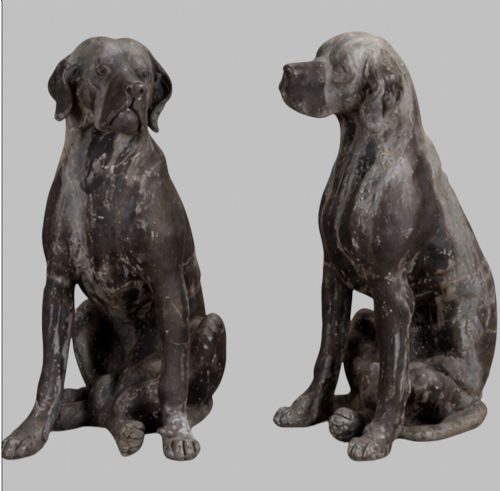
A vintage hunting statue encompasses bronze hounds, marble goddesses, and spelter panthers originating from the nineteenth and early twentieth centuries. These figures capture sporting dogs, wild animals, and mythological hunters in moments of sustained motion or watchful repose.
The objects on this page range from compact desk ornaments and table lamps to substantial garden statues and figural groups. Animalier bronzes and porcelain figurines dominate the selection, reflecting a sustained fascination with canine and wildlife subjects.
French and English animalier schools provide the backbone of the available pieces, alongside distinct contributions from Russian foundries and Italian Grand Tour workshops. Collectors encounter works spanning the neoclassical era through the art deco period.
Materials and Working Methods
Foundries utilised the lost-wax casting method for bronze works, allowing artisans to render muscular tension and textured fur with exceptional clarity. Spelter served as a more accessible metallic alternative during the art deco years, often finished with patination to mimic bronze.
Marble and onyx provided heavy, stable plinths and bases for metallic sculptures, while alabaster and cast lead fulfilled roles in larger domestic and garden settings. Porcelain factories relied on detailed moulding and hand-painting to produce glazed canine figures and figural groups.
Vintage Hunting Statue Retail Price Guide 2026
Typical asking prices for vintage hunting statue among the pieces listed under this phrase on Sellingantiques today, from the lower quarter to the upper quarter. They describe what is for sale here now, not the wider market.
Several hounds share the room with startled rabbits and elusive foxes, locked in silent chases across living room mantels.
Distinctions in Execution
Quality rests in the fidelity of the anatomical modelling and the crispness of the post-cast chasing. Superior bronzes display meticulous hand-tooling on the fur and musculature, whereas lesser castings lose fine detail in the finishing stage.
The integration of the figure with its base indicates the level of original craftsmanship. Heavy, genuine marble or slate plinths fitted flush to the metal work distinguish higher-grade studio pieces from later or more commercial iterations.
D. H. Chiparus·Carl Kauba·Jules Moigniez·Antoine Louis Barye·Nikolai Lieberich
The Vintage Hunting Statue Glossary
- Animalier
- A nineteenth-century artistic movement focused on the realistic depiction of animals, particularly in sculpture. Practitioners studied subjects in menageries and the field to capture authentic movement.
- Spelter
- A zinc alloy used widely as a cost-effective substitute for bronze in decorative figures. It accepts metallic paints and patination readily to resemble heavier metals.
- Lost-wax casting
- A process where a molten metal is poured into a mould created by melting away a wax model. This technique permits intricate undercut details and complex animal forms.
- Patina
- The surface sheen or colour developed on metal through age or chemical treatment. A stable patina protects the underlying bronze and enhances visual depth.
Vintage Hunting Statue: Frequently Asked Questions
How do I identify animalier bronzes?
Examine the surface for naturalistic muscle definition, textured fur, and the artist's signature usually stamped near the base. The weight and cold feel of the material distinguish true metal from composite substitutes.
Check the underside for casting pins and the quality of the patina. Older pieces exhibit consistent wear patterns that align with their nineteenth or early twentieth-century origins.
Where should I place a heavy marble base?
Position heavy stone or bronze pieces on stable furniture that can support substantial downward weight without warping. Ensure the surface remains out of direct, prolonged sunlight to protect any applied patination.
Keep these sculptures away from high-traffic household areas where accidental impacts might dislodge them from their display pedestals.
How do I clean antique bronze safely?
Dust the surface regularly with a soft, dry lint-free cloth to prevent particulate buildup in the crevices. Avoid using commercial metal polishes, abrasive pads, or water, as these can strip the historical patina.
Consult a professional conservator if the metal develops active corrosion or requires deep cleaning beyond basic maintenance.
What distinguishes art deco figures?
Art deco hunting sculptures emphasise streamlined silhouettes, geometric bases, and stylised animal forms rather than strict nineteenth-century naturalism. Materials like spelter and polished onyx frequently accompany these sleek designs.
These pieces often reflect the modern machinery and speed of the 1920s and 1930s in their forward-leaning postures and simplified contours.