


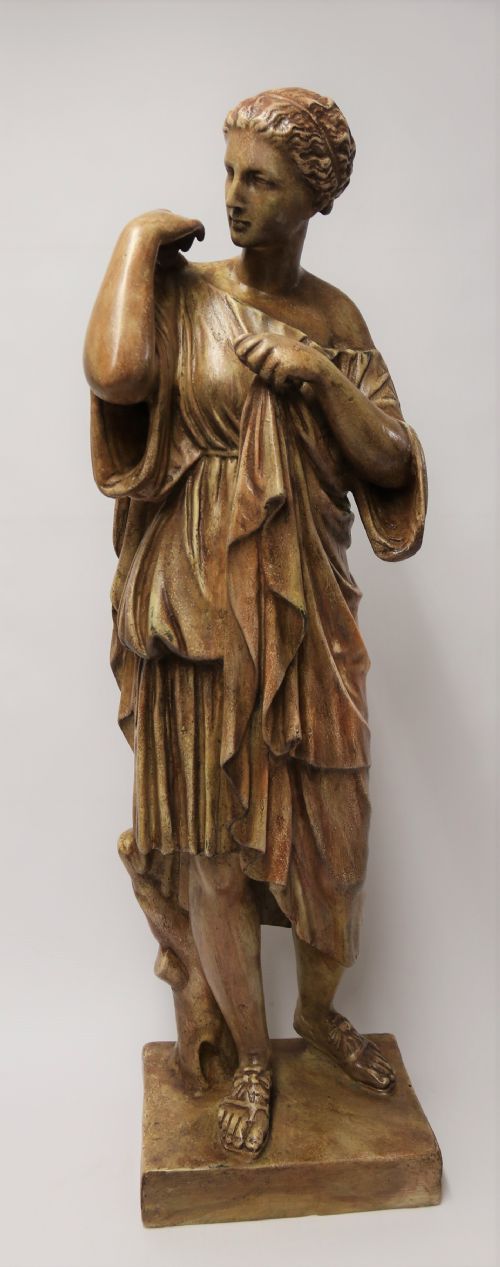



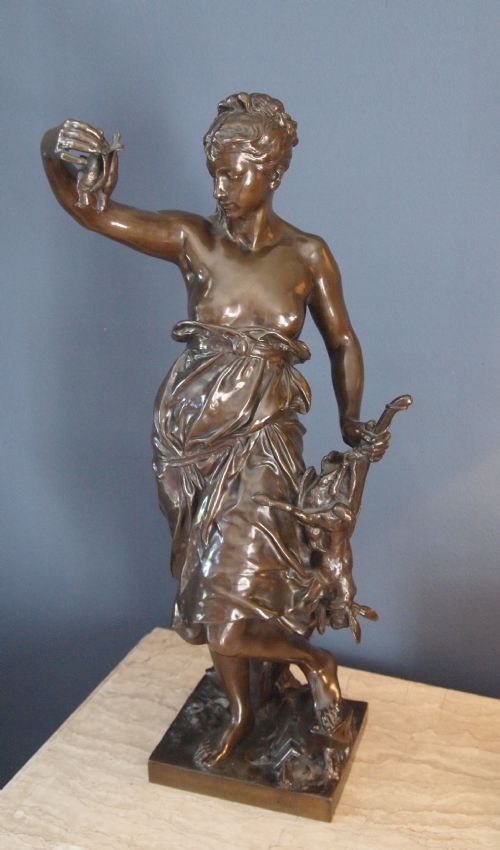


Antique Huntress Figure
An antique huntress figure brings classical mythology into your room, capturing Diana with her bow, hounds, and classical grace.
Antique Huntress Figure
When you search for an antique huntress figure, you encounter sculptural representations of Diana the goddess of the hunt, rendered across multiple centuries and aesthetic movements. These pieces range from eighteenth-century soft-paste porcelain figurines to nineteenth-century Grand Tour marbles and twentieth-century Art Deco bronzes.
The versions you meet most frequently on this page combine classical iconography with the material preferences of their specific era. You will find wall reliefs, clock garnitures, figural groups, and standalone sculptures depicting the huntress with hounds, bows, and arrows.
The historical span represented here covers Georgian soft-paste porcelain works through to French Academic bronzes and 1930s Art Deco creations. Each period interprets the classical huntress theme through its own lens, shifting from delicate polychrome porcelain to patinated bronze and carved marble.
How they were made
Makers utilised traditional casting, carving, and moulding techniques depending on the chosen material. Bronze and spelter figures relied on lost-wax or sand casting methods before receiving hand-applied patination or gilding.
Porcelain examples like those from Derby and Chelsea involved soft-paste ceramic bodies fired at lower temperatures, then hand-painted with enamels and sometimes highlighted with gold leaf during the patch and gold anchor periods.
Marble and alabaster sculptures required skilled hand-carving, often following classical prototypes or Grand Tour reductions of famous statutory, while wood and plaster found occasional use in relief panels and decorative groupings.
Antique Huntress Figure Retail Price Guide 2026
Typical asking prices for huntress figure among the pieces listed under this phrase on Sellingantiques today, from the lower quarter to the upper quarter. They describe what is for sale here now, not the wider market.
What varies in quality
The crispness of the casting and the sensitivity of the chisel work distinguish superior sculptures from simpler commercial productions. In bronze and spelter pieces, sharp details in the facial expressions, drapery folds, and hunting attributes reveal the skill of the foundry and sculptor.
For porcelain figures, the delicacy of the enamel painting, the preservation of the gilding, and the subtlety of the modelling separate masterworks from standard factory output. Early soft-paste porcelain demands careful inspection of the glaze surface and firing finish.
The quality of the mounting and secondary materials also dictates the overall standing of the piece. Fine marble bases, integrated clock movements, and signed foundry markings elevate a sculpture above unsigned or later assembly-line variants.
William Duesbury and Co·Pierre Le Faguays·Louis Ernest Barrias
The Antique Huntress Figure Glossary
- Grand Tour
- A cultural journey undertaken by wealthy young Europeans in the eighteenth and nineteenth centuries to collect classical art and antiquities. Figures from this tradition often copy famous Italian statuary.
- Soft-paste porcelain
- An artificial ceramic body fired at lower temperatures than hard-paste porcelain, common in eighteenth-century English works. It has a warm, slightly creamy glaze well suited to delicate figure modelling.
- Spelter
- A zinc alloy commonly used as a cheaper alternative to bronze in nineteenth-century decorative figures. It is usually given a bronze-coloured surface finish to mimic true metal casting.
- Patch period
- An early phase in English porcelain manufacture identified by unglazed patches on the base left by the kiln supports. It helps date pieces from factories like Derby.
- Neoclassical
- A style spanning the eighteenth and nineteenth centuries inspired by the art and culture of classical antiquity. It prioritises balance, classical drapery, and heroic mythological subjects.
Antique Huntress Figure: Frequently Asked Questions
What materials were used for these figures?
Makers employed a wide range of media depending on the prevailing style of the period. You will find pieces cast in bronze and spelter, carved from marble and alabaster, moulded in soft-paste porcelain, or formed as bronzed copper reliefs.
Porcelain examples frequently feature enamel decoration and gilding, while stone and metal sculptures rely on patination and fine chisel work to define the classical details of the huntress.
How do I identify a Grand Tour piece?
Grand Tour pieces typically date from the nineteenth century and reflect the souvenirs brought back by travellers visiting Italian collections and archaeological sites. They are usually executed in carved white marble or patinated bronze, often copying famous classical statues.
These sculptures frequently display high technical skill and were designed to bring the atmosphere of classical antiquity directly into nineteenth-century European drawing rooms.
Who is the huntress usually depicted as?
The huntress in these sculptures is almost universally Diana, the Roman goddess of the hunt, wild animals, and the forest. She is readily identified by her traditional attributes, which include a bow, quiver of arrows, hunting hounds, and classical drapery.
Some Art Deco and later interpretations modernise her form while retaining the core imagery of the athletic huntress accompanied by her dogs.
How do I care for an antique bronze or marble sculpture?
Care for bronze figures requires only gentle dusting with a soft, dry brush to prevent the accumulation of grit in the recesses of the casting. Avoid liquid cleaners or polishes that can strip the original historic patination.
Marble sculptures should similarly be kept free of dust using a soft cloth, taking care to avoid abrasive materials or harsh chemical solutions that might etch the polished stone surface.