


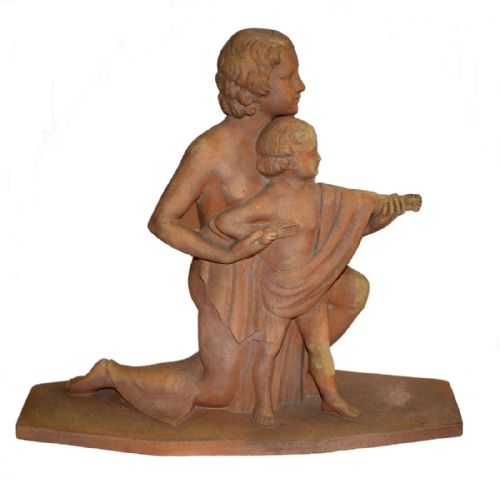
Art Deco Figure Group
An art deco figure group captures the dynamism of the interwar years through multi-figure compositions in bronze, spelter, marble, and ceramic.
Art Deco Figure Group
An art deco figure group presents multiple human figures or animals interacting within a single sculptural composition. You will frequently encounter animal groups such as deer, lionesses, and stags, alongside human dancers, musicians, and mothers with children.
These pieces emerge primarily from the 1920 and 1930 periods, capturing the distinct aesthetic of the interwar era. Sculptures and figurines span diverse object types, often mounted on heavy bases of marble or onyx.
Origins trace strongly to France, where many of these multi-figure works were conceived and signed by prominent artists. The groupings rely on balanced arrangements that draw the eye across the various subjects depicted.
Materials and construction
Makers utilised a wide range of materials, most notably spelter, bronze, terracotta, and glazed ceramic, often pairing them with carved marble or onyx bases. Alabaster and wood also appear, providing contrasting textures and natural grain patterns to the heavier metallic elements.
Metal groups frequently involve cast spelter or bronze, sometimes finished with cold painting or patination to enhance surface detail. Ceramic and terracotta works employ skilled moulding and glazing techniques, whilst plaster and bisque versions rely on delicate surface finishing.
Listings feature works spanning the 1920 and 1930 periods, constructed from marble, onyx, spelter, bronze, terracotta, glazed ceramic, wood, and alabaster.
Quality variations in the range
The sophistication of the modeling and the dynamism of the multi-figure arrangement separate finer examples from simpler output. Well-rendered anatomy in animal and human subjects, combined with expressive postures, marks out superior artistic intent.
The choice and execution of the base material also dictate overall quality, with dense marbles and finely finished onyx elevating the presentation. Clear signatures from recognised makers add definitive provenance and craftsmanship value to the piece.
P. Sega·Guido Cacciapuoti·H. Bal·Chiparus·I. Rochard·Limousin·Mennivelle·B Rezl
The Art Deco Figure Group Glossary
- Spelter
- A zinc alloy commonly utilised as a cost-effective alternative to bronze for sculptural figures during the period. It readily accepts various patinations and cold-painted finishes.
- Onyx
- A banded variety of chalcedony frequently employed for the heavy architectural bases supporting these figural compositions. Its natural translucency and distinct banding offer a polished, decorative foundation.
- Bisque
- Unglazed ceramic fired once, leaving a matte, porous white surface that resembles fine marble. It captures delicate facial expressions and costume details with high precision.
- Patination
- The surface coloration, sheen, or chemical ageing applied to metals such as bronze and spelter. It enhances depth and highlights the contours of the figures.
- Cold painted
- A decorative technique where paint is applied to a metal or plaster sculpture after casting, without subsequent firing. It provides vibrant surface colour but remains susceptible to chipping.
Art Deco Figure Group: Frequently Asked Questions
What materials are these figures made from?
These sculptures utilise a diverse mix of materials, including cast metals like bronze and spelter, alongside terracotta, glazed ceramic, and carved alabaster. Bases are frequently fashioned from solid marble or onyx.
Many pieces combine these elements, such as a metal animal group mounted directly onto a heavy stone base to provide stability and visual contrast.
How do I identify a 1930s piece?
Pieces from this era typically exhibit characteristic geometric styling, streamlined forms, and specific material combinations popular between the wars. Signatures, patination types, and base construction also offer clues to the decade of production.
Looking closely at the clothing styles and animal postures will often reveal the distinct aesthetic sensibilities of the nineteen twenties and thirties.
Where were these figure groups made?
A significant portion of these multi-figure sculptures originated in France, which served as a major centre for decorative arts during the period. European workshops and individual studios produced the vast majority of the surviving examples.
Many works bear the signatures of French and Italian artists who specialised in figural bronzes, spelter casts, and ceramics.
How should I display a heavy sculpture?
Due to the substantial weight of marble and onyx bases combined with metal or ceramic figures, ensure your display surface is robust and level. Placement away from direct sunlight protects any cold-painted finishes or delicate wood elements from fading.
Allowing adequate space around the multi-figure composition ensures the interaction between the subjects remains fully visible from multiple angles.