

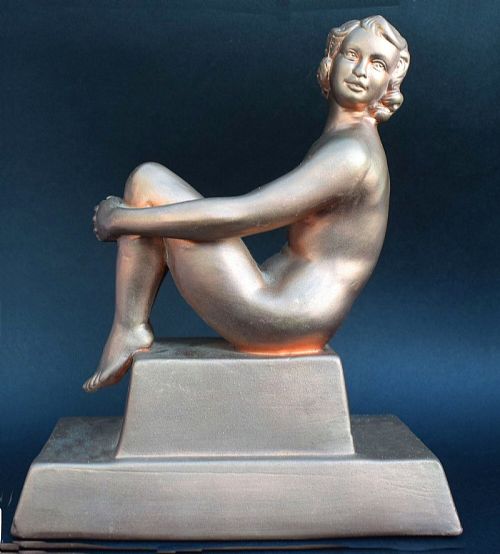


Bronze Lady Statue
These figures bring the elegance of past eras into a room, capturing female subjects through decades of changing decorative taste.
Bronze Lady Statue
A bronze lady statue represents female figures cast in metal, often taking the form of dancers, classical maidens, or allegorical subjects. These pieces span periods from the nineteenth century through the Art Deco era, reflecting shifting artistic movements.
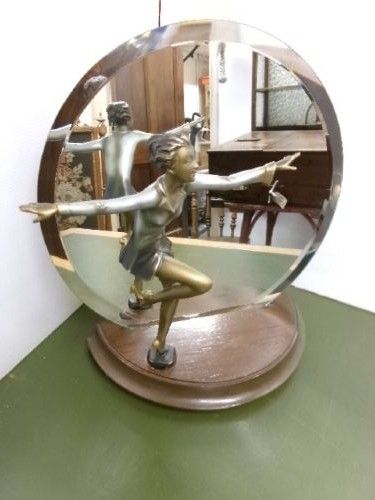
The version most commonly met on this page is the Art Deco figure from the nineteen-thirties, frequently cast in spelter and mounted upon heavy stone bases like onyx or alabaster. Many examples function beyond pure sculpture, appearing as table lamps, bookends, and car mascots.
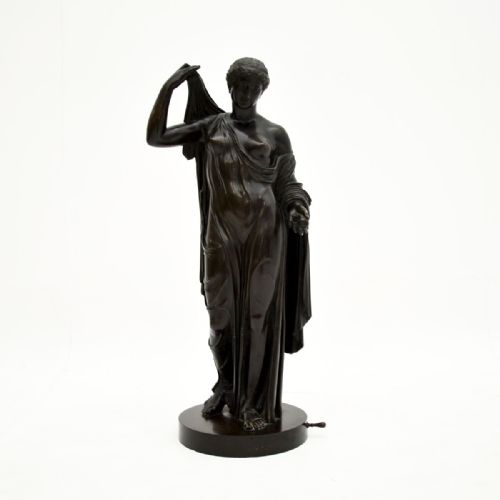
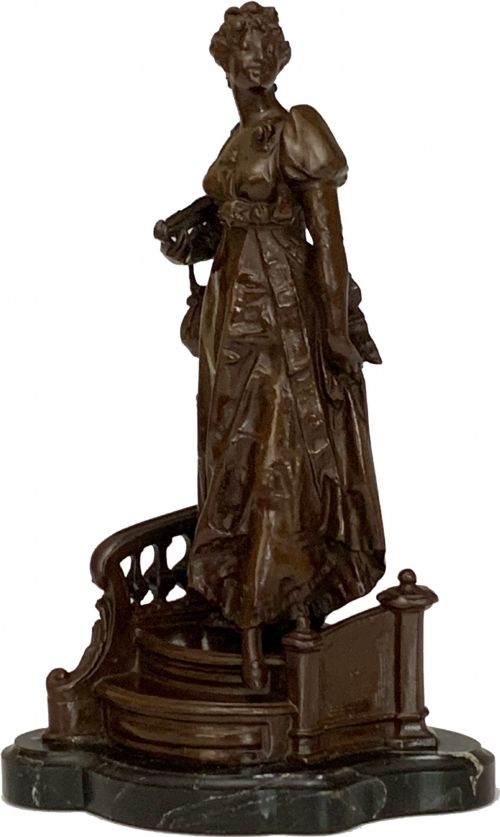
Earlier nineteenth-century pieces tend toward classical robed subjects, French neoclassical models, and patinated portrait busts. Orientalist and Belle Epoque interpretations also surface, showing women in elaborate costumes or narrative scenes.
Distinctions in craftsmanship
The integrity of the mounting matters significantly, particularly in figures joined to stone bases. Superior pieces display seamless integration between the metal figure and its marble or onyx plinth, with secure fixings and high-grade materials.
The listings show works spanning from eighteen-sixty through nineteen-thirty, with materials ranging from carved alabaster and wood to patinated bronze and spelter.
Georges Van Der Straeten·Bergman·Josef Lorenzl·Sylvain Kinsburger·Eurotrope Bouret·Demetre Chiparus·Jennings Brothers·Franz Bergman·Geo Maxim·Maurice Bouval·Emmanuel Villanis·Pierre Hebert·Henri Honore Ple·Jose Dunach
The Bronze Lady Statue Glossary
- Spelter
- A zinc alloy commonly utilised as a substitute for bronze in decorative figures. It is softer and lighter than bronze, often finished with a patinated surface coating.
- Chryselephantine
- A sculpture combining ivory and bronze elements. This technique gained prominence during the Art Deco period for depicting figures with carved faces and hands.
- Cold painted
- A method where enamel paint is applied to unheated bronze and allowed to dry naturally. This technique was favoured by Viennese foundries to achieve vibrant polychrome finishes.
- Patination
- The ageing or chemical treatment applied to the surface of metal to create a distinct colour or sheen. It protects the bronze and adds depth to the sculptural contours.
- Regency
- An English architectural and decorative style spanning the early nineteenth century. Pieces from this period often draw heavily on classical Greek and Roman motifs.
Bronze Lady Statue: Frequently Asked Questions
How do I clean a bronze sculpture?
Dust the surface gently with a soft, dry brush to prevent the accumulation of grit in the recesses of the casting. Avoid harsh chemical cleaners or abrasive cloths, which can strip away the original patination and damage the metal.
Applying a very light coat of microcrystalline wax helps protect the bronze from atmospheric moisture. Buff the wax off gently after application to maintain a subtle, even sheen across the figure.
What is the difference between bronze and spelter?
Bronze is an alloy primarily composed of copper and tin, valued for its strength, durability, and ability to hold fine detail during casting. Spelter is a softer, zinc-based metal that was frequently utilised as an economical alternative for decorative figures.
Spelter is generally lighter than bronze and can feel more brittle if struck. Figures cast in spelter often require a heavier stone base, such as onyx or marble, to prevent tipping due to the lighter weight of the metal.
Where were these figures typically displayed?
In period interiors, these statues functioned as mantelpiece ornaments, desk accessories, or focal points on side tables in drawing rooms. Larger figural sculptures were placed on pedestals in hallways or grand reception rooms.
Many Art Deco examples served a dual purpose as functional items, including desk lamps, bookends, and automobile mascots. Their placement depended on whether the piece was purely decorative or integrated into daily domestic use.
How can I tell Art Deco from Art Nouveau?
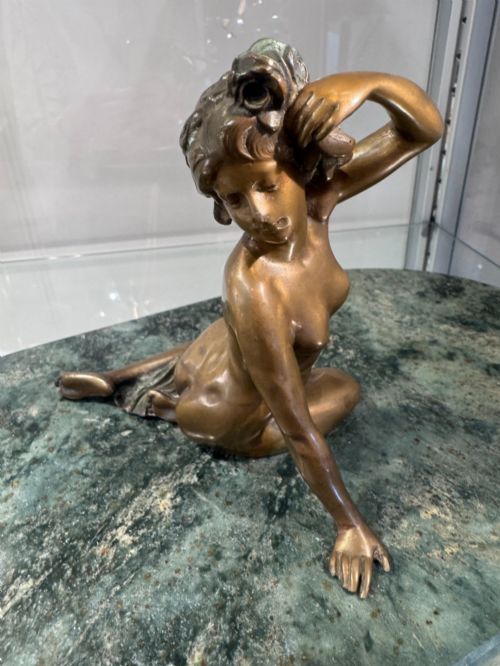
Art Nouveau pieces, popular around the turn of the twentieth century, feature flowing, asymmetrical lines inspired by natural forms like plant stems, winding hair, and insect wings. The female subjects often appear dreamlike with long, sweeping drapery.
Art Deco figures, emerging in the nineteen-twenties and thirties, lean toward geometric precision, stylised forms, and dynamic movement. The poses are frequently sharp and angular, celebrating modern speed, dance, and fashion.