
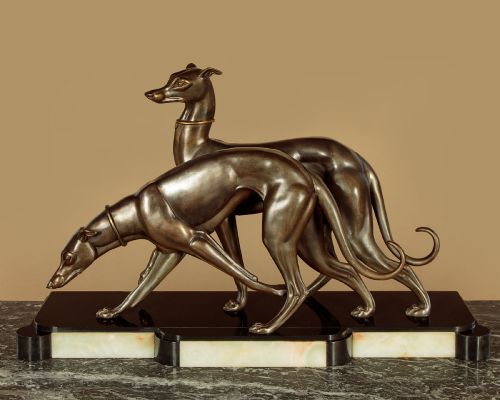


Art Deco Dog Figurine
These art deco dog figurine pieces capture the sleek lines and dynamic energy of the interwar period, offering collectors wonderful sculptural form and charm.
Art Deco Dog Figurine
When you search for an art deco dog figurine, you are looking at domestic sculpture and decorative objects that celebrate the canine form through the distinctive aesthetic lens of the interwar period. The versions you are most likely to meet on this page span the 1920s and 1930s, taking the shape of standalone sculptures, playful night lights, and companion figures paired with young girls or flappers. Greyhounds, borzois, and poodles dominate these forms, reflecting a period taste for sleek silhouettes and refined motion.
Beyond standalone figures, the evidence shows these hounds integrated into functional or decorative objects such as trinket boxes, dresser powder boxes, and even car mascots for classic automobiles. Many of these pieces combine metal or porcelain figures with substantial bases made from marble or onyx, grounding the vertical energy of the design. Whether rendered as a leaping hound or a faithful companion, each piece channels the streamlined modernity characteristic of the style.
Judging quality and execution
Quality in these sculptures rests upon the crispness of the casting and the expressiveness of the animal's posture. Finer examples display clean lines, well-defined musculature, and careful finishing to the metal or ceramic surface, whereas lesser pieces may exhibit softened details and clumsy proportions. The choice and integration of secondary materials, such as a heavy marble base supporting a bronze hound, also indicate the ambition of the piece.
Signatures and attribution play a significant role in distinguishing the upper tier of works. Pieces bearing the marks of known sculptors or makers command greater attention due to their superior artistic conception and careful foundry work. The harmony between the canine subject and any human figures or architectural elements further separates standard decorative items from superior sculptural compositions.
Object forms span sculptures, trinket boxes, table lamps, figurines, and car mascots.
Rosenthal·Karl Hagenaur·Alexandre Kelety·Geo Maxim·H. Bal
The Art Deco Dog Figurine Glossary
- Spelter
- A zinc alloy used as a cost-effective substitute for bronze in decorative figures. It is softer than bronze and typically requires a surface coating or patination to mimic more precious metals.
- Car Mascot
- A decorative ornament mounted on the radiator cap of a motor car. In this period, small bronze dog figures were frequently utilised for this purpose.
- Night Light
- A small decorative lamp designed to emit a low glow, often featuring a bronze or ceramic figure mounted on a marble plinth beside a light fitting.
- Patina
- The surface sheen or coloration developed on bronze through age or chemical treatment. It highlights the sculptural contours and protects the metal underneath.
- Trinket Box
- A small container for holding jewellery or small items, often topped with a porcelain or metal figural lid representing a human or animal scene.
Art Deco Dog Figurine: Frequently Asked Questions
Are all these dog figures made of bronze?
No, the materials vary significantly across the pieces recorded in the evidence. While several sculptures are cast in bronze or silvered bronze, others utilise spelter, glazed ceramic, or porcelain.
Additionally, many metal figures are mounted on bases made from stone such as marble or onyx, combining different textures within a single decorative object.
How were these decorative dog objects used?
Many of these pieces served as standalone sculptural ornaments for domestic display on mantelpieces or tables. Others had practical functions, such as night lights, trinket boxes for dressers, or even metal mascots fitted to classic cars.
Companion pieces also integrated dogs with human figures, reflecting popular domestic themes of the interwar decades.
Which dog breeds appear most frequently?
Greyhounds and borzois appear most often in the sculptural works, celebrated by artists for their slender, elegant lines that suited the modern aesthetic. Poodles also feature among the recorded items, alongside other unspecified hounds and puppies.
These breeds were chosen to emphasise dynamic movement, speed, and refined companionship.
How can I tell the period of a dog figurine?
The pieces largely date from the 1920s and 1930s, sharing distinct characteristics of the period style through their streamlined forms and choice of materials. Stylistic cues include the posture of the animals and the geometry of the bases.
Signatures from period sculptors and makers further help anchor individual pieces to specific decades of production.