




Patinated Bronze Lady Sculpture
A patinated bronze lady sculpture brings distinct nineteenth and twentieth-century figures into a room, offering enduring form and classical presence.
Patinated Bronze Lady Sculpture
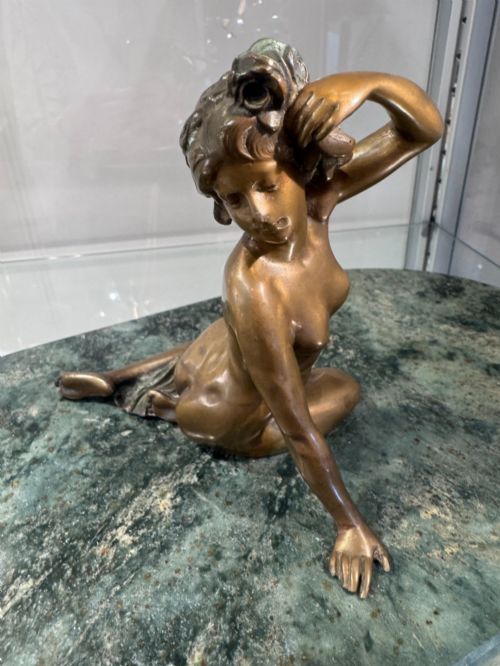
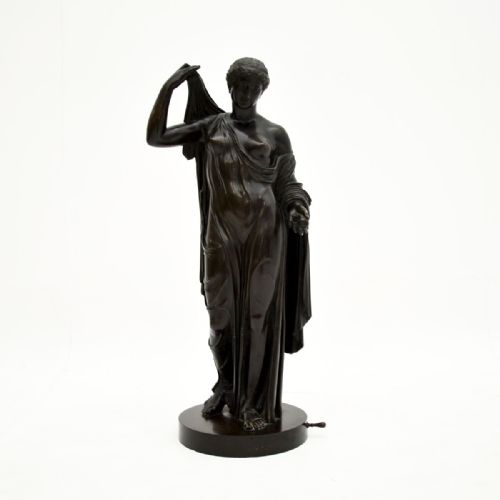
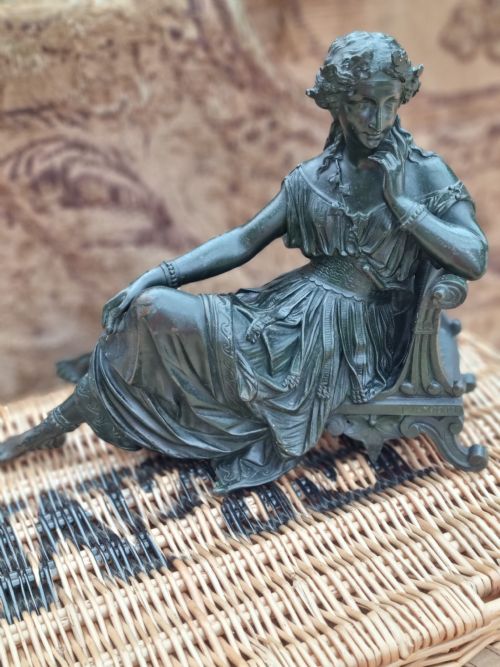
A patinated bronze lady sculpture captures the female form across periods from the Victorian and Edwardian eras through to Art Nouveau and Art Deco movements. These pieces range from full-length seated figures and running girls with greyhounds to detailed portrait busts and robed classical ladies.
The versions most commonly met on this page originate from French workshops or bear the distinct fluid lines of Art Nouveau and the geometric stylisation of the 1930s. Sculptures often incorporate bases or plinths made from contrasting materials such as marble or onyx to anchor the metalwork.
Object types vary from smaller desk-sized figurines and busts to larger decorative statues and figure groups. Makers frequently drew upon classical revival, Neoclassical and Grand Tour influences to shape these striking representations of women.
Materials and construction
Foundries produced these sculptures primarily in bronze and spelter, often applying a deliberate dark or chemical patination to the metal surface to create depth and highlight the contours of the drapery and hair. Alternative mediums recorded in the evidence include cold-painted metal and plaster.
Stonework such as marble and onyx served as mounting material for the figures, while wooden elements occasionally supplemented the bases and supports. Metalwork finishing involved careful chasing and signing by the artist or foundry.
French ateliers dominate the sculptural evidence, alongside notable American cold-painted bronze studies and British Edwardian pieces.
Markers of quality
The distinction between standard commercial output and finer work lies in the crispness of the casting and the sensitivity of the hand-finishing. Skilled chasers refined the metal after it left the mould, ensuring sharp details in facial expressions, costume folds and hair strands.
The choice and integration of the base material also indicate grade, where heavy, finely polished marble or onyx complements the weight and proportion of the metal figure above it. Signed pieces by recognised modellers demonstrate a higher degree of artistic intent and foundry execution.
Sylvain Kinsburger·Jennings Brothers·Georges Van Der Straeten·Geo Maxim·Emmanuel Villanis·Pierre Hebert·J C De Blezer
The Patinated Bronze Lady Sculpture Glossary
- Patination
- The chemical or natural treatment applied to the surface of bronze to alter its colour and protect the metal underneath. This process creates deep brown, green or black tones that accentuate the sculptural relief.
- Spelter
- A zinc-based alloy commonly utilised as a less expensive alternative to bronze during the nineteenth and twentieth centuries. It often received a bronze-like metallic coating to mimic the heavier material.
- Neoclassical
- A style inspired by the art and culture of classical antiquity, focusing on symmetry, restraint and robed female figures. It heavily influenced European sculpture throughout the nineteenth century.
- Art Nouveau
- An artistic movement characterised by organic, flowing lines, whipstitch curves and natural motifs. Figures from this period frequently depict women with long, cascading hair integrated into floral or sinuous designs.
- Cold-painted bronze
- A technique where paint is applied to the unheated bronze surface rather than fired in a kiln. This method allows for subtle polychrome detailing on costumes and skin.
Patinated Bronze Lady Sculpture: Frequently Asked Questions
How do I clean a bronze sculpture?
Dust the surface gently with a soft, dry brush to remove particles without disturbing the underlying chemical patina.
Avoid using water, chemical cleaners or abrasive cloths, as these can strip away the aged finish and damage the metal.
Where should I place these sculptures?
Position them on sturdy surfaces such as wooden sideboards, mantelpieces or dedicated pedestals where their weight and material presence can be appreciated. Keep them away from direct sunlight and moisture to preserve the condition of the metal and any attached marble bases.
Allow enough surrounding space so the silhouette of the female figure remains clearly visible from multiple angles in the room.
What is the difference between bronze and spelter?
Bronze is a durable alloy of copper and tin that yields heavy, crisp castings capable of holding fine chisel work. Spelter is a softer zinc alloy that feels lighter and requires careful handling to prevent structural stress.
Examining the underside or areas of wear often reveals the paler grey metal beneath a spelter patination.
How do I identify Art Nouveau figures?
Look for asymmetrical compositions, whiplash curves, and flowing drapery that mimic natural plant forms. The female subjects often feature elaborate, sweeping hair entwined with floral motifs.
These characteristics reflect the dominant design philosophy of the late nineteenth and early twentieth centuries.