




Sculpture of Hunting Dogs
When you handle a sculpture of hunting dogs, you hold a century of anatomical study and field sport captured in bronze, porcelain, and earthenware.
Sculpture of Hunting Dogs
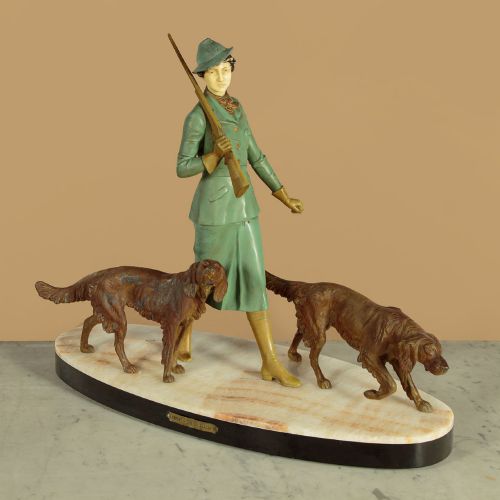
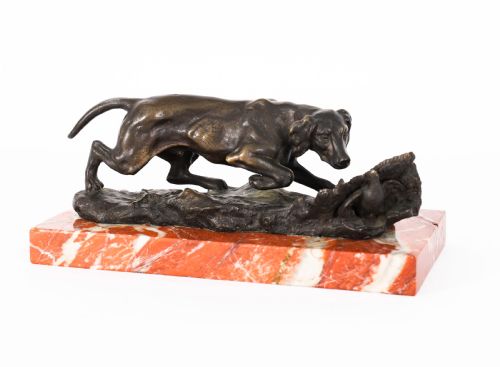
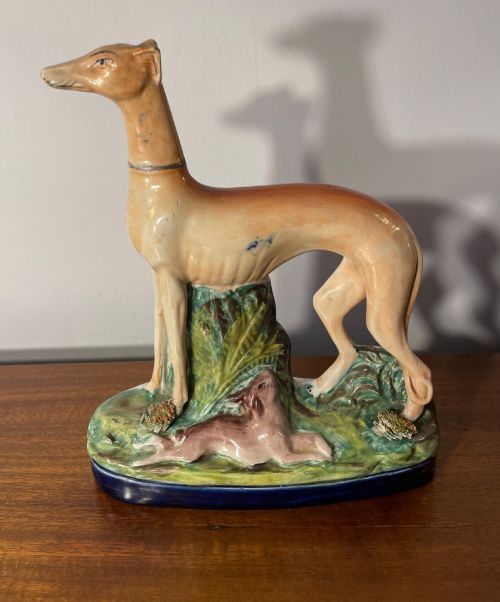
A sculpture of hunting dogs brings together hounds, setters, spaniels, and pointers modeled in active field pursuits or resting by game. You will most frequently meet 19th-century French animalier bronzes alongside Staffordshire pottery figures and Art Deco spelter groups.
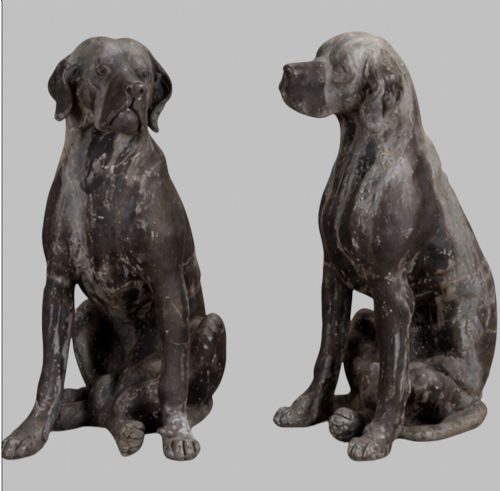
The objects range from small mantel figurines and porcelain table pieces to large life-size garden statues and heavy fireplace fenders. Makers placed their focus on the tension of the chase, depicting dogs flushing pheasants, tracking hares, or standing alongside their quarry.
Materials and Casting Techniques
Foundries produced bronze sculptures using the lost-wax method, allowing artists to capture muscular detail, textured coats, and fine cold-painted finishes on setters and hounds. Marble and ormolu served as substantial plinths and mounts for these metal figures.
Potters shaped earthenware and porcelain pieces by hand or in moulds before applying lead glazes and hand-painted details. Spelter and cast iron offered alternative, heavier mediums for larger decorative figures and functional hearth accessories.
Sculpture of Hunting Dogs Retail Price Guide 2026
Typical asking prices for sculpture of hunting dogs among the pieces listed under this phrase on Sellingantiques today, from the lower quarter to the upper quarter. They describe what is for sale here now, not the wider market.
Several setters share space with very confused-looking hares and pheasants.
Distinctions in Execution
Quality rests entirely in the anatomical accuracy of the animal and the crispness of the chase scene. A strong piece demonstrates precise muscle tension, realistic fur texture, and a balanced composition between the hound and its quarry.
The integration of the figure with its base distinguishes workshop standards. Finer bronzes feature sharp foundry chording and harmonious marble integration, while lesser examples show softer surface detail and indistinct casting.
Carl Kauba·Jules Moigniez·Thomas Parr·Enoch Wood factory·Antoine Louis Barye·Pierre-Jules Mêne
The Sculpture of Hunting Dogs Glossary
- Animalier
- A 19th-century artistic movement focused on the realistic depiction of animals, particularly predators and sporting dogs. Practitioners studied subjects in menageries and veterinary clinics.
- Spelter
- An alloy of zinc and lead cast into decorative figures and patinated to resemble bronze. It provides a lighter and more affordable alternative to traditional metalwork.
- Cold-painted
- A technique where paint is applied to bronze without heat firing. This finish requires careful handling to preserve the original polychrome details on the animal coats.
- Ormolu
- Gilded bronze used for decorative mounts and accents. It frequently complements marble bases and metal figures from the 19th century.
- Lead glaze
- A traditional shiny coating applied to pottery before firing. It creates a smooth surface characteristic of early earthenware figures.
Sculpture of Hunting Dogs: Frequently Asked Questions
How do I identify an animalier bronze?
Look for a signature on the bronze base alongside foundry marks that indicate 19th-century French production. The surface should display a rich patina developed through handling and age.
Examine the musculature and posture of the hound for naturalistic observation rather than rigid symmetry.
What is the difference between bronze and spelter?
Bronze is a heavy copper alloy that takes fine chisel work and holds a durable, deep patina. Spelter is a softer zinc alloy that feels lighter and shows a duller fracture if the surface chips.
Most antique animalier works utilise bronze, while larger decorative figures often employ spelter.
How were Staffordshire dog figures displayed?
Staffordshire pottery hounds sat in pairs on mantelpieces, flanking clocks or ornaments in 19th-century parlours. Potters designed them to face inwards toward each other.
Collectors today place them on shelves and tables where their lead glazes catch the light.
How do I care for a cold-painted bronze?
Keep cold-painted sculptures away from direct sunlight and moisture to prevent the paint layers from flaking. Dust them gently with a soft, dry brush without using liquid cleaners.
Stable indoor humidity preserves both the metal substrate and the fragile polychrome finish.