




Vintage Hot Water Urn
A vintage hot water urn is a functional metal vessel designed for entertaining, bringing period character and hospitality to any room.
Vintage Hot Water Urn
A vintage hot water urn encompasses practical vessels designed to heat and dispense water for tea or coffee, appearing as samovars, tea urns, and spirit kettles on stands. These pieces span periods from the Georgian and Regency eras through the Victorian and Edwardian decades up to the early twentieth century.
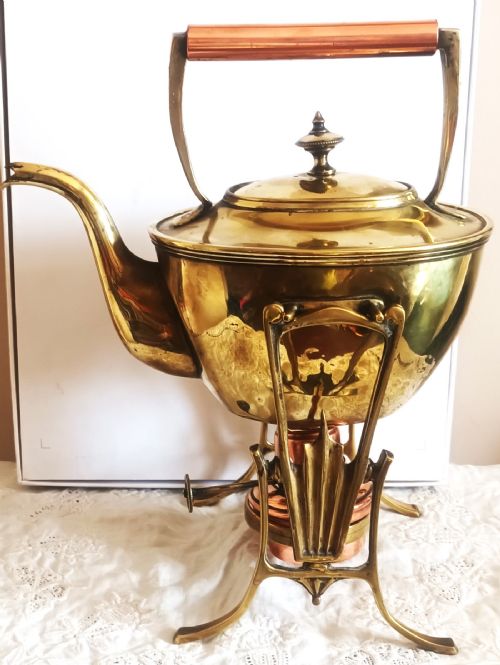
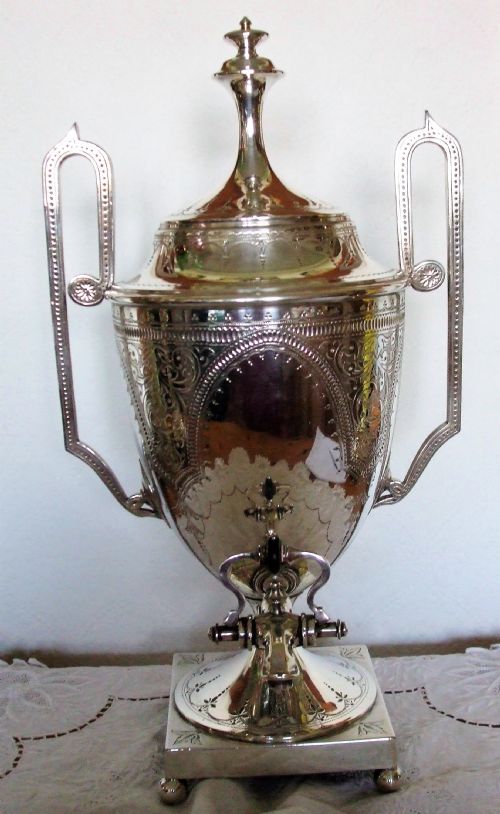
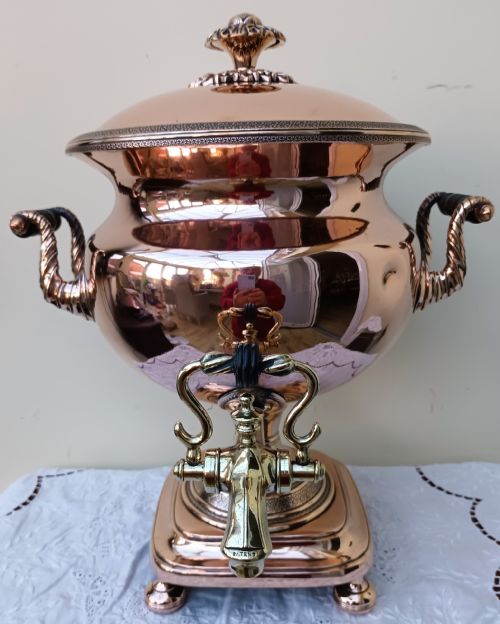
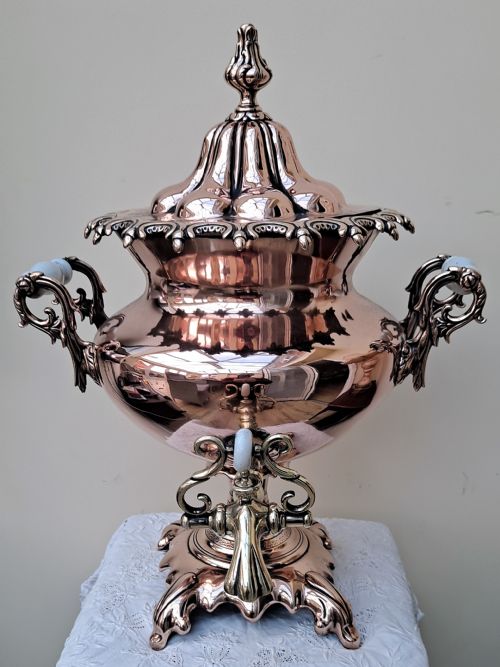
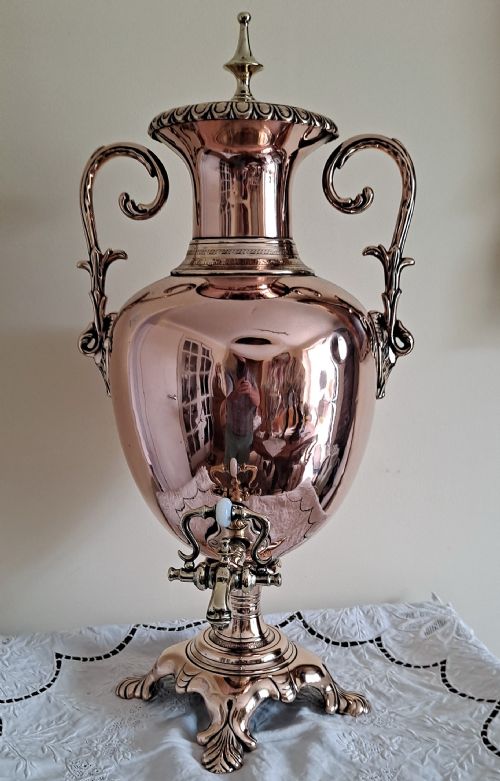
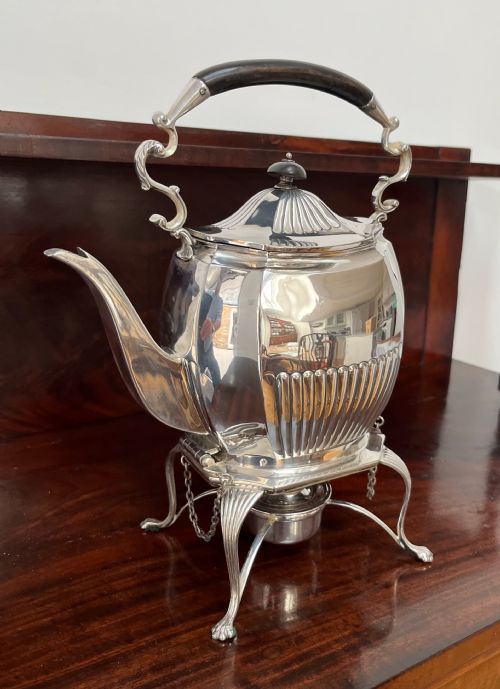
The most common forms on this page include copper and brass samovars alongside silver plated spirit kettles complete with burners. Such pieces reflect the social rituals of hot beverage service in past centuries, functioning as both table centrepieces and practical heaters.
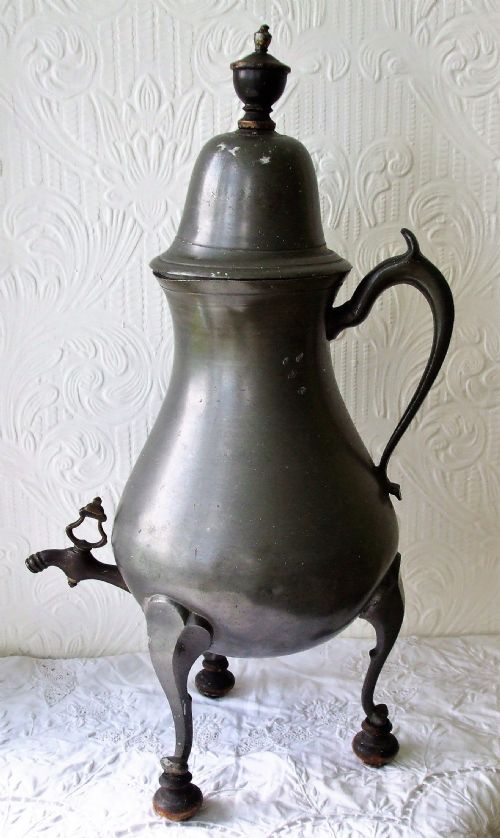
Origins stretch across English workshops and Dutch makers, utilising metalworking traditions that prioritized durability alongside decorative presence. Buyers encounter domestic containers ranging from modest tea kettles to large ceremonial samovars.
Materials and construction methods
Constructed primarily from copper, brass, and silver plate over base metals, these urns combine heavy metal bodies with fitted spigots, taps, and handles. Many incorporate contrasting details in ebonised wood, ebony, or bone to insulate handles against heat.
Makers shaped sheet metals through hammering and joining techniques, mounting vessels onto specialised metal stands equipped with spirit burners. Surface finishes range from polished brass and bronzed copper to silver plating.
Several kettles arrive with their original spirit burners intact, ready for a Victorian tea party that is roughly a century overdue.
Distinctions in quality and finish
Quality rests upon the weight of the metal, the crispness of decorative casting on mounts and handles, and the integrity of internal components like taps and burners. Pieces produced by established makers demonstrate superior finishing in joints and surface detail.
The presence of matching original stands, burners, and handles separates complete working assemblies from incomplete vessels. Proportion and decorative restraint further distinguish refined George III and Regency examples from later mass-produced items.
William Soutter & Sons·Walker & Hall
The Vintage Hot Water Urn Glossary
- Samovar
- A heated metal urn traditionally used to boil water for tea, featuring an internal vertical metal tube for charcoal or a modern heating element. These vessels often include a spigot near the base for easy dispensing.
- Spirit Kettle
- A small kettle mounted on a metal stand with an integrated spirit burner underneath to keep water hot at the table. They frequently appear in Edwardian and Victorian tea services.
- Spigot
- A tap or spout fitted near the base of an urn to control the flow of hot water. Their design and mechanism vary according to the period and metal used.
- Ebonised Wood
- Timber treated to resemble ebony, frequently utilised for insulating handles and knobs on metal teaware to prevent heat transfer.
- Silver Plate
- A thin layer of silver applied to a base metal such as copper or brass. This technique provided the appearance of solid silver at a lower cost during the Victorian and Edwardian periods.
Vintage Hot Water Urn: Frequently Asked Questions
What is a vintage hot water urn used for?
These vessels were originally utilised for heating and dispensing water during tea and coffee service, particularly in large households and formal drawing rooms.
Today, collectors appreciate them primarily as decorative objects that display the craftsmanship of past metalworkers.
How do I distinguish a Georgian urn from a Victorian one?
Georgian and Regency urns often display neoclassical forms, refined proportions, and bronzed or heavy copper surfaces reflecting earlier design ideals.
Victorian and Edwardian examples tend toward heavier ornamentation, silver plating, and diverse companion stands with spirit burners.
Are spirit kettles different from samovars?
Spirit kettles are smaller vessels suspended on dedicated metal stands above a small burner, designed for continuous table use during tea service.
Samovars are generally larger stationary urns featuring an internal chamber or tap system for dispensing hot water to multiple guests.
How should I display a hot water urn at home?
These pieces function well as focal points on sideboards, side tables, or dedicated beverage stations, highlighting their warm copper, brass, and silver plated surfaces.
Keeping them complete with their original stands and burners maintains the intended historical silhouette.