


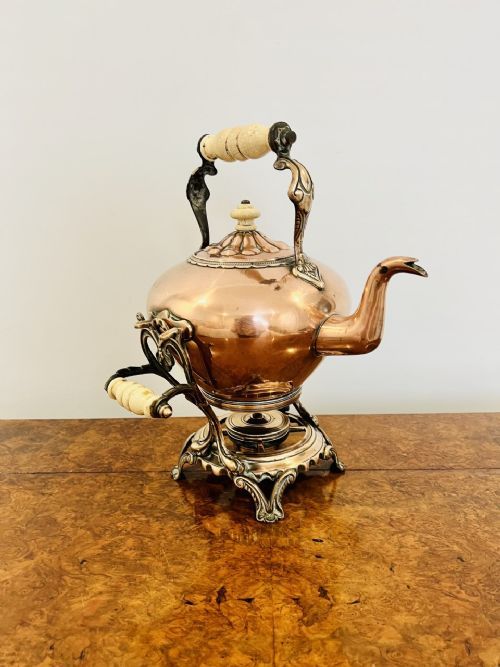


Victorian Copper Tea Urn
A victorian copper tea urn brings warmth and historic craftsmanship to a room, offering a striking centrepiece rooted in nineteenth-century hospitality.
Victorian Copper Tea Urn
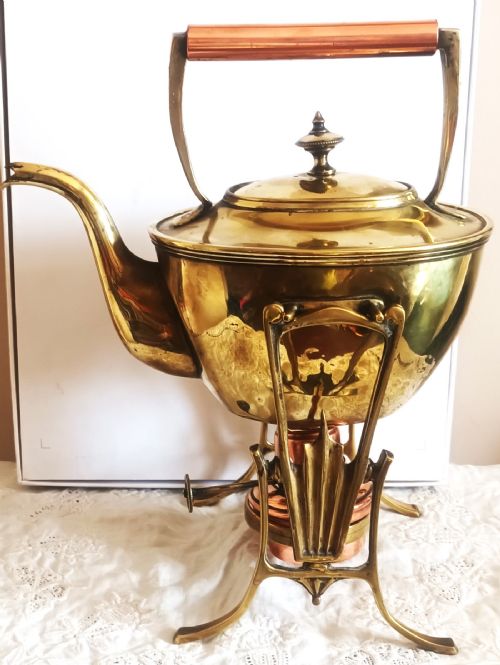
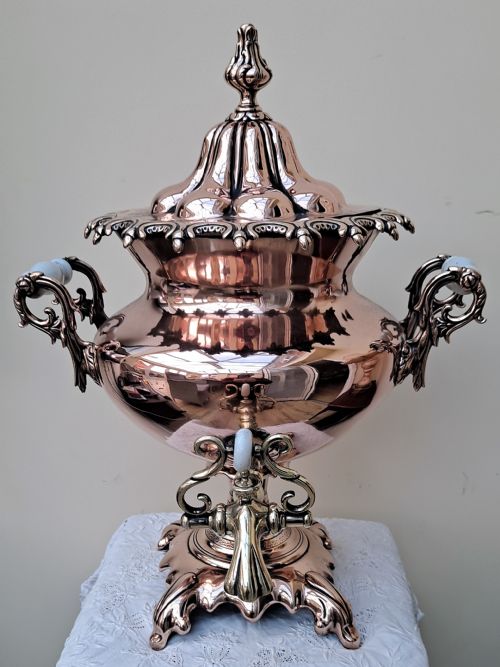
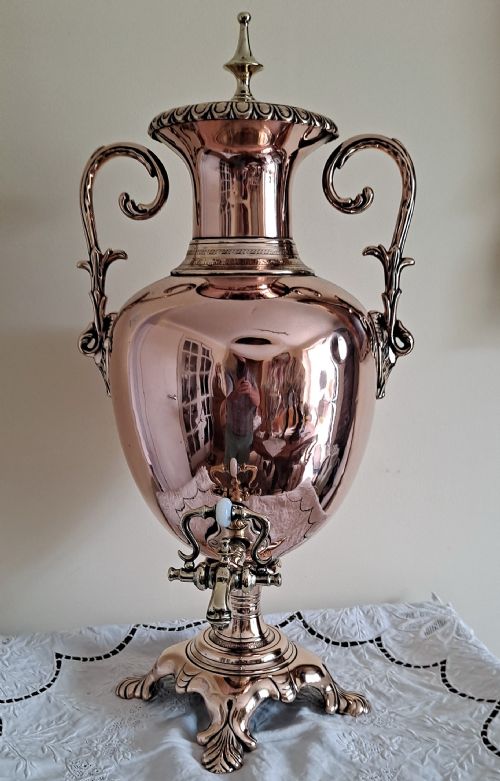
A victorian copper tea urn represents a grand era of domestic entertaining, designed to hold and dispense hot water for tea service. These vessels range from substantial freestanding samovars to spirit kettles on stands and hanging kettles.
The pieces on this page span the nineteenth century, including specific dates from the mid to late decades such as eighteen-fifty, eighteen-sixty, and eighteen-ninety. You will encounter standard copper bodies often paired with contrasting brass handles, spigots, and mounts.
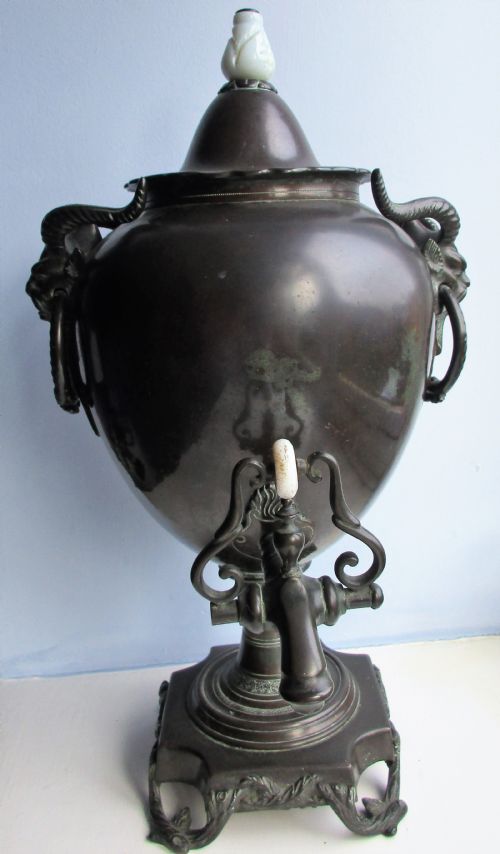
Forms cross over between traditional tea urns, samovars, and Japanned variations like Pontypool ware. Examples include both standard Victorian aesthetics and later Arts and Crafts interpretations.
Materials and construction
Makers built these vessels primarily from sheet copper, shaping the metal to form the body and combining it with cast brass fittings. Handles frequently incorporate insulating materials such as bone or wood to protect the hand from heat.
Surface finishes include bright polished copper, patinated metal, and japanned metal applied to specific pieces like Pontypool ware. Wrought iron elements also appear on stands and hanging mechanisms for stability.
A few hanging kettles let you swing your boiling water back and forth, proving the Victorians took table drama very seriously indeed.
Assessing quality and manufacture
Quality reveals itself in the weight of the copper and the crispness of the brass casting on taps and handles. Superior examples feature heavier gauge metal and precise dovetail or brazed seams that demonstrate expert workshop production.
Design complexity also separates standard vessels from exceptional ones, particularly those bearing named maker marks or specialised finishes like japanning. The integration of stands, spirit burners, and bone insulators reflects higher tiers of nineteenth-century manufacture.
William Soutter & Sons·Benetfink & Co·Benham & Sons
The Victorian Copper Tea Urn Glossary
- Samovar
- A heated metal container traditionally used to boil and heat water in Russia and adopted across Britain for tea service. These large urns often feature an internal vertical tube for charcoal or a heating element.
- Spirit Kettle
- A portable water kettle mounted on a metal stand above a small spirit burner. This setup kept water hot at the tea table.
- Pontypool Ware
- A type of British japanned metalware known for its polished, lacquered finish. It originates from a historic manufacturing tradition in Wales.
- Patinated Metal
- Metal surfaces showing a natural change in colour and sheen caused by age and oxidation. This finish develops organically over decades of exposure to the environment.
- Spigot
- A tap or faucet fitted near the base of an urn to dispense hot water. These components are frequently cast in brass.
Victorian Copper Tea Urn: Frequently Asked Questions
How do I use a tea urn?
These historical pieces are primarily intended for display, interior decoration, or collection rather than daily beverage preparation. Many retain their original taps and internal components, though modern use requires careful inspection of seals and plumbing.
Placing an urn on a sideboard or table creates a strong focal point that reflects nineteenth-century dining traditions. Ensure the surface is stable, as larger copper and brass vessels carry significant weight when empty.
What is the difference between a samovar and an urn?
While the terms often overlap in nineteenth-century listings, a samovar traditionally includes an internal central tube for heating fuel. Standard tea urns rely on external heat sources or simply serve as insulated vessels for hot water.
Both forms share similar brass spigots and handles, but samovars generally present a more monumental architectural silhouette. You will find both categories represented across the Victorian period on this page.
How should I clean copper?
Maintenance depends entirely on whether you prefer a bright polished finish or an aged historic patina. Gentle dusting and occasional wiping with a soft cloth preserve the surface without stripping character.
Avoid harsh abrasive cleaners that can damage the thin protective layers or historic patinated metal. Leaving the natural oxidation untouched is often preferred by collectors of antique metalwork.
How do I date a copper urn?
Dating relies on stylistic clues, construction methods, and occasionally maker stamps or engraved details. Mid-nineteenth-century examples often feature heavier classical proportions, while later items may show Arts and Crafts influences.
Maker marks associated with London firms or specific metalworking shops help narrow down the decade of production. Examining the construction of the handles, feet, and spigot also provides insight into the manufacturing period.