


Brass Samovar
A brass samovar brings sculptural weight and warming presence to a room, functioning as both a decorative centrepiece and a historical tea urn.
Brass Samovar
When you search for a brass samovar, you encounter heavy tea urns and water vessels designed to heat water for hospitality. These pieces appear across Georgian, Regency, and Victorian periods, taking forms such as coffee urns, water urns, and spirit kettles.
How they were made
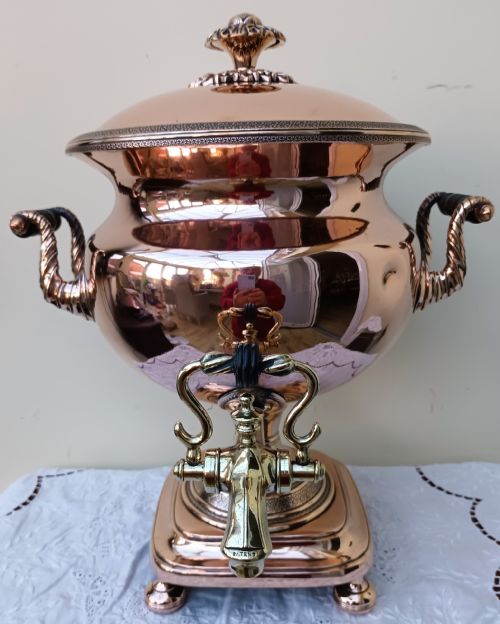
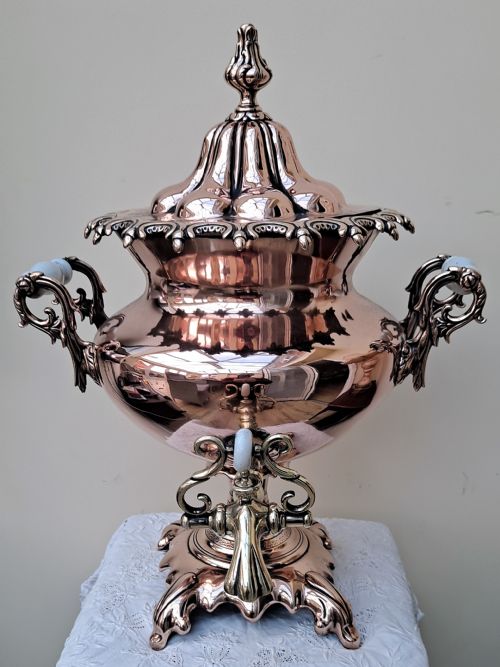
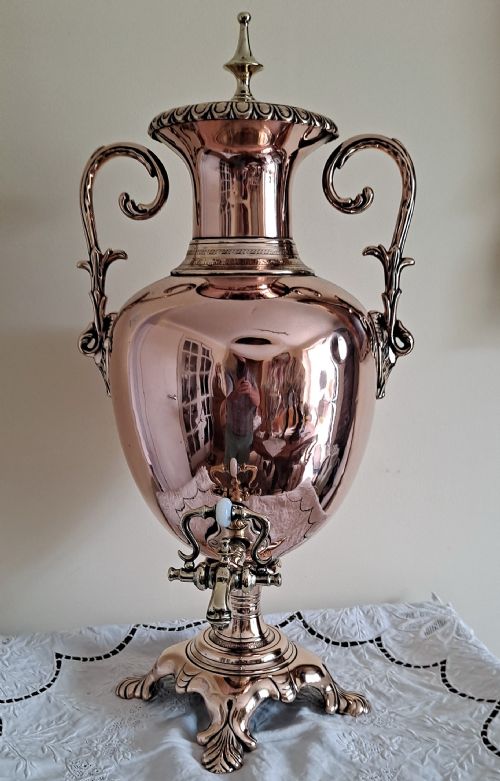
Makers shaped sheet copper and brass into body forms, often combining metals to contrast the warm red hue of copper with bright brass handles, taps, and feet. Components such as bone, ebonised wood, and ceramic insulated the handles from heat during use.
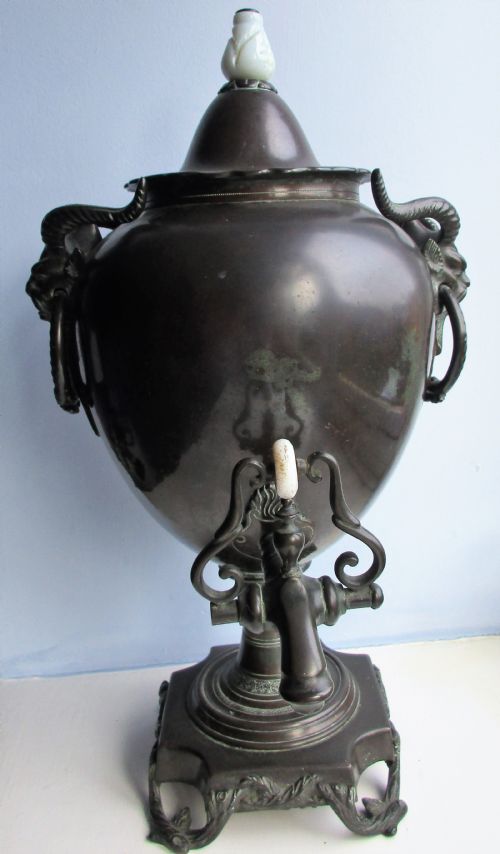
Craftsmen applied patinated finishes, tinplate linings, and bronzed coatings to protect the interior and exterior surfaces. Many pieces retain original fittings including internal heating tubes, spigots, and lids.
Keep an eye out for bone insulators on handles, reminding us that tea time once required serious thermal engineering.
What varies in quality
The distinction between standard utility vessels and superior pieces lies in the crispness of casting and the weight of the metal used in the body and handles. Finer examples display meticulous attention to detail in the mounts, tap spigots, and base supports.
Proportion and the integrity of original fittings dictate the desirability of a samovar. Pieces retaining matching lids, original wooden or bone insulators, and uncompromised internal components stand apart from those altered or assembled from mixed parts over time.
Benetfink & Co
The Brass Samovar Glossary
- Samovar
- A heated metal container traditionally used to boil and heat water in Russia and throughout Europe. These vessels often feature an internal vertical tube containing burning fuel to heat the surrounding water.
- Spirit Kettle
- A small water kettle mounted on a stand above a spirit burner. They provide a portable method for heating water independently of a larger hearth or stove.
- Pontypool Ware
- Japanned metalware produced in Wales, known for its glossy lacquer finishes applied to tinplate or iron. This technique created decorative surfaces resembling oriental lacquer.
- Toleware
- Painted or lacquered metalware, typically tinplate or copper, originating in continental Europe and Britain. The finish imitates fine Asian lacquerwork through layered varnishes and pigments.
- Bell Metal
- An alloy of copper and tin traditionally used for casting bells and durable vessel fittings. Its high tin content gives it a distinct ring and resistance to corrosion.
Brass Samovar: Frequently Asked Questions
What is a brass samovar used for?
A brass samovar served to boil water for tea and hot beverages in domestic settings and grand households. The internal metal tube held hot coals or a heating element to maintain the water temperature.
In modern rooms, collectors utilise these vessels as decorative items on sideboards or as statement pieces of historical metalware.
How do I tell a Georgian samovar from a Victorian one?
Georgian samovars often display restrained neoclassical lines, urn-shaped bodies, and refined classical proportions dating from the late eighteenth century. Regency examples frequently incorporate bronzed finishes and bold architectural details.
Victorian samovars tend toward heavier construction, more elaborate ornamentation, and varied combinations of brass and copper. Examining the style of the handles, feet, and tap spigots helps clarify the period of manufacture.
Are original fittings important on a samovar?
Original fittings such as taps, handles, lids, and internal heating tubes greatly enhance the integrity of the piece. Matching components indicate that the vessel remains in its historical state without later replacements.
Collectors look for original bone or ebonised wood insulators on the handles, which confirm the piece retains its period assembly.
How should I clean a brass samovar?
Cleaning requires gentle dusting and occasional wiping with a soft cloth to preserve the historical patina accumulated over decades or centuries. Aggressive polishing removes the aged surface character that collectors value.
Harsh chemical cleaners can strip protective patinated metal finishes and damage the underlying copper or brass surface.