


Polished Metal Tea Urn
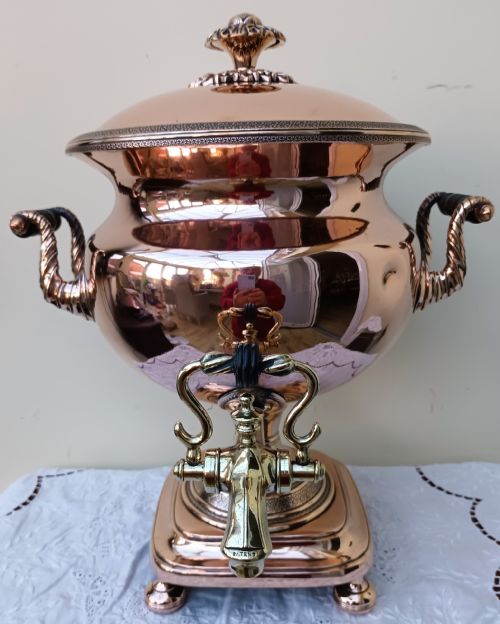
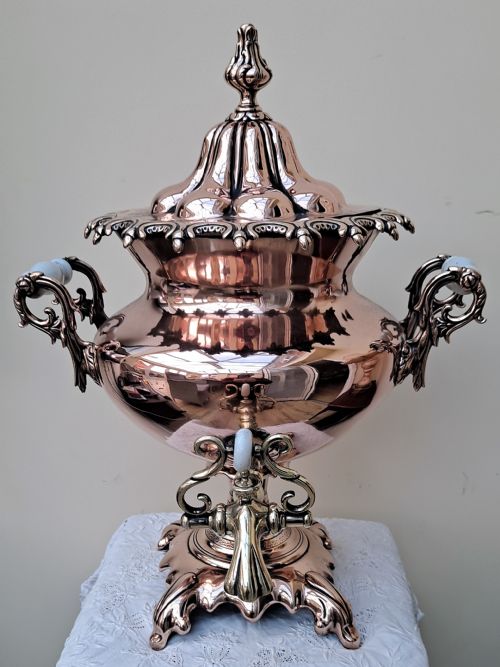
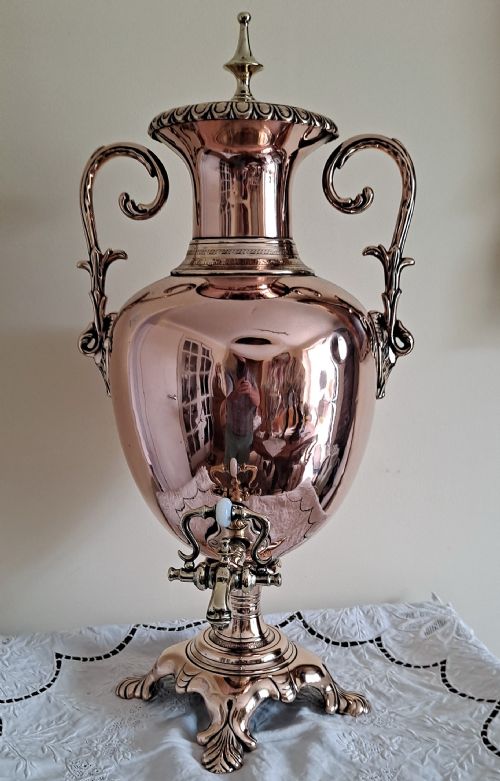
These polished metal tea urn pieces are heavy copper and brass vessels built to heat water, offering a striking centrepiece for any room.
Polished Metal Tea Urn
When you search for polished metal tea urn, you encounter substantial vessels designed for heating water, including copper samovars and spirit kettles. The pieces listed now originate primarily across the nineteenth century, with Victorian and Georgian examples dominating the selection.
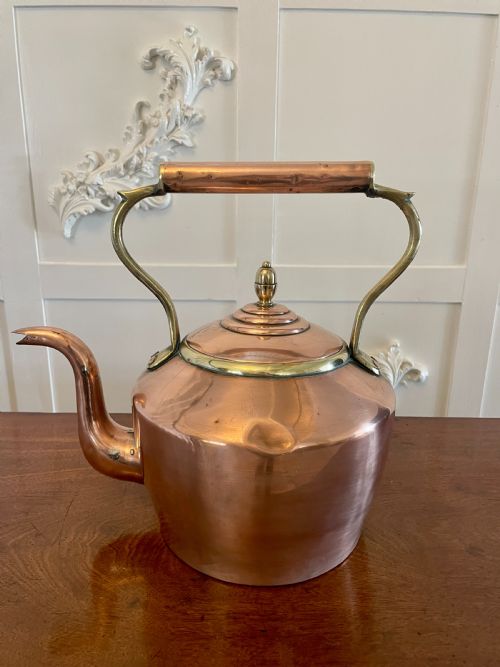
You will regularly find forms described as tea urns and samovars alongside tea kettles on stands. These items draw on Georgian, Victorian, and Edwardian styles, often combining copper bodies with brass fittings.
The assortment relies heavily on English origins, spanning the years from 1800 through to 1920. Buyers meet everything from large George III copper kettles to ornate Victorian samovars complete with original fittings.
How they were made
Makers shaped these vessels predominantly from copper and brass, hammering and joining the metal to form large water containers. Many examples incorporate wooden elements such as ebonised wood handles, alongside occasional ceramic or bone components.
The construction of a polished metal tea urn often involves detailed brass taps, handles, and stands. Bell metal appears in select Georgian items, while spirit kettles rely on matching stands and burners to heat the contents from below.
Listings for this phrase feature periods spanning the 1800s to 1920, with brass, copper, and ebonised wood as primary materials.
What varies in quality
The distinction between standard vessels and the finest examples rests on the weight of the metal and the intricacy of the ornamentation. Ornate George III and Victorian pieces often display superior hand-finished details on the brass spigots and handles.
Completeness dictates much of the standing within this range, particularly whether a kettle retains its original stand, burner, and fittings. Items described as complete with original components hold greater physical integrity than those lacking their matching parts.
The Polished Metal Tea Urn Glossary
- Samovar
- A heated metal container traditionally used to boil water for tea. These vessels typically feature an internal heating tube or a spigot at the base.
- Spirit kettle
- A kettle mounted on a metal stand above a small spirit burner. This setup allowed water to remain heated at the tea table.
- Bell metal
- A hard alloy used for casting bells and certain metal vessels. It provides a resonant quality and a distinct bronze-like appearance.
- Ebonised wood
- Timber treated to resemble ebony, achieving a deep black finish. Makers often utilised this material for insulated handles and knobs.
- George III
- The period spanning the reign of George the Third from 1760 to 1820. Furniture and metalwork from this era often display classic Georgian proportions.
Polished Metal Tea Urn: Frequently Asked Questions
How were samovars used?
Samovars were filled with water and heated to boiling point to provide a ready supply of hot water for tea service. The built-in spigot at the base allowed users to pour water easily into waiting cups.
Many featured internal chambers or exterior spirit burners to maintain the water temperature over extended periods.
How do I date a copper kettle?
Dating these items involves examining the manufacturing techniques, handle materials, and prevailing stylistic details. Georgian and Victorian examples often exhibit distinct handle shapes and construction methods.
Makers frequently incorporated ebonised wood, brass mounts, and specific joinery that help place the piece within the nineteenth century or earlier.
Are original fittings important?
Original fittings, such as taps, handles, stands, and burners, contribute significantly to the authenticity of a metal tea urn. Finding a piece with all its matched components intact is particularly valued by collectors.
Replacements or missing elements alter the original configuration of the kettle or samovar.