


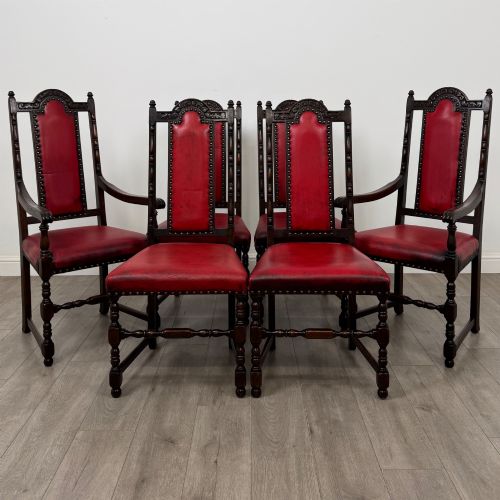
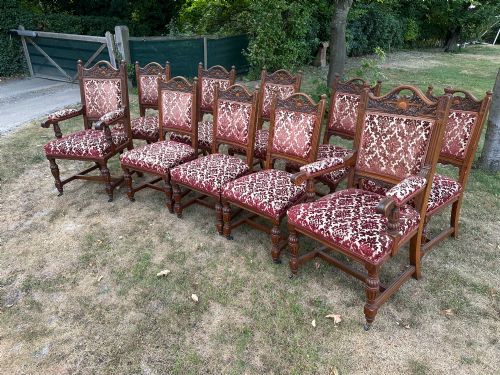
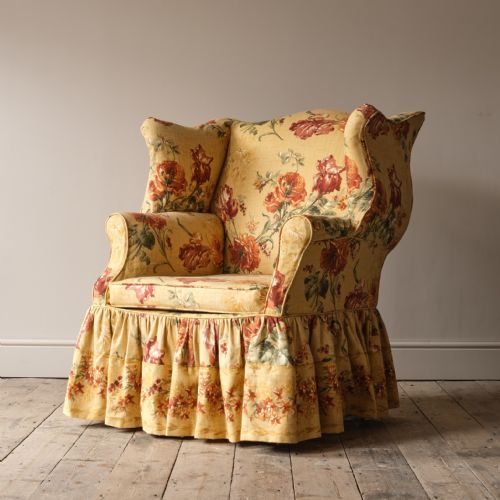
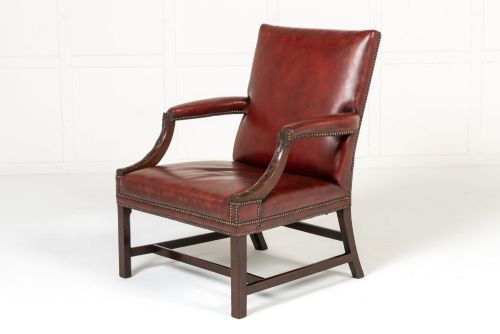
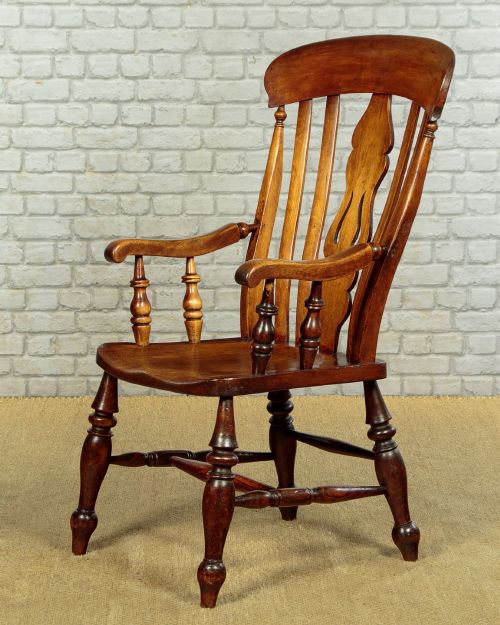
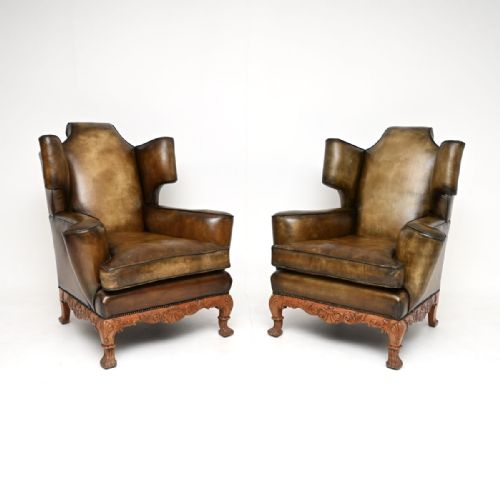
Vintage High Back Armchair
A vintage high back armchair brings substantial presence and upright comfort to a room, drawing on centuries of sturdy framing and deep upholstery traditions.
Vintage High Back Armchair
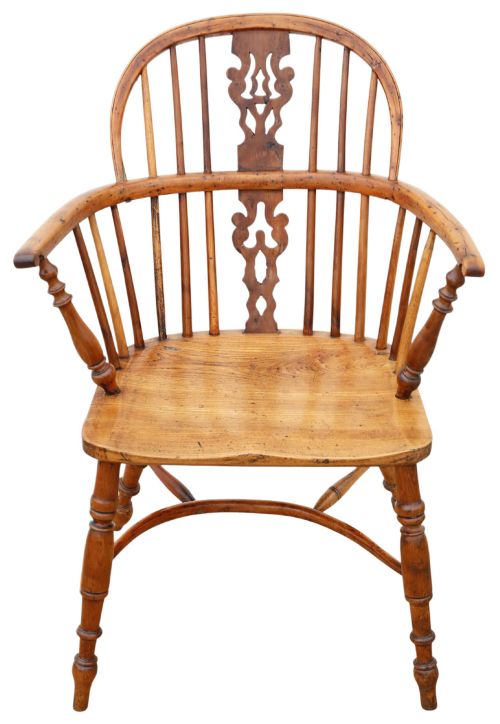
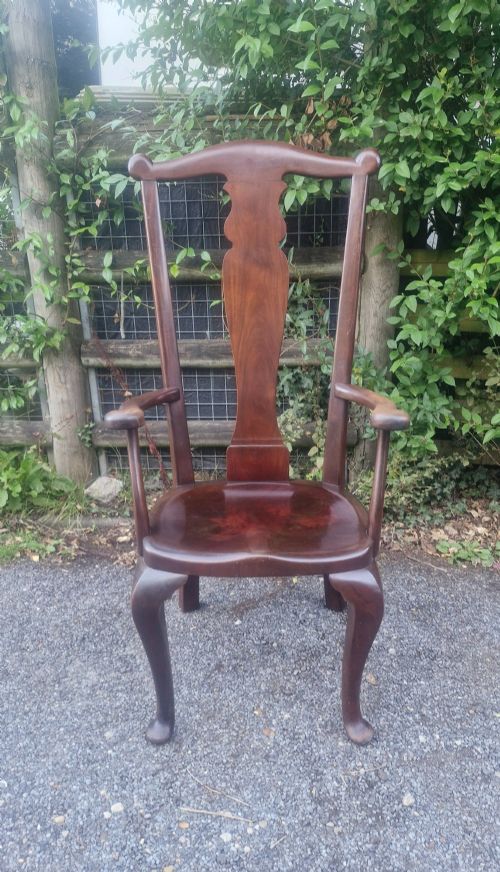
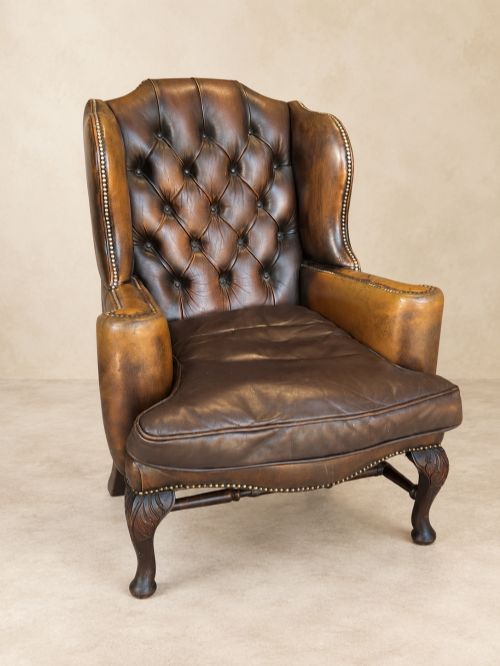
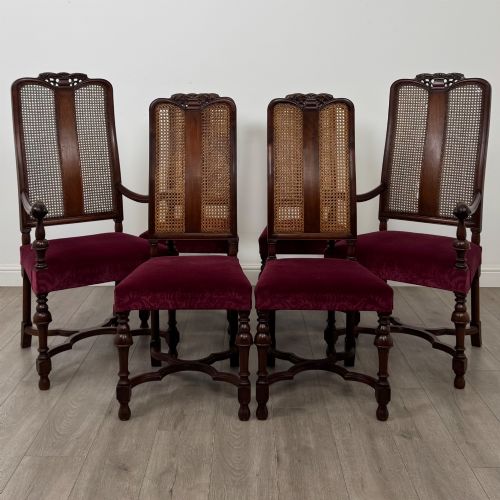
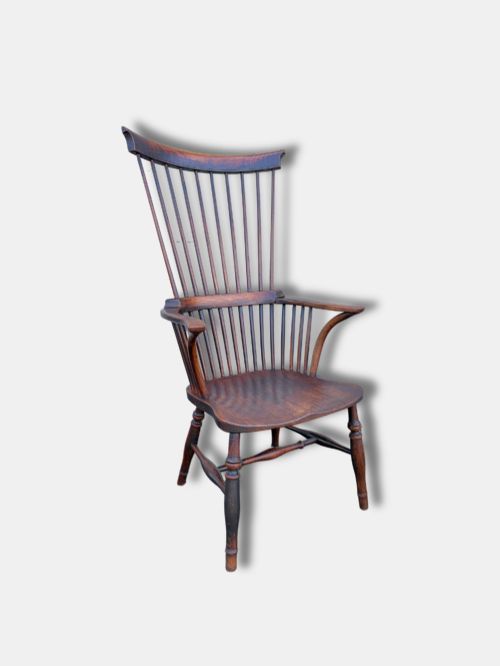
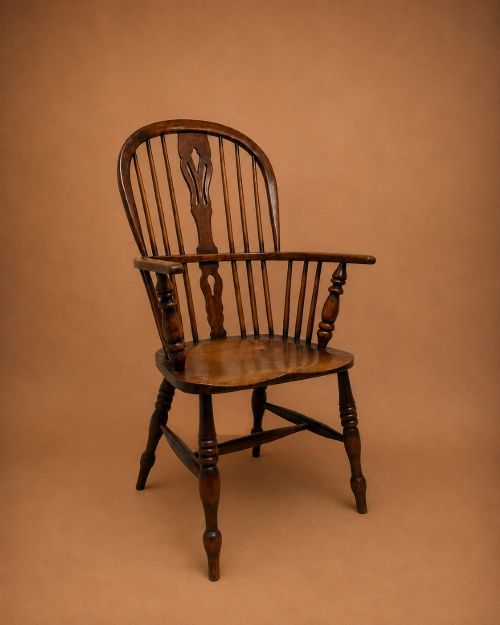
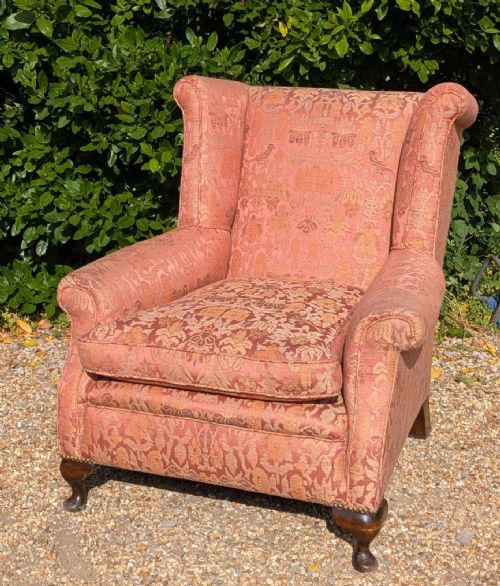
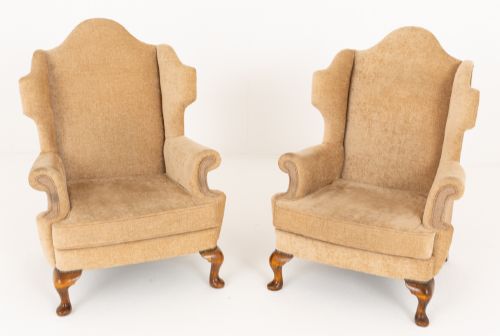
A vintage high back armchair gathers together designs ranging from Georgian wingbacks to Victorian Windsor forms and early twentieth-century leather fireside seats. Buyers seeking a vintage high back armchair encounter pieces built for domestic utility, reading, and desk work across various historic revivals.
The selections span vernacular country seating in elm and ash alongside formal mahogany and walnut frames finished with wool, leather, and velvet. Formats stretch from high comb-back Windsors to deep-seated wing armchairs created in the eighteenth, nineteenth, and early twentieth centuries.
Materials and construction
Timbers such as mahogany, oak, walnut, ash, and elm form the structural skeletons of these chairs, shaped through traditional turning, joinery, and carving. Windsor examples utilise contrasting woods like yew and elm, pairing resilient bendable spindles with solid carved seats.
Upholstered variants rely on durable fillings like feathers and traditional webbing beneath outer layers of leather, velvet, chenille, and plaid wool. Frames frequently incorporate brass hardware, intricate carving, or rush seating to complement the timber framework.
The listings span eight historic periods from the eighteenth century to the 1930s, using materials including mahogany, leather, oak, and velvet.
Distinctions in quality
The standard of a vintage high back armchair rests on the integrity of its timber frame, the crispness of its carved detailing, and the faithfulness of its stylistic revival. Superior examples maintain uncompromised structural joints and select grain patterns in woods like mahogany and walnut.
Upholstered pieces differ according to the depth and durability of their internal stuffing, the quality of the leather or woven textile specified, and how sympathetically reupholstering preserves the underlying maker's intent.
Liberty Morris And Co·Howard And Sons
The Vintage High Back Armchair Glossary
- Windsor chair
- A wooden chair constructed with a solid sculpted seat into which the legs and back spindles are direct-tenoned. These rural forms frequently pair ash, elm, and yew for strength and flexibility.
- Wingback armchair
- An upholstered seat featuring protective side panels attached to the arms to deflect drafts from firesides. Georgian and Victorian iterations utilise leather or heavy woven textiles.
- Gainsborough chair
- A type of wide armchair with an upholstered back and seat, open padded arms, and short wooden legs. They commonly serve as desk or library chairs.
- Carver elbow-chair
- A sturdy wooden chair with arms, originally designed as the principal seat at a dining table. They frequently feature high backs and turned structural elements.
- Comb-back
- A Windsor chair variation where the top rail resembles the spine of a comb, holding vertical spindles. This design provides additional head support.
Vintage High Back Armchair: Frequently Asked Questions
How do I identify a Georgian wingback armchair?
Georgian wingback chairs typically exhibit proportioned wings designed to shield the sitter from draughts, supported by substantial timber legs in mahogany, oak, or walnut.
They often feature traditional feather or horsehair stuffing beneath conservative wool or leather upholstery, distinguishing them from later heavily padded Victorian revivals.
What defines a traditional Windsor armchair?
Windsor armchairs rely on a distinct construction method where the legs and back spindles fit directly into a thick, saddle-shaped wooden seat rather than a continuous frame.
Craftsmen traditionally utilised contrasting British timbers such as elm for the seat and ash or yew for the bentwood bows and spindles.
Where should I place a high back armchair?
These tall chairs suit studies, libraries, and living room firesides where their elevated frames create a distinct focal point and comfortable reading nook.
Their substantial height requires careful consideration of ceiling clearance and surrounding furniture scale to prevent them from overwhelming smaller spaces.
How do I care for leather upholstered chairs?
Leather upholstery benefits from regular dusting and occasional treatment with appropriate leather balms to maintain flexibility and prevent the surface from drying out.
Keep antique leather away from direct sunlight and heat sources to preserve the original hide colour and historic patina.