
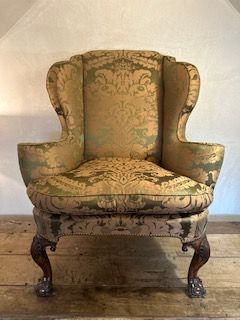
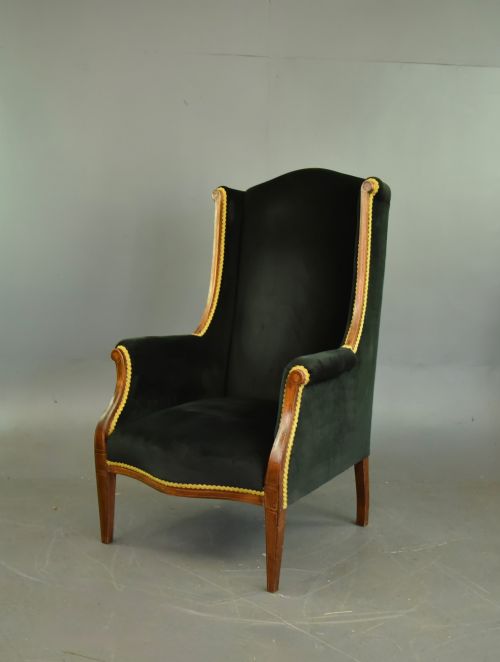
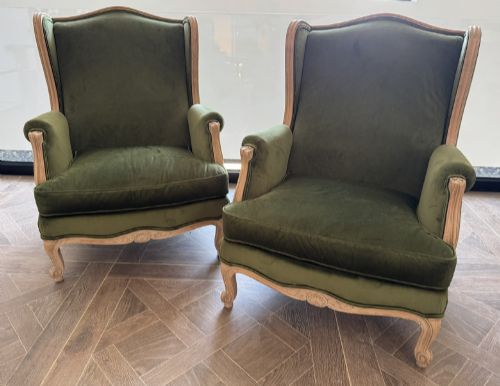
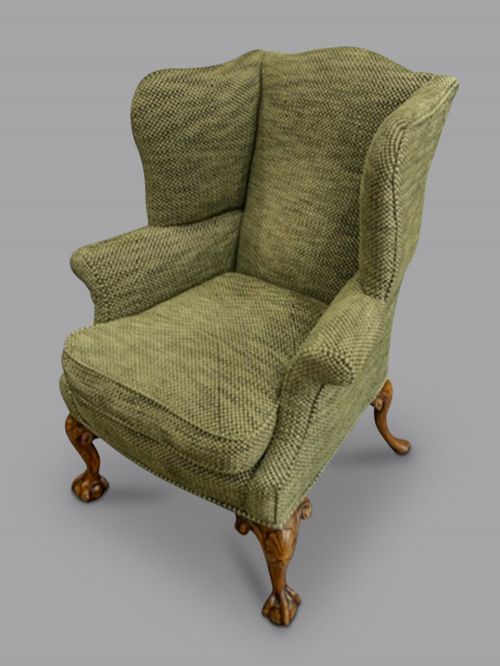
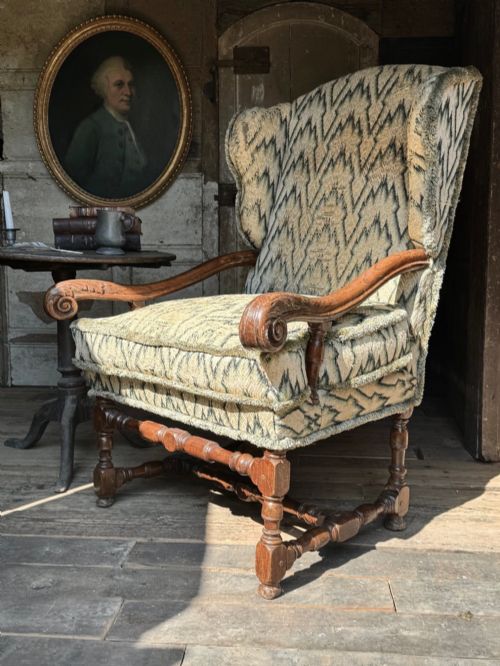
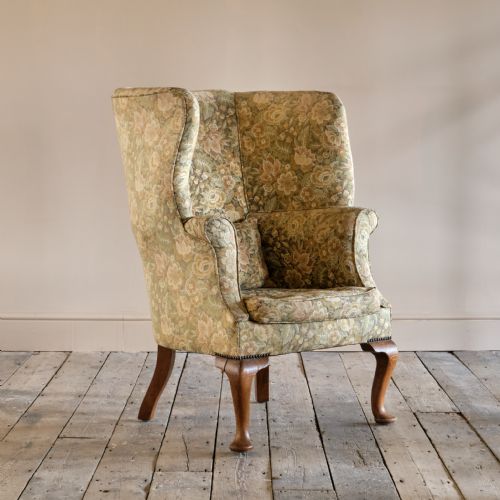


Green Upholstered Wingback Armchair
A green upholstered wingback armchair offers deep-seated comfort and draught protection, spanning centuries of skilled British and European seating design.
Green Upholstered Wingback Armchair
When searching for a green upholstered wingback armchair, you encounter forms stretching from the 18th century through the Edwardian period and into the 20th century. These pieces encompass styles ranging from George II and Queen Anne revival to Victorian and French provincial designs, all featuring the characteristic high back and protective side wings.
The versions most common on this page combine traditional wooden frames in mahogany, walnut, oak, or general hardwood with textile coverings such as velvet, hide, or ticking fabric. Many examples carry specific period attributions, including Georgian proportions or Edwardian inlay work, providing distinct silhouettes for domestic interiors.
The selection ranges from grand library armchairs to fireside seating and barrel back forms. Certain pieces survive in original condition with period upholstery, whilst others arrive ready for re-upholstery to suit individual textile preferences.
Materials and construction methods
Frames rely on sturdy timbers such as mahogany, walnut, oak, and general hardwood, often shaped with cabriole legs, brass castors, or inlaid details. Joinery techniques from the 18th and 19th centuries ensure structural longevity beneath the padding.
Upholstery layers utilise traditional textiles including velvet, hide, and woven fabrics stretched over supportive internal webbing and stuffing. Wingback designs require precise tension in the fabric to maintain the clean lines of the protective side panels and high back.
Listings feature hardwood frames including mahogany, walnut, and oak paired with velvet, hide, and textile coverings.
Judging the quality of a wing armchair
Quality rests in the integrity of the wooden frame and the proportion of the silhouette, where authentic period pieces display balanced curves and precise joinery rather than clumsy proportions. The grace of the arms and the sweep of the wings determine visual success.
The standard of upholstery work and the choice of covering material dictate tactile appeal, distinguishing master-trimmed pieces from simpler workshop productions. Surviving period fabric or high-grade hide elevates the character of the seating.
Howard And Sons
The Green Upholstered Wingback Armchair Glossary
- Wingback
- An armchair featuring high sides and projecting wings designed to shield the sitter from draughts and retain heat from a fire.
- Cabriole leg
- A furniture leg that curves out and then narrows inward, typically ending in a pad or ball and claw foot.
- Barrel back
- A seating form where the upholstered back curves continuously around to form the arms in a single rounded enclosure.
- Inlay
- A decorative technique where contrasting pieces of wood or other materials are inserted into the timber surface of the frame.
Green Upholstered Wingback Armchair: Frequently Asked Questions
How do I date a wing chair?
Dating relies on examining the timber of the frame, the turnings of the legs, and the structural carpentry hidden beneath the upholstery. Earlier 18th-century pieces often show different framing techniques compared to Edwardian or later revival examples.
Style indicators like George II or Queen Anne proportions also guide the timeline, though many chairs combine historical revival styles with later 19th-century manufacturing methods.
Are these chairs suitable for daily use?
Most antique and vintage armchairs are built on robust hardwood frames designed for enduring utility. Assessing the internal webbing and padding helps determine if restoration or re-upholstery is needed for modern comfort.
Many examples function well as daily fireside or reading chairs when placed correctly within a room.
How should I care for velvet upholstery?
Velvet textiles require gentle brushing and protection from direct sunlight to prevent pile crushing and colour fading. Regular light vacuuming with a soft attachment keeps the fabric free from dust.
Professional cleaning is recommended for deeper maintenance to preserve the texture of the textile.