


Traditional Three Seater Settee
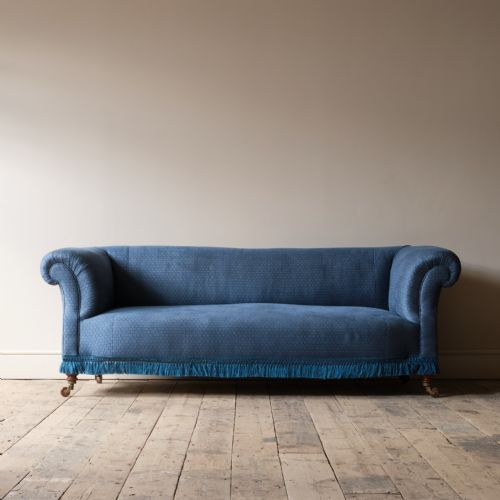
A traditional three seater settee offers substantial seating anchored in period craftsmanship, bringing historic comfort and presence to a room.
Traditional Three Seater Settee
A traditional three seater settee provides generous seating rooted in centuries of British and continental design. When exploring this selection, buyers frequently encounter pieces spanning the Victorian and Edwardian eras alongside 1930s examples.
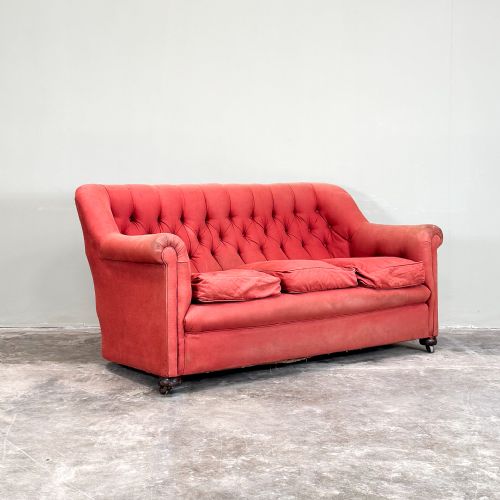
The forms range from deep-seated country house sofas to buttoned leather chesterfields and elegant camelback shapes. These seating options emerge from periods such as the nineteenth century, the 1920s, and the 1930s.
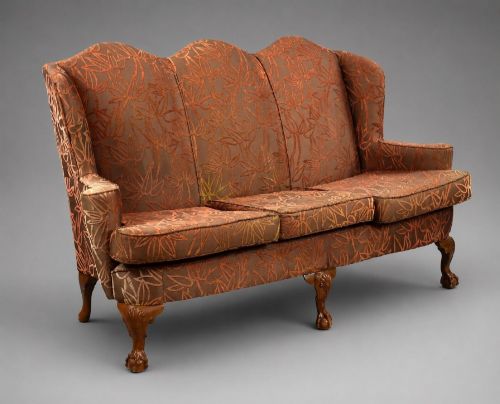
Makers and workshops of the past constructed these settees to serve as central pieces for libraries, drawing rooms, and studies. They appear in styles including Queen Anne, Georgian, and French Provincial.
How they were made
Frames rely upon timbers such as mahogany and general wood substrates, providing a rigid structural skeleton for the upholstery. Artisans shaped these wooden supports carefully, incorporating carved elements like hawk claw and ball feet.
Upholstery techniques involve traditional stuffing materials enclosed by hessian, velvet, fabric, or leather coverings. Buttoning and hand dyeing complete the finish on many leather chesterfields and club sofas.
Listings feature nineteenth-century and 1930s settees utilising mahogany, timber, leather, velvet, and hessian materials.
What varies in quality
The integrity of the underlying timber frame and the precision of the carving dictate the baseline standard of a settee. Pieces demonstrating refined proportions and substantial wood craftsmanship stand apart from simpler iterations.
Upholstery execution and the preservation of original materials heavily influence the overall character. Settees retaining authentic maker labels or possessing sophisticated hand-dyed leather surfaces represent higher tiers of the selection.
Hampton and Sons·Howard and Sons·William Birch
The Traditional Three Seater Settee Glossary
- Chesterfield
- A upholstered sofa characterised by deep button tufting and arms of the same height as the back. This iconic form appears frequently in leather and fabric variants.
- Camelback
- A sofa style featuring a graceful, undulating curved backrest that resembles the hump of a camel. It often pairs with exposed wooden legs and carved details.
- Drop end
- A sofa design incorporating movable or hinged armrests that can be lowered. This mechanism allows the seating to convert into a daybed or day lounge.
- Knowle sofa
- A historic sofa style featuring hinged or adjustable high arms tied with decorative cords or braids. This form originates from seventeenth-century English seating traditions.
- Moustache back
- A nineteenth-century upholstery style where the upper wooden rail or padded back curve mimics the shape of a moustache. It is typically found on Victorian gentleman's club seating.
Traditional Three Seater Settee: Frequently Asked Questions
How do I identify a Victorian chesterfield?
Victorian chesterfields display deep button tufting across the back and arms, often wrapped in worn brown or red leather. They utilise robust wooden frames beneath dense horsehair or traditional stuffing.
Inspect the leather patina and the stitching details around the deep buttons for signs of nineteenth-century handcrafting. These elements distinguish genuine period pieces from later reproductions.
What is a country house sofa?
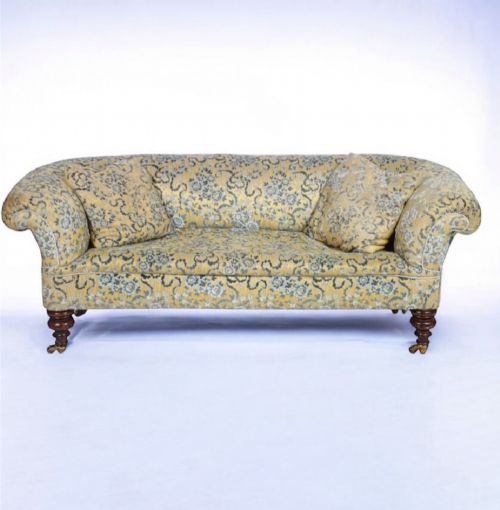
A country house sofa is a deep-seated, generously proportioned piece designed for relaxed lounging in large domestic settings. They frequently feature loose feather cushions and floral fabric upholstery.
These settees prioritize comfort above rigid formal posture, making them versatile for modern living spaces. Their relaxed silhouettes blend easily with various interior design schemes.
Are drop end sofas practical?
Drop end sofas feature hinged or adjustable armrests that fold downward to extend the usable seating length. This mechanical adaptability allows the furniture to function as both a conventional settee and a daybed.
When living with these pieces, check the metal hinges and wooden pivot points for smooth operation. They provide functional flexibility for smaller rooms or library spaces.
How should I care for antique leather?
Antique leather requires gentle cleaning and regular conditioning to prevent the hide from drying and cracking. Avoid placing leather settees near direct heat sources or strong sunlight.
Applying specialist leather balms helps preserve the natural patina and historic hand-dyed finishes. Proper maintenance protects the material while retaining the character earned over decades of use.