


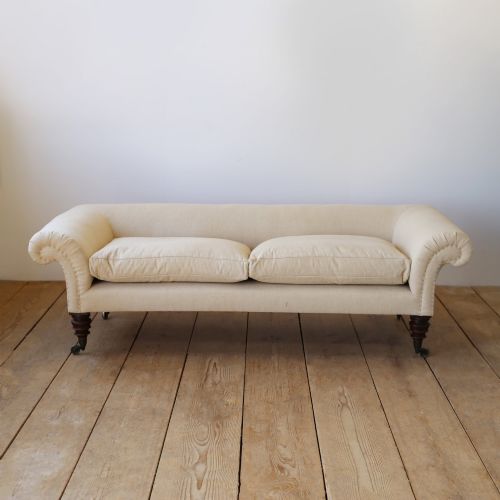


Howard Style Sofa
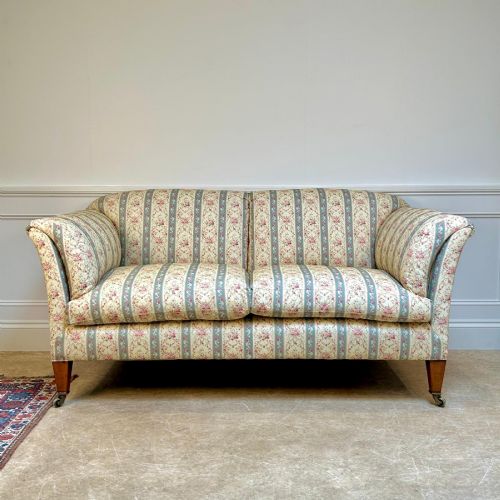
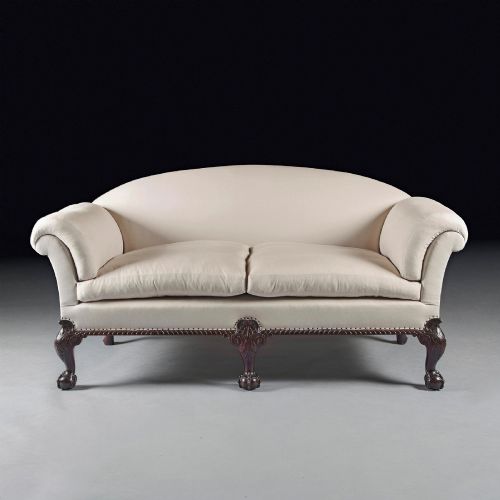
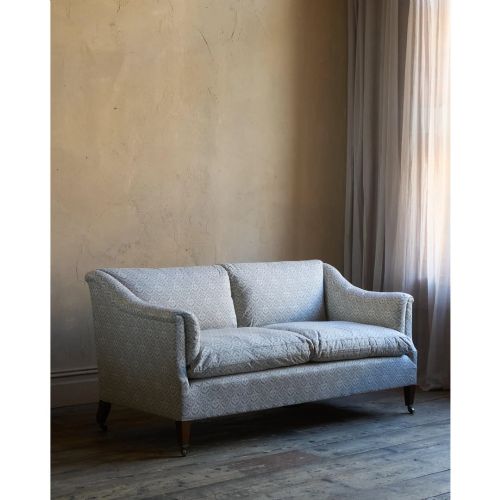
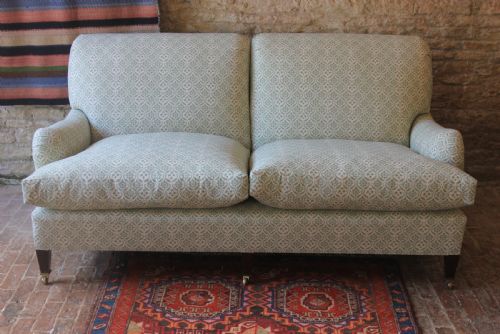
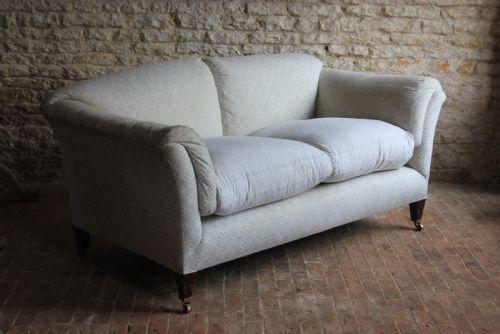
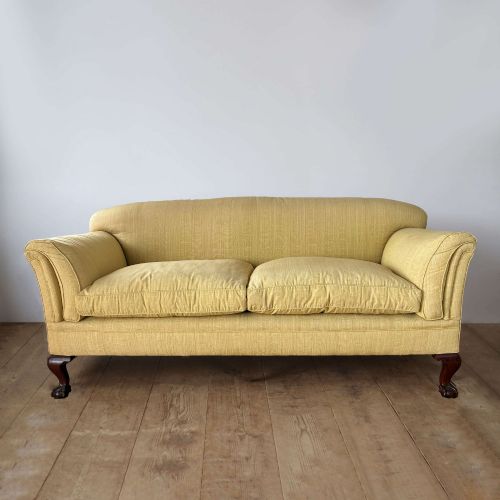
A howard style sofa is a deeply comfortable seat built for country houses, defined by low rolled arms and generous proportions.
Defining the Howard Style Sofa
A howard style sofa is built for lounging, appearing in the evidence across the nineteenth century, nineteen hundred, and the Edwardian era. These pieces draw on Victorian and Edwardian country house traditions, often described as deep-seated or drop-armed forms.
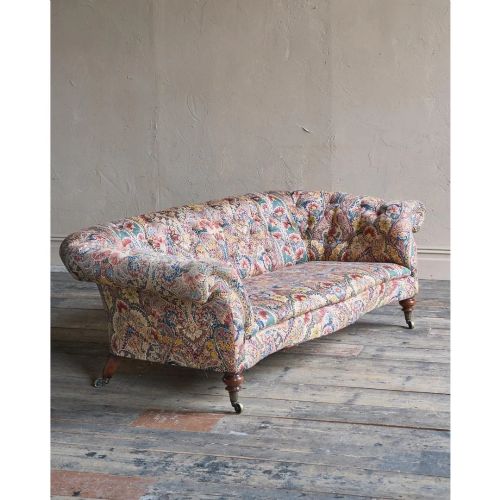
The version most commonly met on this page is a two-seater or three-seater upholstered sofa, occasionally appearing as a reclining daybed, slipper sofa, or chaise longue. Makers such as Whytock and Reid and the firm of Howard and Sons inspired many of these designs.
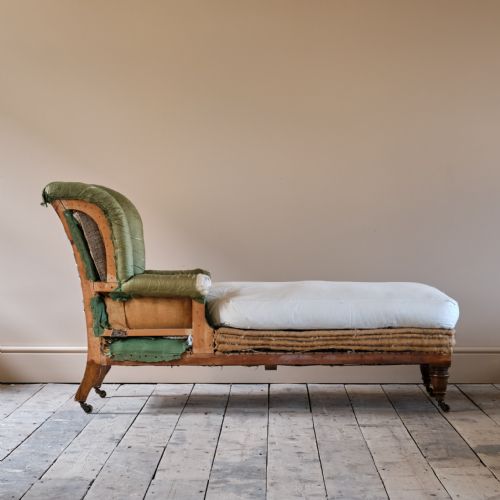
The framework relies on substantial hardwood and mahogany, resting on brass castors and wood legs. Many examples carry labels or stamps from famous makers, while others reflect the wider commercial popularity of the style in local workshops.
Assessing Quality and Execution
Quality rests in the architectural proportions of the frame and the integrity of the internal stuffing. Superior examples maintain firm structural lines beneath the soft exterior, while lesser pieces suffer from sagging frames.
The choice of secondary woods and the precision of the leg turning distinguish workshop tiers. Original maker stamps elevate an attribution, whereas unsigned country house pieces rely entirely on their baseline build quality.
Retail Price Guide 2026
Typical UK retail prices for howard style sofa, calculated from the Sellingantiques database of over a million retail prices indexed since 2003. This retail price guide relies exclusively on Sellingantiques data; no external sources or auction records are used, so the figures do not describe the wider market.
Listings feature pieces spanning the nineteenth century, nineteen hundred, and the Edwardian period, constructed from mahogany, hardwood, cotton calico, and brass.
Howard and Sons·Whytock and Reid
The Howard Style Sofa Glossary
- Drop-arm sofa
- A couch featuring a hinged or adjustable arm that lowers to create a daybed. This mechanism offers versatile lounging options.
- Castor
- A small wheel attached to the base of each leg for mobility. Brass versions are typical on higher-tier upholstery.
- Calico
- A plain-woven unbleached cotton textile used as a tight foundational inner cover. It holds the stuffing in place before final top-fabric is applied.
- Chesterfield sofa
- A deep-seated upholstered couch traditionally featuring arms and back of the same height. It shares the deep proportions common in country house seating.
- Feather down
- A natural filling mixture of soft plumage and small quills. It provides the yielding, sink-in comfort characteristic of fine sofas.
Frequently Asked Questions
What defines a howard style sofa?
These seats are defined by low, soft rolled arms, deep proportions, and robust hardwood frames designed for country house comfort. They typically sit on low wooden legs fitted with brass castors.
Many examples date from the late nineteenth century and the Edwardian period, reflecting a golden age of British upholstered seating design.
How do I date a howard style sofa?
Dating relies on examining the timber frame, leg style, and any maker stamps or paper labels hidden beneath the upholstery. Earlier nineteenth-century pieces often feature heavier mahogany frames and distinct castor designs.
Edwardian examples tend to show lighter proportions and different ticking fabrics. Structural joins and webbing materials also help establish the manufacturing era.
Are these sofas comfortable for daily use?
They were originally designed as the ultimate lounge seating for country house libraries and drawing rooms. The deep seats and feather down fillings make them exceptionally well-suited for relaxing.
Restored or well-maintained examples easily accommodate modern daily lounging while retaining their traditional aesthetic appeal.
What is a drop-arm sofa?
A drop-arm sofa incorporates a mechanical hinge on one or both arms, allowing them to drop downward into a horizontal position. This transforms the standard seating arrangement into a daybed for reclining.
This variation appears alongside standard two-seater and three-seater configurations in period listings.