
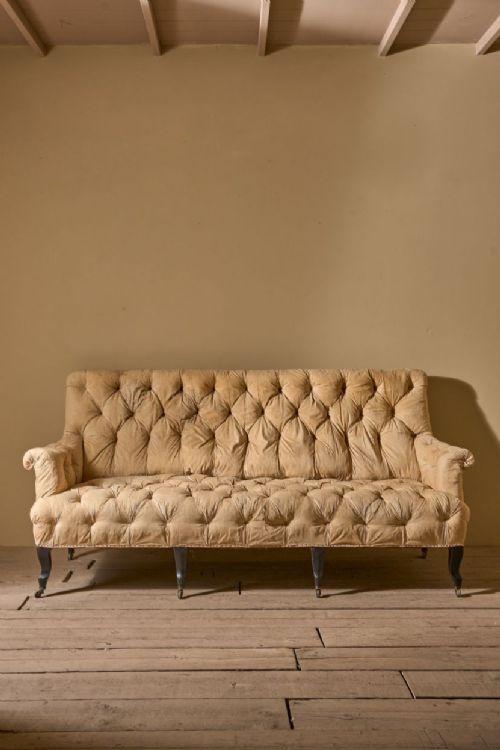
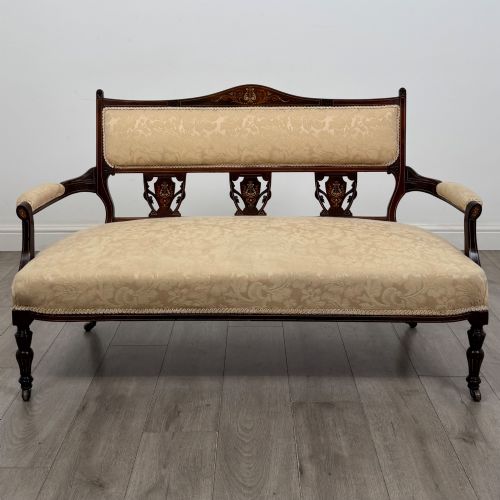
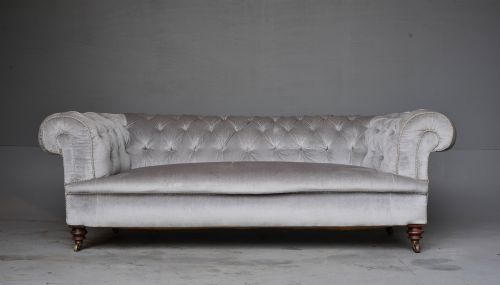

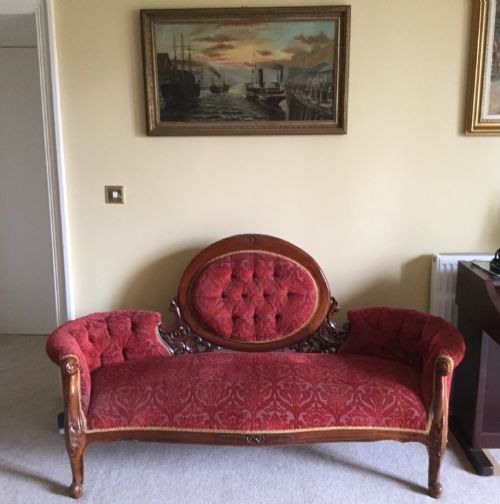
Victorian Upholstered Couch
When you search for a victorian upholstered couch, you find substantial nineteenth-century seating built from dense hardwoods and covered in varied textiles.
Victorian Upholstered Couch
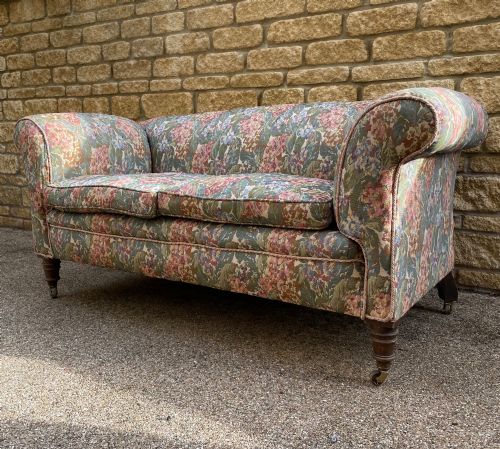
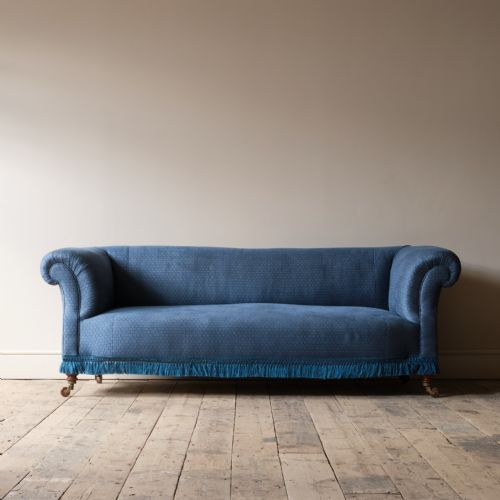
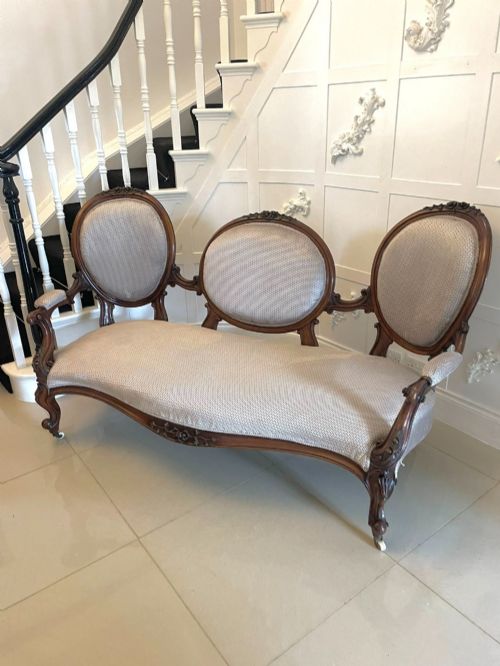
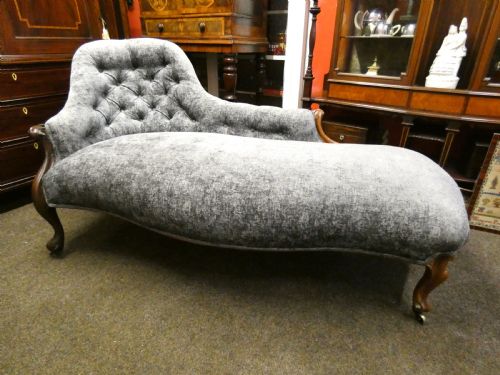
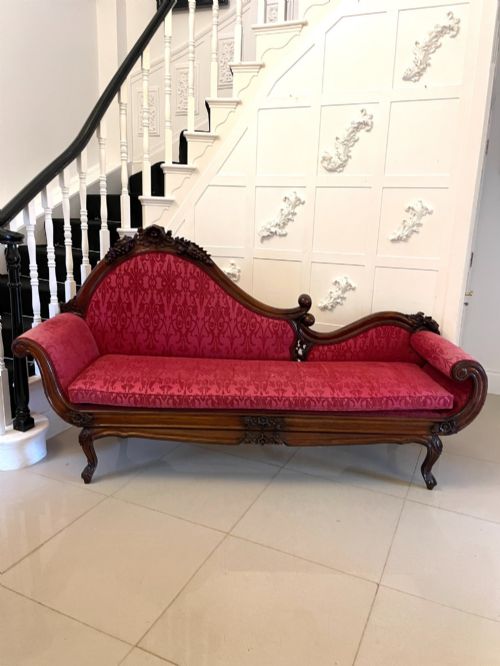
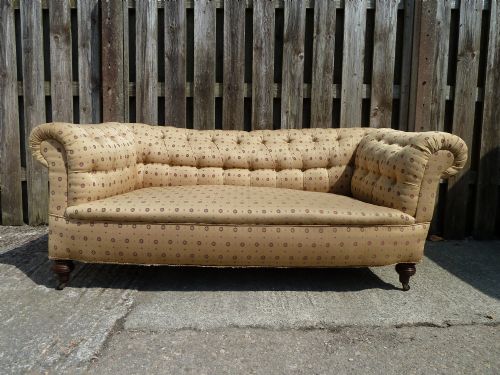
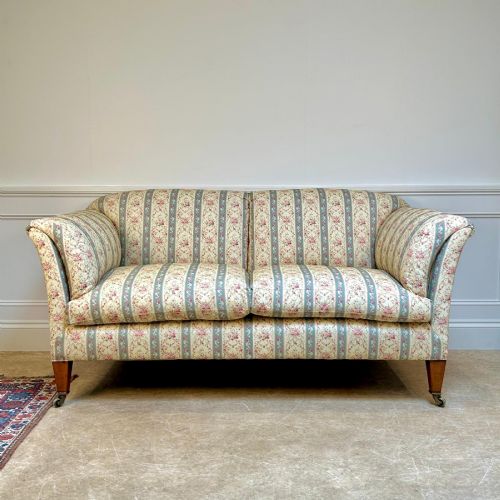
A victorian upholstered couch encompasses robust settees, deep chesterfields, and long daybeds produced across the nineteenth century. These pieces reflect the varied domestic seating arrangements of the period, ranging from formal salon furniture to heavy library daybeds.
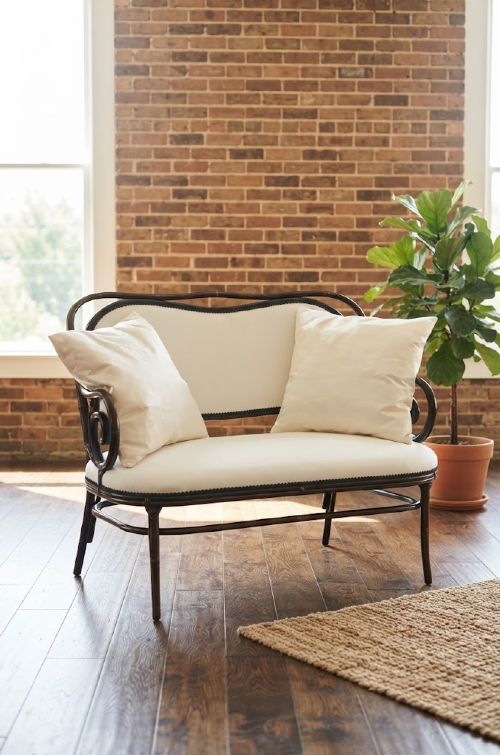
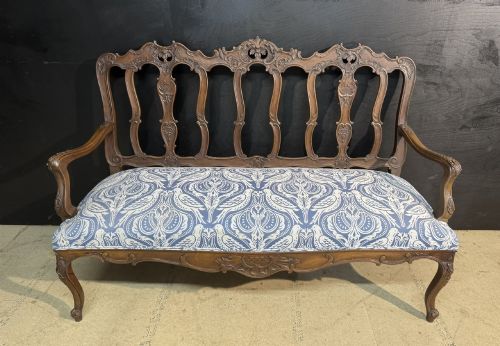
The most common formats met here are deep-sprung chesterfields and carved wooden framed sofas. Walnut, rosewood, and mahogany provide the structural frames, often shaped with scroll ends or cameo backs.
Makers and workshops of the era employed diverse revival styles, incorporating rococo and aesthetic movement details. Many pieces retain traditional sprung bases paired with contemporary or period fabric coverings.
How they were made
Carpenters constructed the structural frames of a victorian upholstered couch using solid timbers like walnut, mahogany, and rosewood. These timbers were carved, turned, or inlaid to display distinct decorative grains and rich tones.
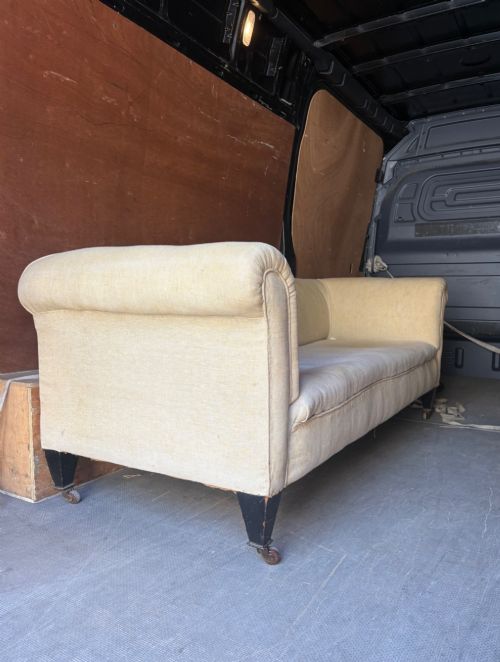
Upholsterers built interior support using webbed and sprung foundations layered with horsehair or wool stuffing. Outer coverings utilised heavy fabrics such as velvet, brocade, calico, or embroidered linen secured with brass tacks.
Listings feature eighteenth and nineteenth-century periods, utilising mahogany, rosewood, walnut, and brass alongside varied fabric coverings.
What varies in quality
The integrity of the internal joinery and the density of the hardwood frame dictate the baseline durability of the seating. Timbers such as rosewood and figured walnut indicate higher workshop ambition than standard pine or mixed secondary woods.
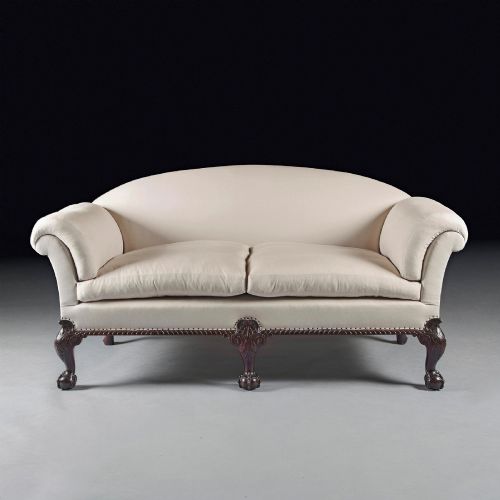
Refinement in hand-carved details, such as scroll ends or ball and claw feet, separates standard production from exceptional furniture. The complexity of the sprung base and the quality of the textile finish further distinguish the tier of the piece.
Thonet Bentwood·Hampton and Sons·Howard and Sons·C. Hindley and Sons·Holland and Sons·Shoolbred and Co
The Victorian Upholstered Couch Glossary
- Chesterfield
- A deep-buttoned upholstered sofa featuring rolled arms of the same height as the back. This form became a staple of nineteenth-century drawing rooms.
- Chaise Longue
- An elongated upholstered chair designed for reclining, featuring a single raised end and an open side. These pieces often served in boudoirs or large dressing rooms.
- Cameo Back
- A sofa back carved into an oval or shield shape resembling a classical cameo portrait. This style appeared frequently on mid-nineteenth-century walnut frames.
- Brocade
- A rich shuttle-woven fabric featuring raised decorative patterns. It frequently appears on formal nineteenth-century salon seating.
- Drop Arm
- A movable sofa arm mechanism that can be lowered to convert the seating into a daybed. This functional design feature offered versatile domestic use.
Victorian Upholstered Couch: Frequently Asked Questions
How do I identify a daybed?
A daybed combines the characteristics of a chair and a bed, designed primarily for reclining rather than upright sitting. They typically feature an asymmetrical raised headrest and an extended platform base.
These pieces were placed in country house libraries or morning rooms. Their proportions are narrower than a standard sofa but longer than a typical armchair.
Were these couches originally sprung?
Many nineteenth-century couches utilised hand-tied coil spring systems mounted on webbing foundations. This innovation provided the deep resilience characteristic of Victorian seating.
Earlier pieces or simpler daybeds occasionally relied on tight webbing and horsehair stuffing without metal springs. Restorers frequently rebuild these interior foundations while retaining the original wooden frame.
What distinguishes an aesthetic movement sofa?
Aesthetic movement seating emphasises clean lines and Japanese-inspired decorative motifs rather than heavy revival ornamentation. These pieces frequently feature ebonised wood frames and minimalist structural forms.
They reflect late-nineteenth-century tastes that rejected ornate rococo carving in favour of artistic simplicity. The textiles used on these frames often include simpler linens or stylized floral patterns.