


Blue Fabric Sofa
These blue fabric sofa examples bring distinct period character and seating comfort to a room.
Blue Fabric Sofa
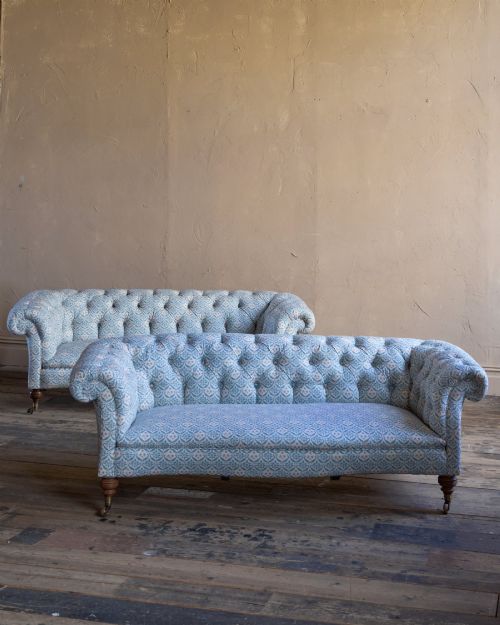
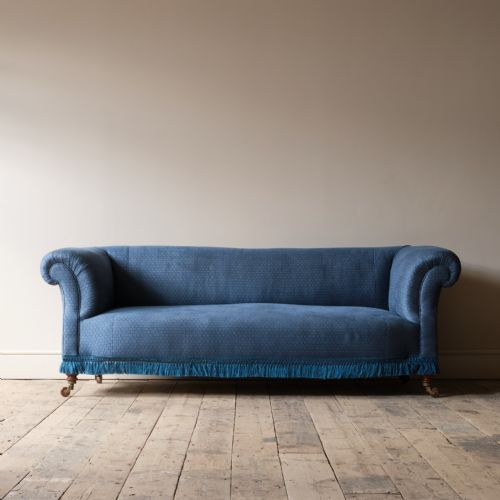
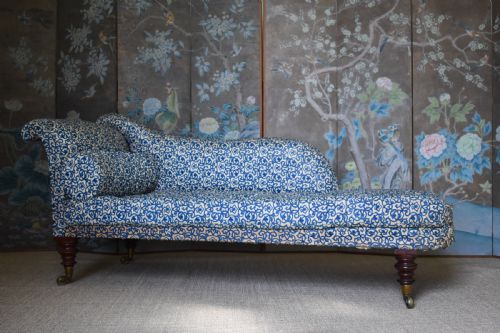
A blue fabric sofa encompasses diverse nineteenth-century and early twentieth-century seating forms, from button-back settees to drop-arm Chesterfields. The selection includes button back canapes, chaise longues, day beds, and traditional three-seater couches spanning Victorian and Edwardian periods.
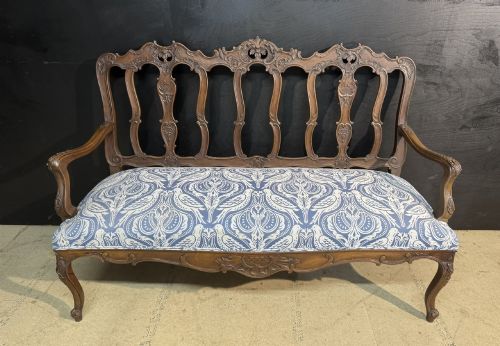
Buyers encounter classic English country house seating alongside French-inspired designs like Louis XV style painted two-seat sofas and Louis XVI design small settees on fluted legs. Forms range from large chesterfield sofas requiring reupholstering to compact hall seats in walnut.
Stylistic variations draw on traditional English, Rococo Revival, Hepplewhite style camel back shapes, and Art Nouveau influences. Frames appear alongside associated armchairs and settees upholstered in cotton, damask, or Flora Soames fabric.
How they were made
Construction relies upon timber frames shaped from walnut and mahogany, supported by exposed elements in brass. Woodwork incorporates turned legs, fluted legs, and original castors.
Upholstery techniques utilise fabric, cotton, and specialised patterns such as blue damask and printed textiles. Traditional stuffing methods define the padded forms of button-back canapes and serpentine Chesterfields.
The listings feature wood, brass, fabric, cotton, walnut, timber, mahogany, and upholstery fabric across multiple nineteenth-century and early twentieth-century forms.
What varies in quality
The distinction between standard output and superior workshops rests in the original frame construction and timber selection. Walnut and mahogany framing combined with refined carving determines the structural integrity.
Upholstery execution and fabric choice separate basic pieces from notable maker output. Original castors and well-preserved turned legs indicate higher craftsmanship within nineteenth-century production.
Howard and Sons·Hampton and Sons
The Blue Fabric Sofa Glossary
- Chesterfield sofa
- A deep-tufted, upholstered couch traditionally featuring arms and back of the same height. This form offers robust seating with classic nineteenth-century proportions.
- Chaise longue
- An upholstered couch shaped like a chair with a long seat for reclining. It typically dates from the Victorian era and combines seating with a day bed function.
- Canape
- An ornamental sofa with an upholstered back and seat, often featuring an exposed wooden frame. French-influenced examples display decorative carving and painted finishes.
- Damask
- A reversible figured fabric woven on a jacquard loom, frequently utilised for historic upholstery. Its pattern appears through the contrast of warp and weft sateen weaves.
- Drop-arm sofa
- A couch featuring a hinged arm mechanism that lowers to form a day bed or lounger. This design provides adjustable seating arrangements.
Blue Fabric Sofa: Frequently Asked Questions
What periods do these blue fabric sofas represent?
The available seating spans the nineteenth century through to the early twentieth century. Key periods include Victorian and Edwardian eras, alongside specific dates around eighteen-ninety and nineteen-twenty.
Design influences range from Hepplewhite style and Rococo Revival to Art Nouveau and French Louis styles. Each era contributes distinct structural details and upholstery treatments.
How do I identify a Victorian sofa?
Victorian examples frequently display button-back upholstery, turned wooden legs, and original brass castors. Forms vary from chaise longues and day beds to classic settees.
Materials commonly feature walnut or mahogany frames paired with heavy woven fabrics like cotton or damask. Proportions are typically generous and built for formal drawing rooms or country houses.
Are these sofas suitable for daily use?
Many historic seating pieces remain robust enough for regular seating, though older frames and springs may require careful handling. Some pieces arrive fully upholstered while others are sold for reupholstering.
Assessing the internal timber frame and existing padding helps determine readiness for domestic placement. Professional restoration preserves the structural longevity of nineteenth-century pieces.
How do French style pieces differ from English ones?
French style pieces, such as Louis XV and Louis XVI designs, typically feature exposed painted frames, carved woodwork, and fluted legs. They emphasise curved lines and decorative ornamentation.
English country house sofas and Chesterfields focus on deep upholstery, rolled arms, and turned timber supports. The aesthetic prioritises relaxed comfort and robust frame construction.