




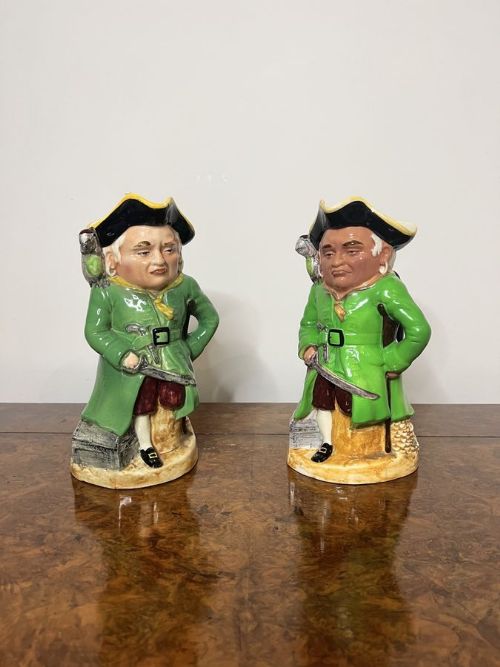


Vintage Green Pitcher
These vintage green pitcher examples bring rich colour and tactile weight to a room, drawing the eye with varied ceramic, glass and metal glazes.
Vintage Green Pitcher
A vintage green pitcher search reveals a diverse selection of vessels spanning the eighteenth, nineteenth and early twentieth centuries. These pieces range from substantial earthenware and stoneware service items to delicate glass ewers and decorative jugs.
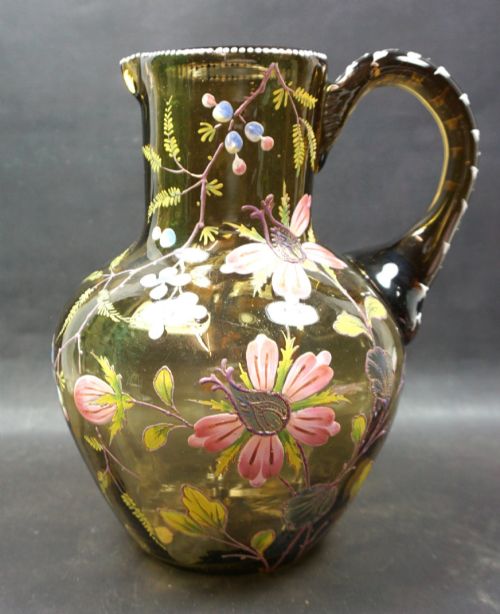
The most likely forms encountered on this page include Victorian enamel painted glassware, Staffordshire and majolica pottery, and glazed Doulton Lambeth pieces. Makers across Britain, France, and Austria utilised these distinct green hues for both functional and decorative service.
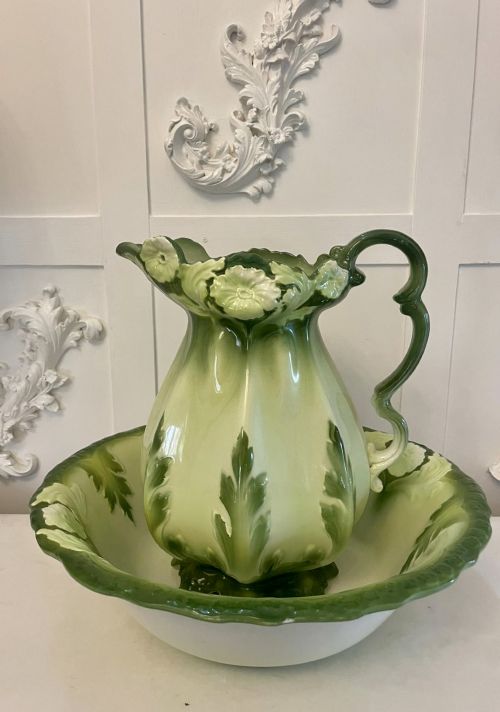
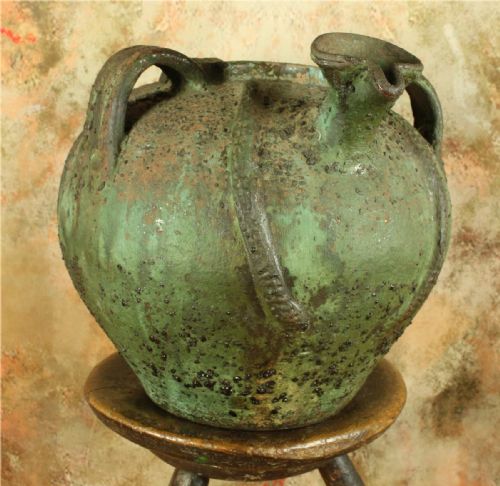
Beyond standard domestic pitchers, related forms such as oil pots, wash set jugs, and bronze aftabas occasionally appear under this heading. Each object demonstrates the period preference for botanical shades and rich surface decoration.
How they were made
Makers shaped these pieces from ceramic, earthenware, stoneware, and glass, applying enamel paints, glazes, and gold leaf for surface enrichment. Molten glass was blown and moulded into ewers, sometimes featuring applied enamel details or metal mounts.
Potters utilised clay bodies that were fired and finished with heavy glazes, notably majolica and salt-glaze techniques seen on Victorian and Edwardian examples. Metal versions involved cast bronze and pewter, often combined with inserted glass bodies.
Vintage Green Pitcher Retail Price Guide 2026
Typical asking prices for vintage green pitcher among the pieces listed under this phrase on Sellingantiques today, from the lower quarter to the upper quarter. They describe what is for sale here now, not the wider market.
What varies in quality
Quality rests in the crispness of the moulding, the depth and evenness of the green glaze, and the precision of any enamel painting or gilding. Pieces with hand-painted details or complex applied handles show superior craftsmanship compared to simpler moulded wares.
The crisp definition of relief decoration in Doulton Lambeth or majolica items distinguishes finer workshop output. Intact gilding and well-preserved enamel work elevate the visual presence of glass and ceramic pieces alike.
Doulton Lambeth·Mary Gregory·Royal Worcester·Sir Edmund Elton·AVEM
The Vintage Green Pitcher Glossary
- Earthenware
- Porous pottery fired at lower temperatures, requiring a glaze to hold liquids. It forms the body of many Victorian and majolica jugs.
- Majolica
- A colourful, glossy earthenware glaze popular in the nineteenth century. It produces vibrant green and brown tones on decorative vessels.
- Ewer
- A large jug with a wide spout, historically used for water or wine service. Many examples here serve a purely decorative function.
- Stoneware
- Dense, impermeable pottery fired at high temperatures. Doulton Lambeth pieces utilise this durable material.
- Enamel
- Opaque vitreous glass fused to metal or glass surfaces. It provides the raised painted decoration on Victorian green glassware.
Vintage Green Pitcher: Frequently Asked Questions
How were these green pitchers used?
Many of these vessels served practical roles in the nineteenth century, holding water for washing, wine at the table, or oil for lamps. Others functioned purely as ornamental centrepieces or formed part of large ceramic toilet sets.
Over time, their roles shifted from daily utility to decorative display, prized for their striking green colourways and varied forms.
How do I date a green glass ewer?
Dating relies on examining the manufacturing technique, pontil mark, and surface decoration style. Victorian pieces often feature hand-painted enamel or gilded motifs on heavy glass bodies.
Later Edwardian and Art Nouveau items display different handle configurations and smoother, more stylised contours that reflect early twentieth-century design shifts.
What is the difference between earthenware and stoneware?
Earthenware is fired at lower temperatures and remains porous unless glazed, whereas stoneware is fired until vitreous and completely waterproof. Stoneware pieces like those from Doulton Lambeth feel heavier and heavier-duty in the hand.
Both materials support rich green glazing, but stoneware provides a tougher, more resilient body for daily use.
Can I use these antique pitchers for serving drinks?
While structurally sound, many of these pieces are antique items with delicate enamel work, gold leaf, or historic glazes that require careful handling. Using them for display or dry storage preserves their fragile surface decoration.
Glass and glazed ceramic items can hold water, but hand-washed care prevents wear to nineteenth-century painted details.
How do I style a vintage green pitcher at home?
These pitchers work well placed on wooden sideboards, open shelving, or as part of a collected tablescape. Their rich green tones pair naturally with neutral walls, botanical arrangements, or grouped alongside other coloured glass.
Grouping items of differing heights, such as pairing a small ewer with a larger wash jug, creates visual balance in a room.