


Art Deco Pitcher
These art deco pitcher options bring striking geometric lines and period materials straight to the drinks table.
Art Deco Pitcher
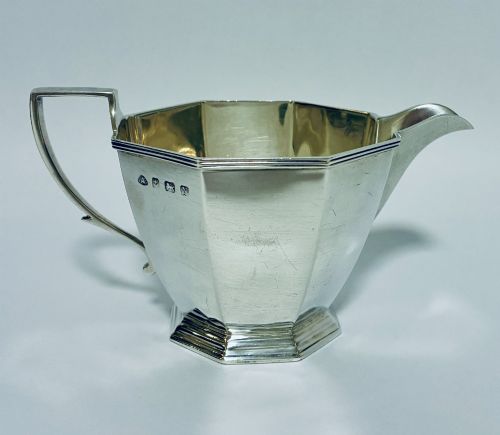
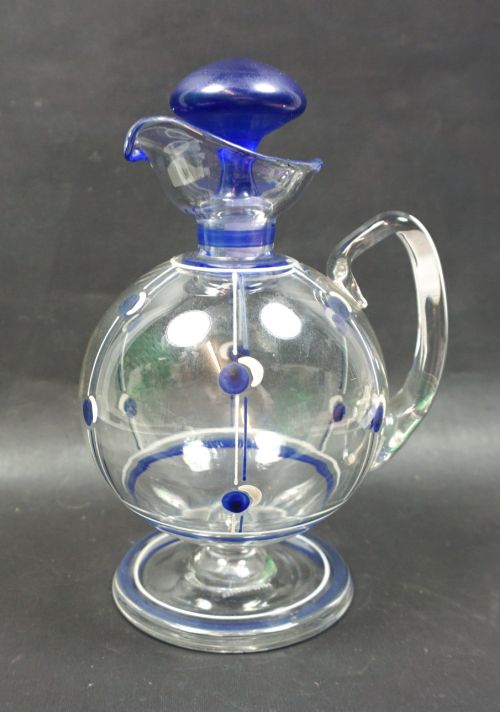
An art deco pitcher encompasses water jugs, claret jugs, and cocktail shakers designed during the interwar decades. The selection here leans heavily towards silver-plated vessels and decorated glass pieces from the nineteen-thirties.
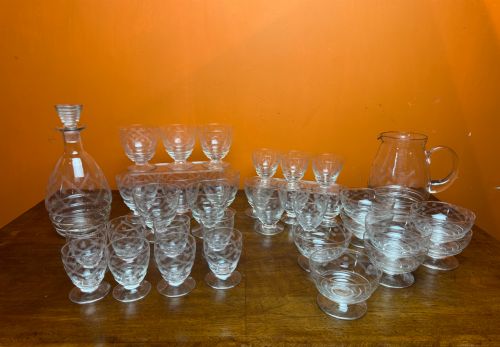
Makers utilised various forms ranging from tall cocktail mixers to handled water jugs for the dining table. Many examples survive as part of wider drinks sets intended for entertaining.
How they were made
Silversmiths shaped sterling silver and silver plate into clean cylindrical and faceted bodies, often working with firms like James Dixon and Sons or Mappin and Webb. Glassmakers blew crystal and clear glass into moulds, sometimes adding cut decoration or surface enamel.
Potters and ceramicists employed earthenware techniques for decorative flower jugs and tableware. Metal mounts and enamel colourways were carefully applied to complement the glass or silver body.
Listings feature items dated across the nineteen-twenties, thirties, and forties, reflecting the peak era of modern tableware design.
What varies in quality
Quality rests upon the weight of the metal, the clarity of the crystal, and the crispness of any engraved or enamelled decoration. Pieces attributed to notable designers or established silver houses generally display superior finishing.
The integrity of silver plating, the tightness of fitted lids on cocktail shakers, and the preservation of delicate enamel work all distinguish finer examples from standard production items.
James Dixon and Sons·Charlotte Rhead·Sue et Mare·Maison Christofle·Karl Palda·Keith Murray·Orfèvrerie Gallia·Mappin and Webb·Wedgwood
The Art Deco Pitcher Glossary
- Silver plate
- A layer of silver fused to a base metal such as brass or nickel silver. This technique allowed makers to produce robust tableware at a lower cost than solid sterling silver.
- Enamel
- A glassy substance melted onto metal or glass surfaces for decoration. It provides bright colour accents typical of nineteen-thirties design.
- Cocktail shaker
- A specialised vessel with a fitted lid and strainer used for mixing drinks. These often feature distinctive cylindrical or tiered metal forms.
- Crystal glass
- A high-clarity glass containing metal oxides that allows for deep, sharp cutting and engraving. It catches the light far more effectively than standard soda glass.
Art Deco Pitcher: Frequently Asked Questions
How do I clean an old silver plated pitcher?
Wash the vessel gently in warm soapy water using a soft cloth, avoiding harsh abrasive dips that strip the plating. Dry thoroughly with a lint-free cloth to prevent water spots.
For stubborn tarnish, use a specialist silver polish applied with minimal pressure. Take care around any applied enamel or glass sections to avoid accidental damage.
Can I still use these pitchers for drinks?
Most metal and glass pitchers remain fully functional for serving water, wine, or cocktails today. Check for any internal residue or hairline cracks in the glass before filling.
Silver-plated cocktail shakers should be rinsed immediately after use to protect the interior lining. Avoid exposing antique glass to sudden extreme temperature changes.
How do I date an art deco piece?
Look for manufacturer hallmarks, registered design numbers, and stylistic cues such as streamlined geometric motifs. Most pieces in this category date from the nineteen-twenties and nineteen-thirties.
Maker stamps on the base of silver plate or ceramics often provide a reliable guide to the exact period of production.
What is the difference between a pitcher and a jug?
The terms are often used interchangeably, though pitcher traditionally implies a vessel designed specifically for pouring beverages. Jug can cover a wider range of objects including ewers and flower holders.
In this selection, items designated as pitchers frequently form part of drinking sets or cocktail equipment.