


Vintage Green Glassware
Vintage green glassware brings together centuries of blown, moulded and enamelled vessels, from Georgian wine glasses to Art Deco vases.
Vintage Green Glassware
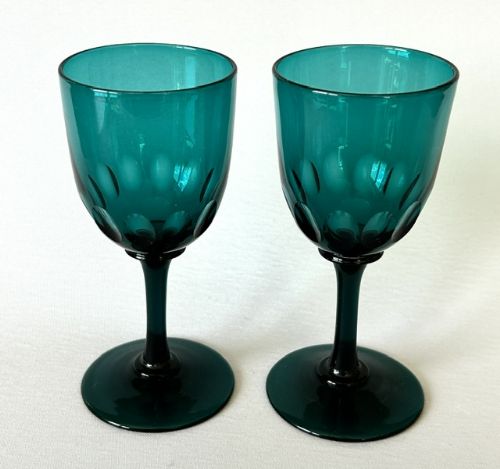
Vintage green glassware covers a broad span of functional and decorative objects, including wine glasses, decanters, vases, ewers, perfume bottles and large bowls. When exploring vintage green glassware, buyers frequently encounter Victorian tablewares alongside twentieth-century studio and factory pieces.
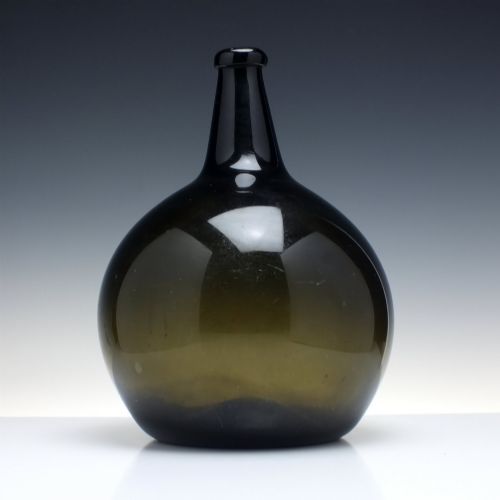
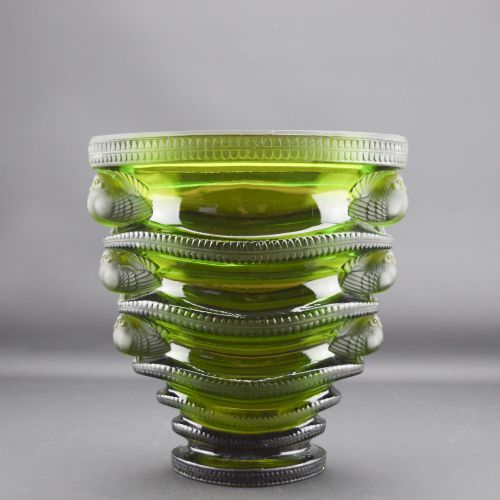
The selection extends from Georgian rummers and eighteenth-century wine bottles to Art Nouveau vessels and Art Deco designs from European glasshouses. Pieces range from deep emerald and Bristol tones to paler shades, turquoise, and yellow-green vaseline glass.
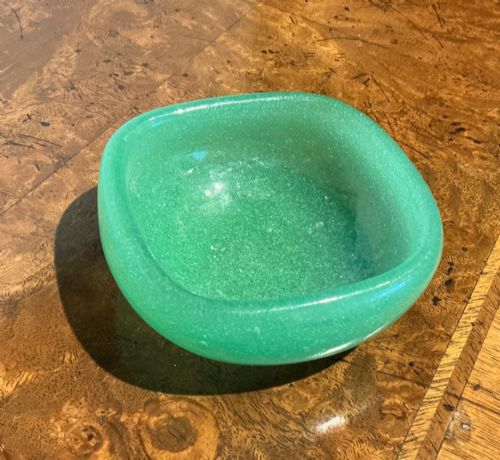
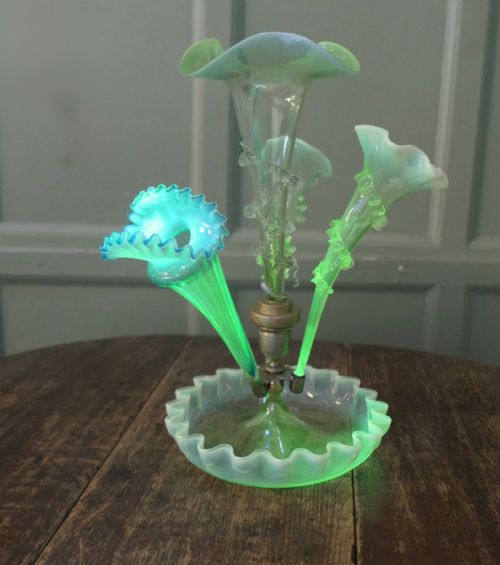
Domestic drinkware appears alongside ornamental epergnes, pickling jars and sculptural bowls, demonstrating how diverse the palette and forms were across different periods.
How they were made
Makers utilised techniques such as free-blowing, mould-blowing and hand-modelling, frequently incorporating lead glass or coloured glass formulas to achieve specific hues. Many items combine layered methods, such as green over crystal cased glass.
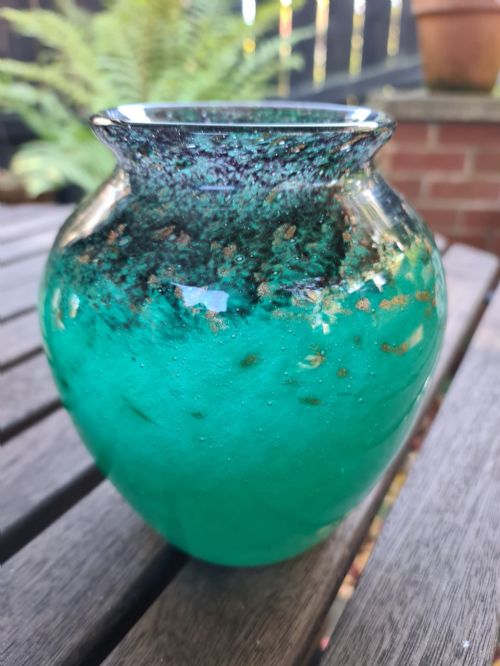
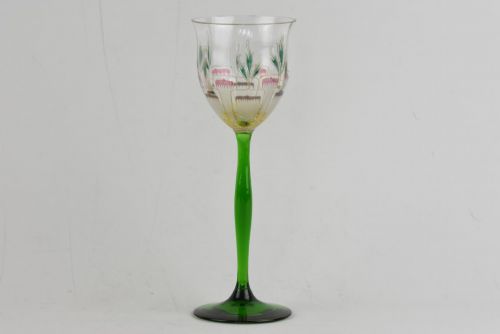
Decoration often involved surface work like hand-painting with enamel, gilding, cutting, or incorporating aventurine inclusions within the hot metal during shaping.
Listings feature glass from the Georgian era through to the nineteen-thirties, including works from Scottish, French, Belgian, Bohemian and English makers.
What varies in quality
Quality rests on the crispness of the glass forming and the precision of any wheel-cut facets, hand-enamelled scenes, or applied gold leaf. Maker attribution and documented designs by notable glass artists elevate certain pieces above standard domestic wares.
Rene Lalique·Theresienthal·Harry Powell·Charles Graffart·Joseph Simon·Karl Palda·Frits Hechert·Moser·Salviati
The Vintage Green Glassware Glossary
- Epergne
- A multi-tiered centrepiece featuring several trumpet-shaped vases or baskets branching from a central base. They were often used on dining tables for flowers or fruit.
- Roemer
- A traditional Germanic wine glass featuring a large bowl set on a cylindrical stem decorated with applied prunts. These are typically made of green forest glass.
- Vaseline glass
- A type of glass coloured with uranium oxide that exhibits a distinct yellow-green fluorescence under ultraviolet light. It was widely produced during the nineteenth and early twentieth centuries.
- Aventurine
- A sparkling glass containing suspended metallic inclusions, often copper or chromium, which create a glittering effect within the material when cooled.
- Cased glass
- A vessel formed of two or more distinct layers of glass, commonly a coloured exterior layer over a clear crystal core. These layers were frequently cut away to reveal the contrasting colour underneath.
Vintage Green Glassware: Frequently Asked Questions
How do I identify Victorian green wine glasses?
Victorian wine glasses often display robust hand-blown or moulded forms with deep aqua, emerald or Bristol green colouring. They frequently show pontil marks on the underside from the glassblowing process.
Examination of the bowl shape and stem thickness helps distinguish them from later twentieth-century productions.
What is Bristol green glass?
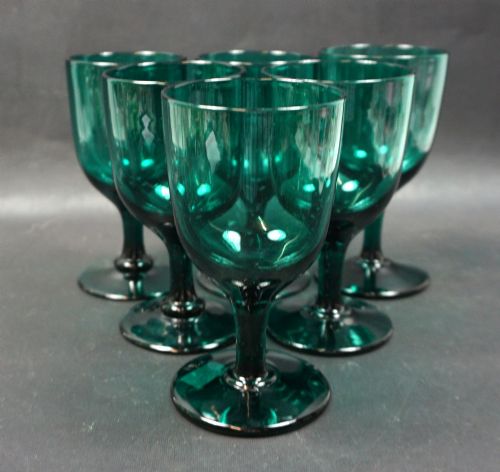
Bristol green glass refers to a distinct dark green hue traditionally associated with glasshouses operating in Bristol during the eighteenth and nineteenth centuries. The colour results from specific mineral impurities or additives in the batch.
It was commonly utilised for wine glasses, finger bowls and spirit decanters.
Are these glass items safe for daily use?
While many vintage and antique glasses were made for dining and drinking, older pieces require careful hand washing. Enamelled or gilded decoration can be sensitive to detergents and heat.
Displaying them or reserving them for occasional use helps preserve their surfaces.
How can I tell Art Deco glass apart from Victorian pieces?
Art Deco pieces from the nineteen-thirties typically feature geometric lines, stylised motifs and heavier cased glass constructions. Makers like Val Saint Lambert and designers such as Charles Graffart championed these modernist silhouettes.
Victorian items lean towards floral painting, Mary Gregory white enamel figures, and more organic or traditional shapes.