

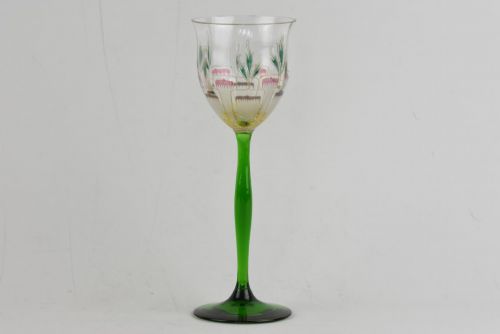


Vintage Glass Goblet
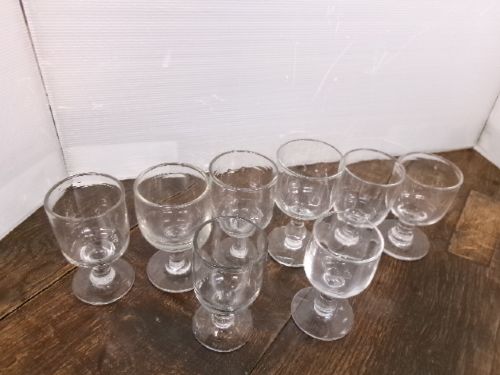
These vintage glass goblet selections bring together centuries of drinking vessels, from eighteenth-century twists to coloured Victorian stemware, shaped for daily use and display.
Vintage Glass Goblet
A vintage glass goblet search encounters drinking vessels spanning the eighteenth century through the Edwardian period, encompassing rummers, wine glasses, and ale glasses. The items vary from simple plain stem forms to intricately cut and engraved pieces produced across England, Bohemia, and Venice.
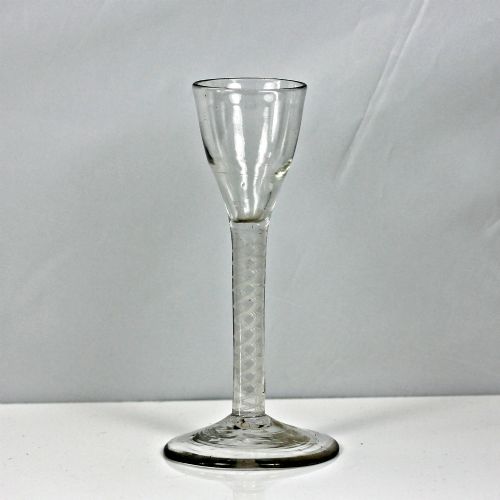
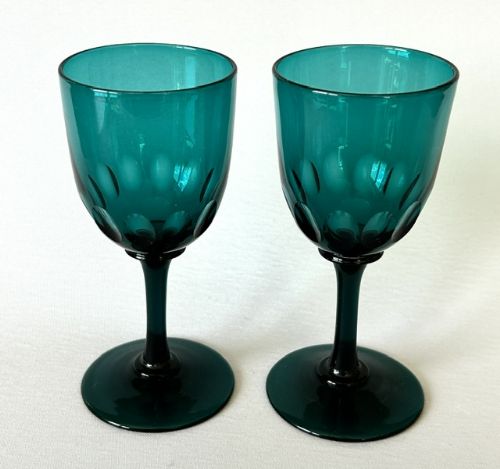
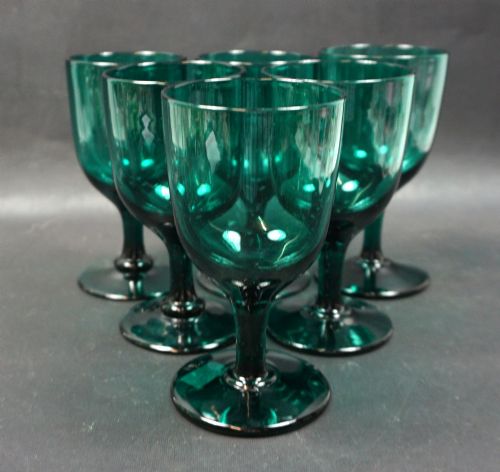
The earlier examples lean towards Georgian lead glass with air or opaque twists, whilst later nineteenth-century items introduce rich hues like cranberry, vaseline, and turquoise. Buyers encounter both single service pieces and larger matched sets suited for practical service or collection.
Materials and construction
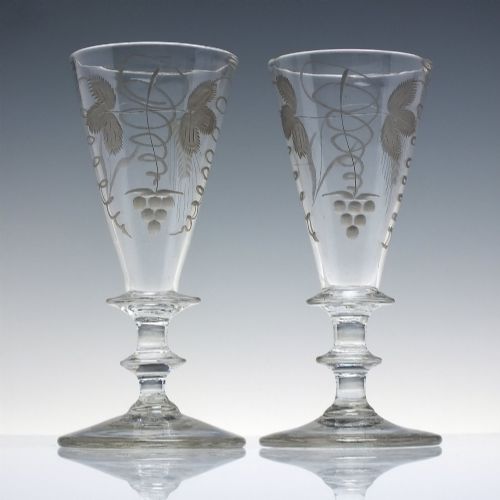
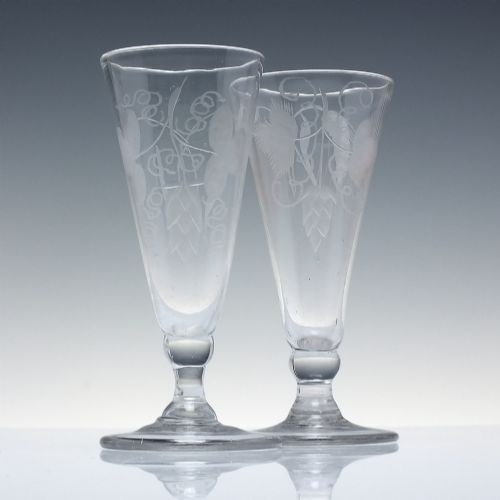
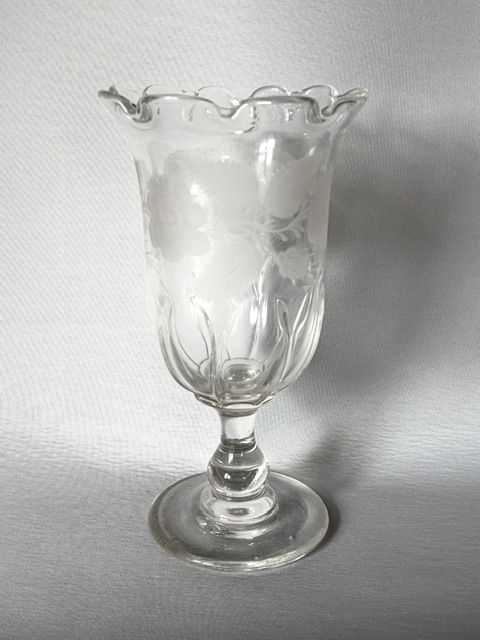
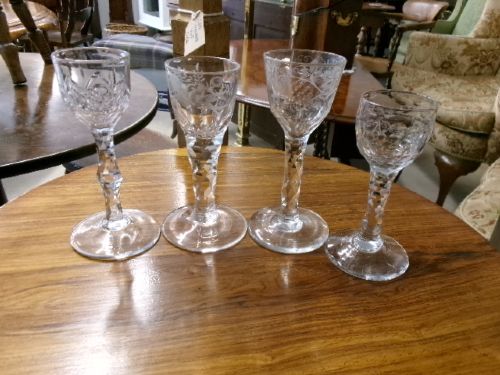
Maker techniques rely heavily on lead glass and flint glass, manipulated through blowing and moulding to achieve clarity and weight. Vessels frequently display engraved or etched motifs such as hops, barley, and floral patterns directly into the bowl surface.
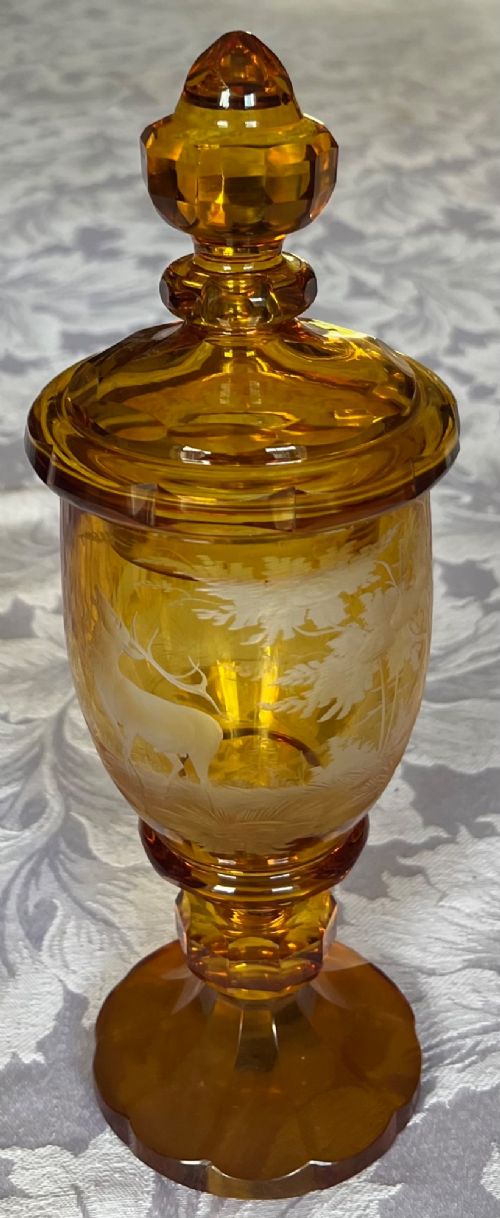
Colour is introduced through coloured glass and overlay techniques, occasionally heightened with enamel and gold leaf details. Stem formations incorporate complex twist inner threads, air bubbles, and faceted cutting executed by hand.
Listings feature lead glass, enamel, gold leaf, and coloured glass across Georgian, Victorian, and Edwardian periods.
Markers of execution and finish
Quality rests upon the precision of the stem twist and the clarity of the metal, distinguishing master lead glass production from standard commercial output. Superior engraving shows deep, crisp lines with distinct shading rather than shallow surface scratching.
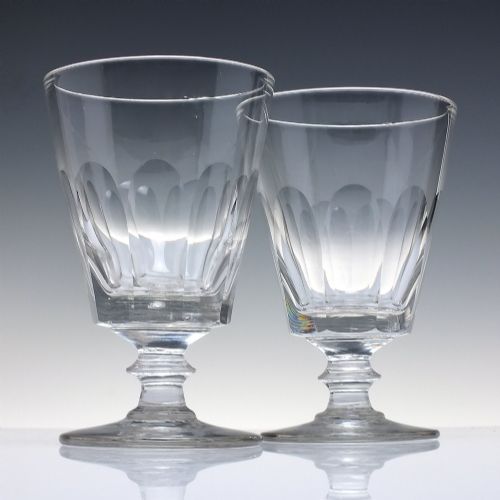
Proportion between the bowl, stem, and wide foot base dictates visual balance, whilst even wall thickness indicates superior blowing skill. Intricate additions like enamel work and faceted stem cutting separate standard examples from finer studio pieces.
TIFFANY & Co·Baccarat·Theresienthal·James Powell·Webb Corbett
The Vintage Glass Goblet Glossary
- Opaque twist
- A stem formation enclosing white or coloured enamel threads drawn through the glass. This technique originated in the eighteenth century to add decorative contrast.
- Rummer
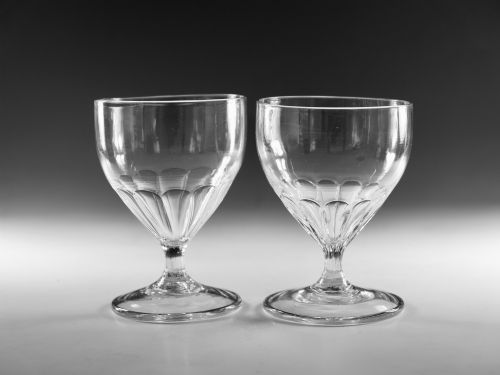
- A large, sturdy drinking glass typically featuring a capacious bowl and a short stem. These pieces were designed for ale, wine, or punch during the Georgian and Victorian eras.
- Roemer
- A traditional Germanic drinking vessel with a globular bowl resting on a cylindrical, prunted stem. They often appear in green or amber glass.
- Baluster
- A thick, swelling stem form resembling an architectural column. This profile defines many mid-eighteenth-century English drinking glasses.
- Vaseline glass
- A yellow-green glass containing uranium dioxide that glows under ultraviolet light. It gained popularity during the Victorian period for decorative tableware.
Vintage Glass Goblet: Frequently Asked Questions
How do I date a glass goblet?
Dating relies on observing manufacturing traits such as pontil marks, metal composition, and stem construction. Georgian pieces often show heavy lead content and distinct twist formations, whilst Victorian examples frequently display brighter colours and moulded bowls.
Changes in fashion also dictate form, moving from baluster stems to faceted cuts and later Edwardian ornamentation. Comparing the silhouette and engraving style to known periods clarifies the production era.
Can I use antique goblets for drinks?
Many sturdy rummers and wine glasses remain entirely suitable for serving beverages today. Lead glass handles normal use well, though hand washing is necessary to protect the material.
Delicate eighteenth-century twist glasses warrant more careful handling due to their age and thinner walls. Using them for special occasions preserves both the glass and its historical integrity.
What is the difference between lead glass and flint glass?
Lead glass incorporates lead oxide into the batch, increasing weight, refractive index, and resonance. This composition allows for deeper cutting and greater clarity than standard formulations.
Flint glass historically referred to high-quality clear glass, though the terms often overlap in older manufacturing contexts. Both materials provide the brilliance characteristic of fine antique stemware.
How are coloured glass goblets made?
Coloured glass requires adding metallic oxides to the molten batch, such as gold for cranberry tones or uranium for vaseline hues. Overlay techniques involve casing a clear or coloured body in a second contrasting layer of glass.
Cut-to-clear methods then grind through the outer layer to reveal the contrasting colour underneath. Enamel decoration and gilding are subsequently applied by hand before being fired in a kiln.